

Acorn cookies
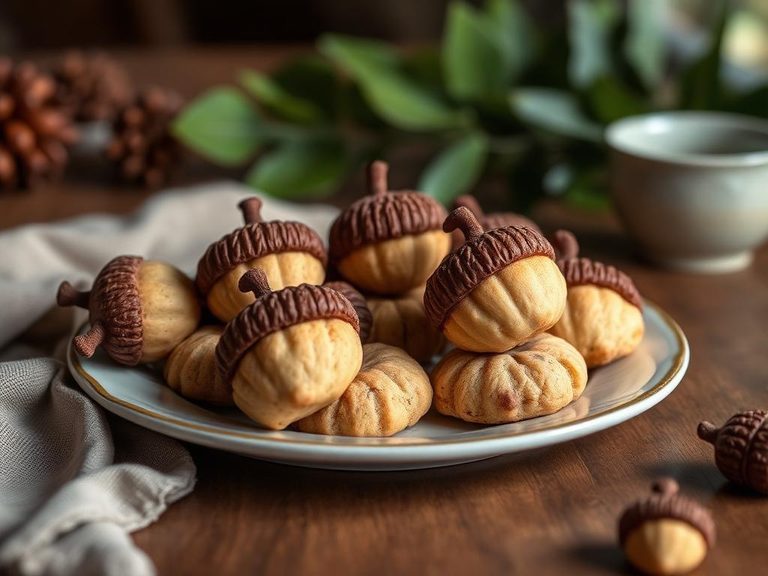
Acorn cookies are a traditional Korean snack made from acorn flour, which is derived from ground acorns that have been processed to remove their natural tannins. The dough is typically mixed with rice flour, sugar, and sesame oil, then shaped into small, dense cookies and baked or pan-fried until firm. This rustic treat is especially associated with mountainous regions and autumn foraging traditions in Korea.
🍽️ Nutrition at a glance
Acorn cookies are primarily a source of complex carbohydrates and dietary fiber, with a moderate amount of fat from added oils like sesame. They provide notable minerals such as potassium and magnesium, and a typical serving contains roughly 180-220 calories.
Nutrition breakdown
| Calories | 190 kcal |
| Protein | 3 g |
| Carbs | 32 g |
| Fat | 6 g |
| Fiber | 4 g |
| Sugar | 8 g |
| Sodium | 45 mg |
| Potassium | 120 mg |
| Magnesium | 25 mg |
| Iron | 1.2 mg |
| Phosphorus | 40 mg |
| Manganese | 0.8 mg |
| Vitamin B6 | 0.05 mg |
| Copper | 0.1 mg |
| Zinc | 0.5 mg |
Per 3 cookies (60 g) · estimated, varies by recipe
💡 What's interesting
What makes acorn cookies unique is their use of foraged acorn flour, a sustainable ingredient that requires careful leaching to remove bitter tannins—a process that reflects deep traditional knowledge. Nutritionally, acorn flour is gluten-free and rich in antioxidants, making these cookies a fascinating example of wild food turned into a comforting snack.
🍽️ Related dishes





AI estimate may be inaccurate · Terms