

Accompaniment to Pasta Dishes
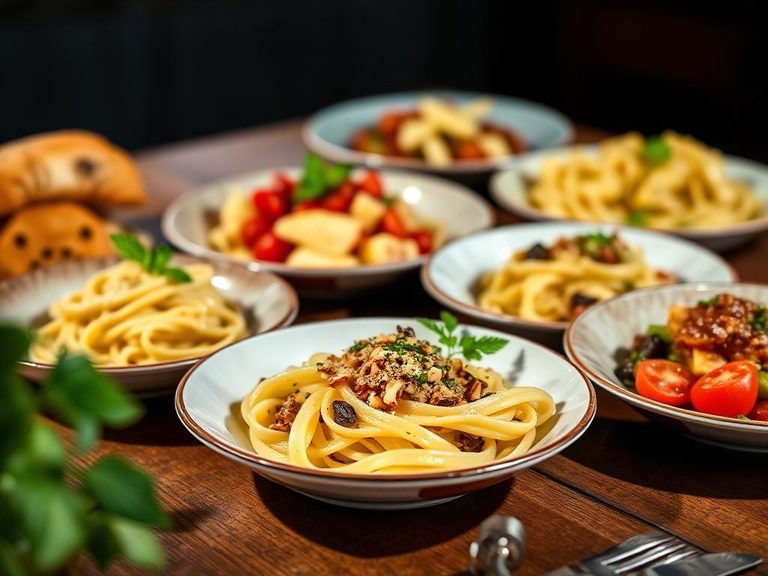
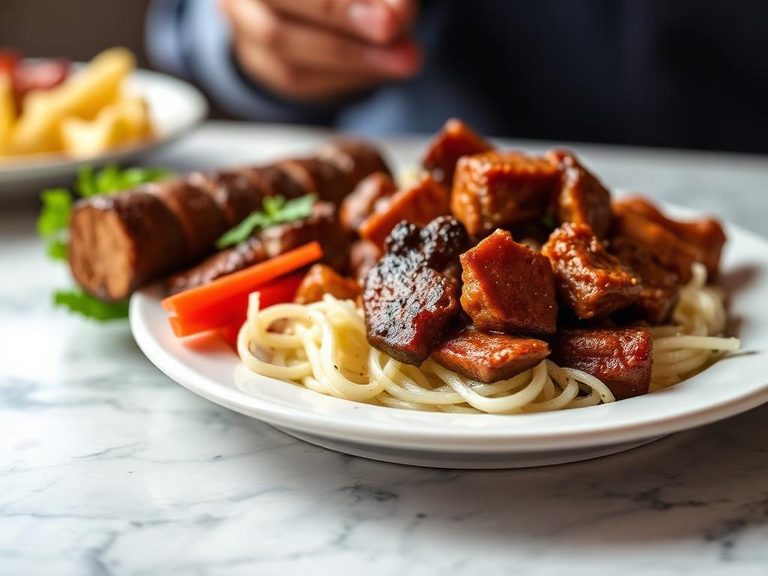
This refers to a wide variety of dishes, from simple garlic bread to complex braised meats, designed to complement and enhance the flavors of pasta. Common accompaniments include proteins like chicken parmigiana or sausage, vegetables like sautéed greens or roasted peppers, and breads for dipping. They are fundamental to Italian and Italian-American dining, rounding out the meal.
🍽️ Nutrition at a glance
The nutritional profile varies drastically; a side of steamed vegetables is low-calorie and nutrient-dense, while a breaded cutlet or creamy sauce is high in fat and calories. Key nutrients can range from fiber and vitamins in vegetable sides to protein and iron in meat-based accompaniments. A typical serving can range from under 100 calories for a simple side to over 600 for a substantial protein dish.
Nutrition breakdown
| Calories | 180 kcal |
| Protein | 4.5 g |
| Carbs | 28 g |
| Fat | 6 g |
| Fiber | 4 g |
| Sugar | 5 g |
| Sodium | 480 mg |
| Potassium | 350 mg |
| Vitamin C | 15 mg |
| Vitamin A | 800 IU |
| Calcium | 120 mg |
| Iron | 2 mg |
| Vitamin K | 25 mcg |
| Magnesium | 40 mg |
| Folate | 60 mcg |
Per 1 cup (240 g) · estimated, varies by recipe
💡 What's interesting
The tradition of accompaniments reflects the Italian principle of a balanced meal structure (contorno, secondo), where pasta is often just the first course. Nutritionally, they are an opportunity to add protein, fiber, and micronutrients that pasta alone may lack, creating a more complete and satisfying plate.
🍽️ Related dishes

AI estimate may be inaccurate · Terms