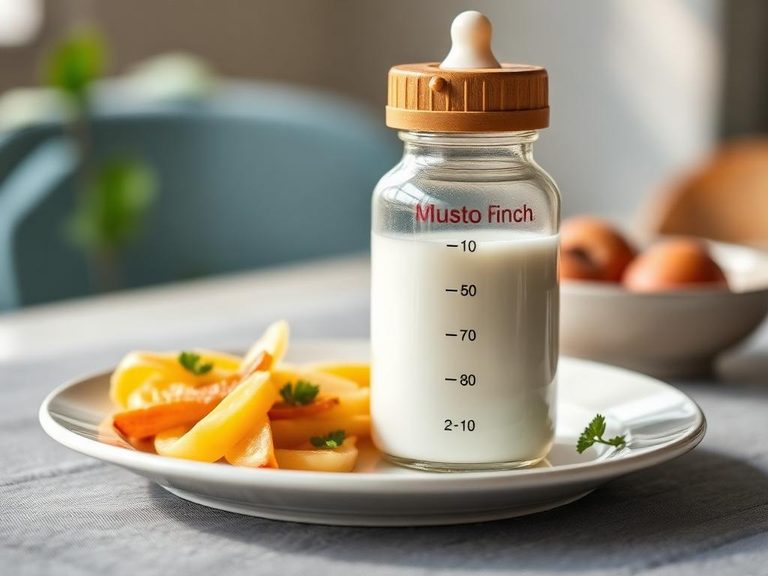
Used in a supplemental nursing system (SNS)

The Supplemental Nursing System (SNS) is not a dish but a feeding device used to provide supplemental nutrition to infants during breastfeeding. It typically consists of a small reservoir, often a bottle or bag, connected to a thin tube that is taped to the mother's breast, allowing the baby to receive formula or expressed milk while latching.
🍽️ Nutrition at a glance
The nutritional content depends entirely on the liquid used in the device, which is usually infant formula or expressed breast milk. These are designed to be complete nutrition sources for infants, providing a balanced mix of carbohydrates, fats, proteins, vitamins, and minerals, with a typical supplemental feed ranging from 30-60 calories per ounce.
Nutrition breakdown
| Calories | 20 kcal |
| Protein | 1.1 g |
| Carbs | 2.2 g |
| Fat | 1.1 g |
| Fiber | 0 g |
| Sugar | 2.2 g |
| Sodium | 25 mg |
| Vitamin D | 40 IU |
| Calcium | 53 mg |
| Iron | 0.15 mg |
| Potassium | 70 mg |
| Phosphorus | 30 mg |
| Vitamin A | 80 IU |
| Vitamin C | 0.8 mg |
| Zinc | 0.5 mg |
Per 1 ounce (30 ml) of standard infant formula (ready-to-feed) · estimated, varies by recipe
💡 What's interesting
The SNS is a unique tool in lactation support, designed to protect and establish breastfeeding by providing positive reinforcement at the breast. It's a fascinating intersection of simple technology and biological nurturing, helping to bridge gaps in milk supply or infant feeding challenges.