

Taco topping
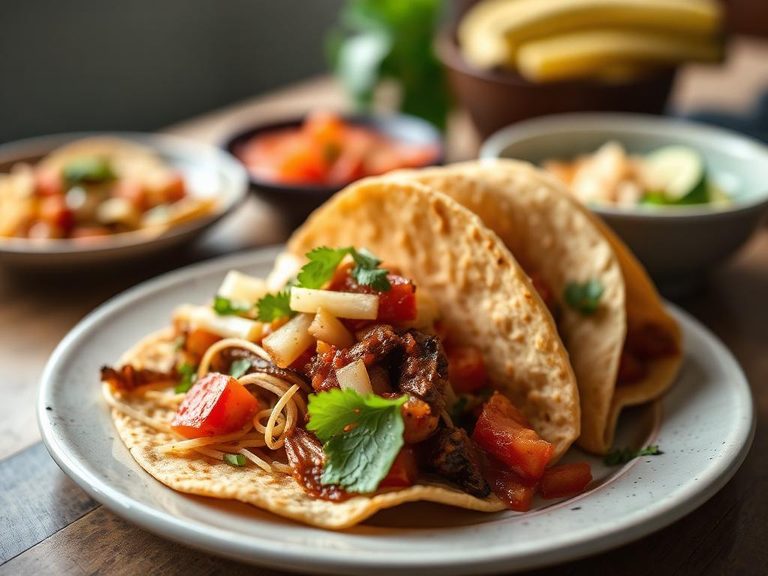
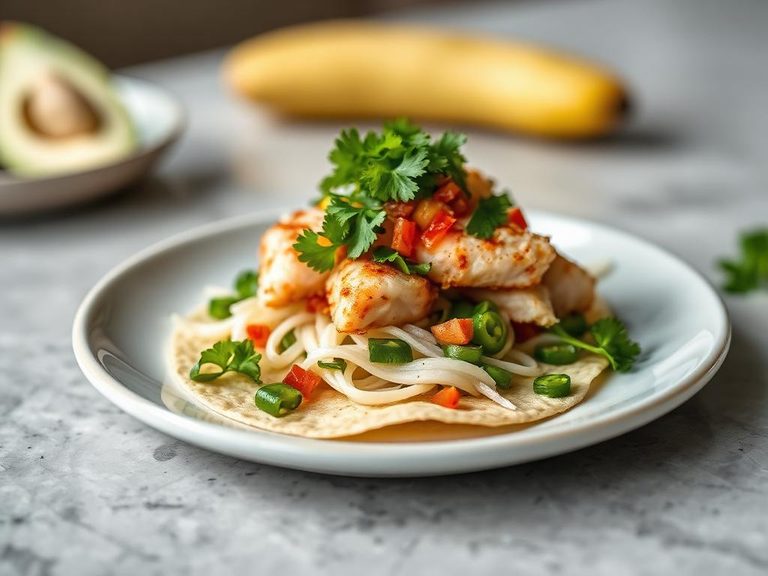
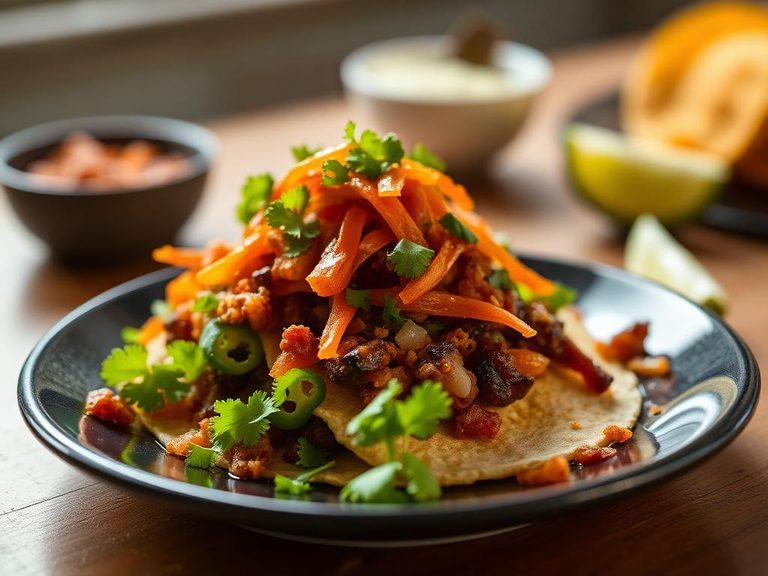
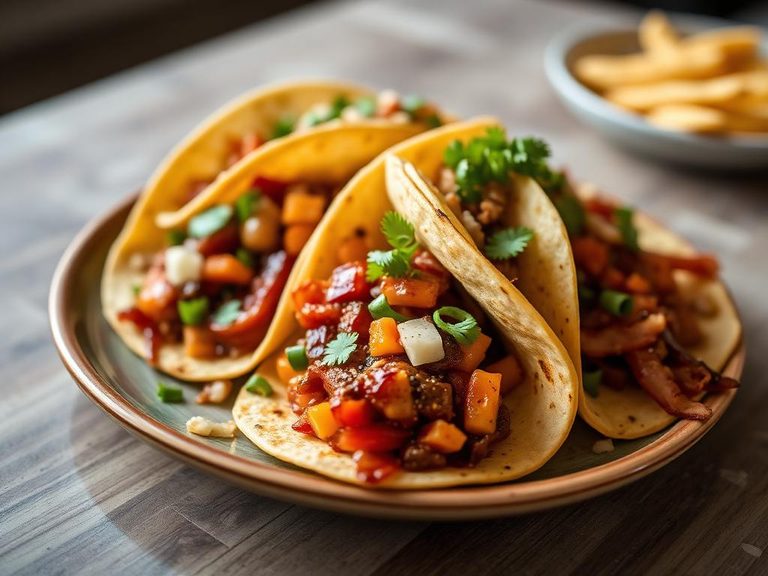
Taco toppings in fusion variations are a creative, deconstructed take on traditional Mexican garnishes, often incorporating non-traditional ingredients like Asian slaws, Mediterranean herbs, or Korean-style pickles. They typically include a mix of fresh vegetables, tangy pickled elements, creamy sauces, and crunchy textures to add flavor and contrast to tacos. This approach is popular in modern fusion cuisine, especially in cosmopolitan food scenes like those in Los Angeles or Tokyo.
🍽️ Nutrition at a glance
These toppings are generally low in calories but can vary widely in macronutrients depending on the components—creamy sauces add fat, while fresh vegetables contribute fiber and vitamins. A typical serving provides a good source of vitamins A and C, potassium, and dietary fiber, with a rough calorie range of 50-150 kcal per serving.
Nutrition breakdown
| Calories | 80 kcal |
| Protein | 2 g |
| Carbs | 10 g |
| Fat | 4 g |
| Fiber | 3 g |
| Sugar | 5 g |
| Sodium | 300 mg |
| Vitamin A | 120 µg |
| Vitamin C | 15 mg |
| Potassium | 200 mg |
| Iron | 1 mg |
| Calcium | 40 mg |
| Magnesium | 15 mg |
| Vitamin K | 10 µg |
| Folate | 30 µg |
Per 1/2 cup (100 g) · estimated, varies by recipe
💡 What's interesting
Fusion taco toppings reflect a global culinary exchange, blending Mexican foundations with techniques and flavors from other cultures, such as using kimchi instead of salsa or adding tahini drizzles. Nutritionally, they often enhance a meal's micronutrient profile without significantly increasing caloric density, making them a popular way to boost flavor and health appeal.
🍽️ Related dishes
AI estimate may be inaccurate · Terms