Squab à la Presse (French)
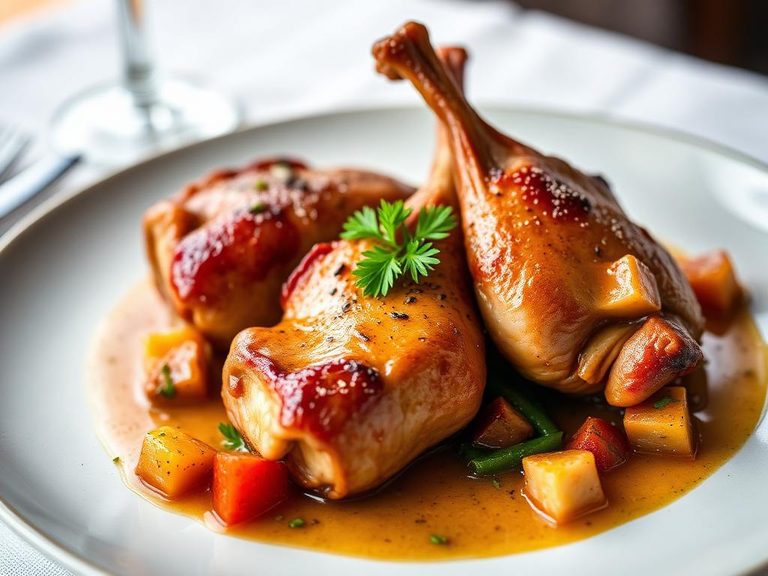
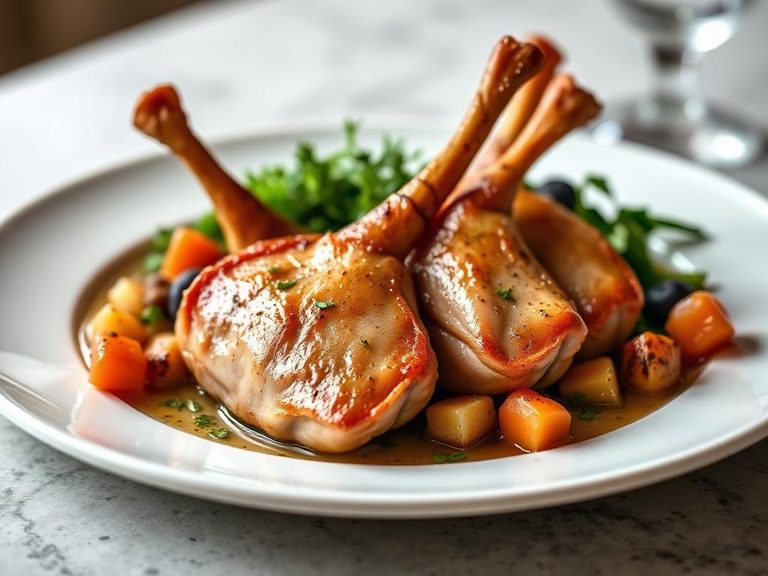
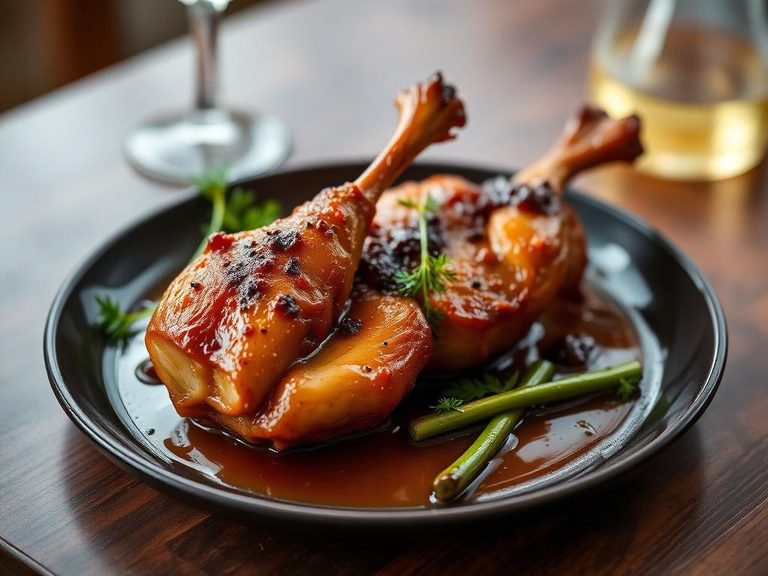
Squab à la Presse is a classic French haute cuisine dish where a young pigeon (squab) is cooked, pressed in a specialized press, and its juices are mixed with wine, stock, and often foie gras to create a rich, velvety sauce. The bird is typically roasted or sautéed, and the sauce is the star, known for its deep, complex flavor. It is a signature dish of traditional Lyonnaise and Parisian gastronomy.
🍽️ Nutrition at a glance
This is a high-protein, high-fat dish with minimal carbohydrates, primarily from the squab meat and the luxurious sauce enriched with fat. A typical serving provides a significant amount of iron, B vitamins (especially B12 and niacin), and selenium, with a calorie count likely in the range of 400-600 kcal per serving.
Nutrition breakdown
| Calories | 520 kcal |
| Protein | 42 g |
| Carbs | 3 g |
| Fat | 38 g |
| Fiber | 0 g |
| Sugar | 1 g |
| Sodium | 680 mg |
| Iron | 4.5 mg |
| Niacin (B3) | 12 mg |
| Vitamin B12 | 3.2 µg |
| Selenium | 28 µg |
| Phosphorus | 320 mg |
| Zinc | 3.8 mg |
| Potassium | 410 mg |
| Vitamin B6 | 0.7 mg |
Per 1 serving (approximately 200 g of squab meat and 100 g of sauce) · estimated, varies by recipe
💡 What's interesting
The dish is culturally unique for its use of the 'presse à canard' (duck press), a specialized tableside tool that became a symbol of 19th-century culinary theater and luxury dining in Paris. Nutritionally, squab is a lean, dark game meat that is a concentrated source of heme iron, making it more bioavailable than iron from plant sources.