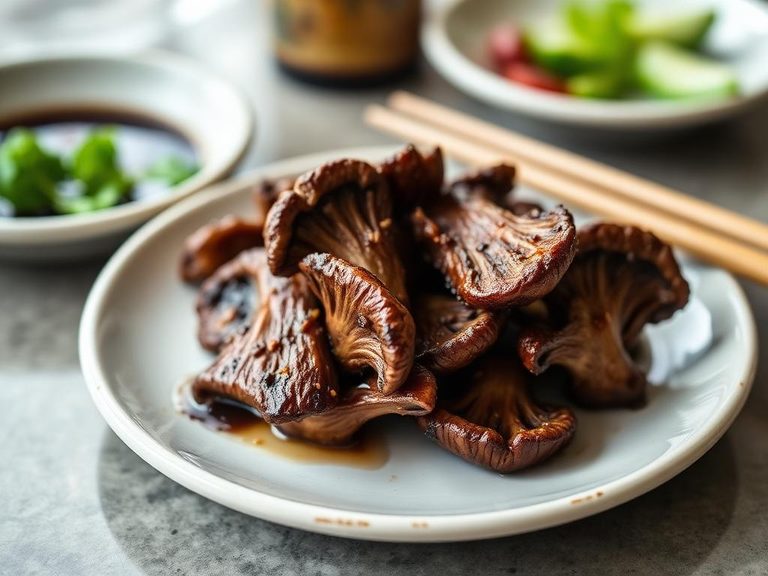
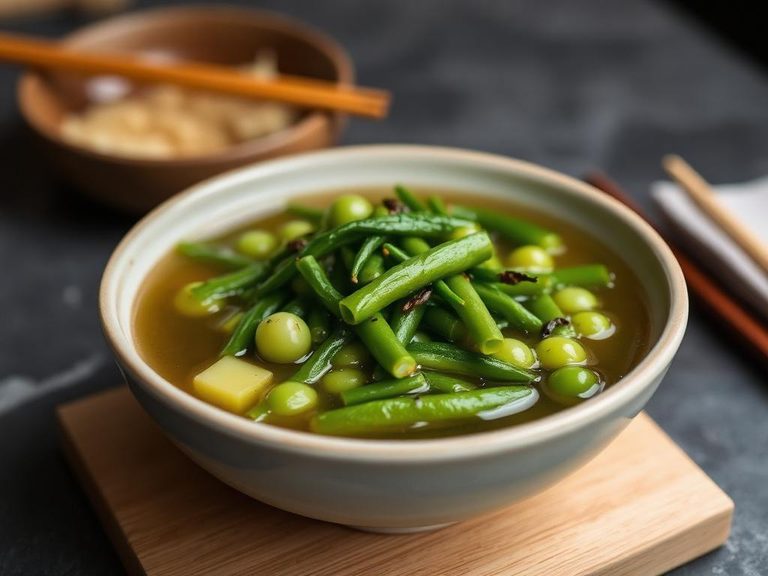
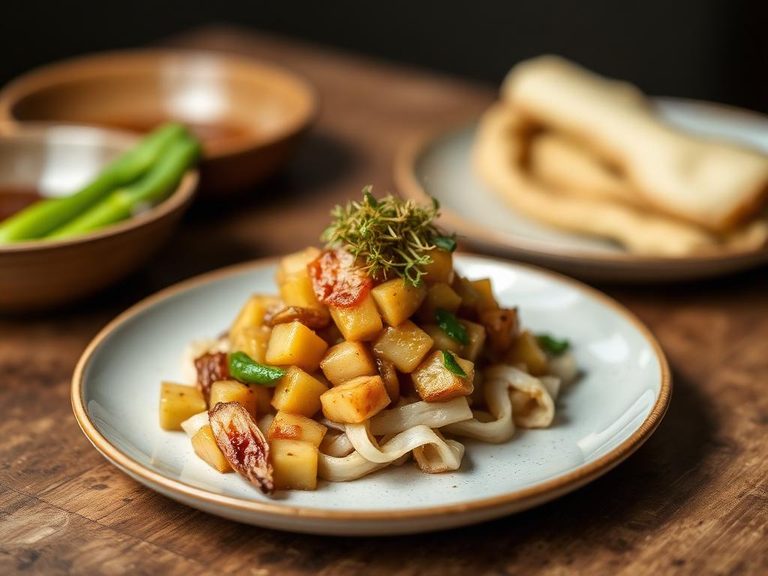
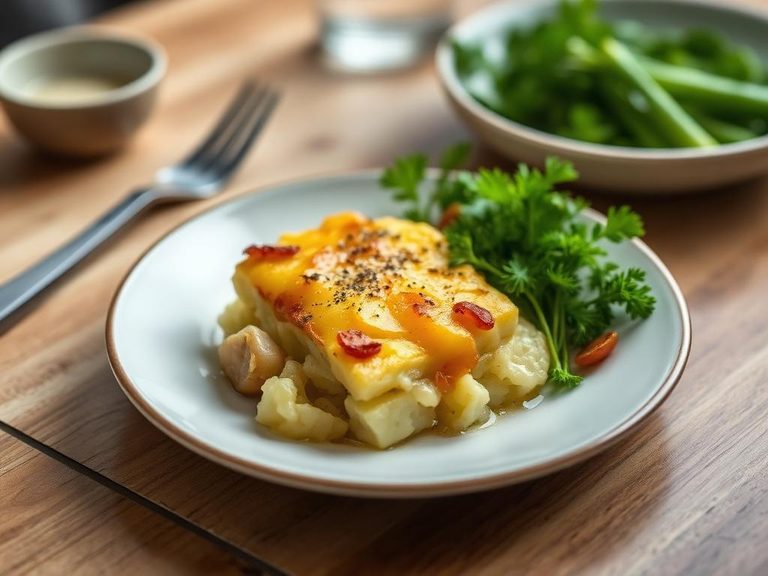
Simmered butterbur with soy sauce and mirin
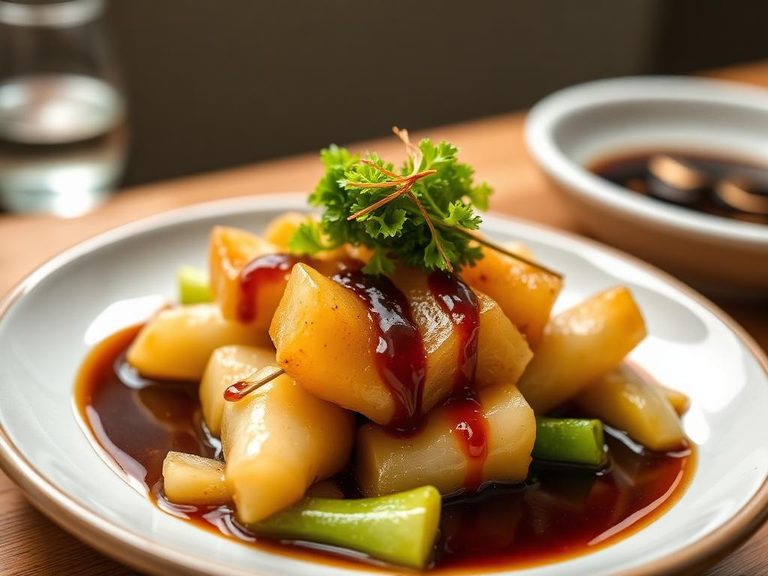
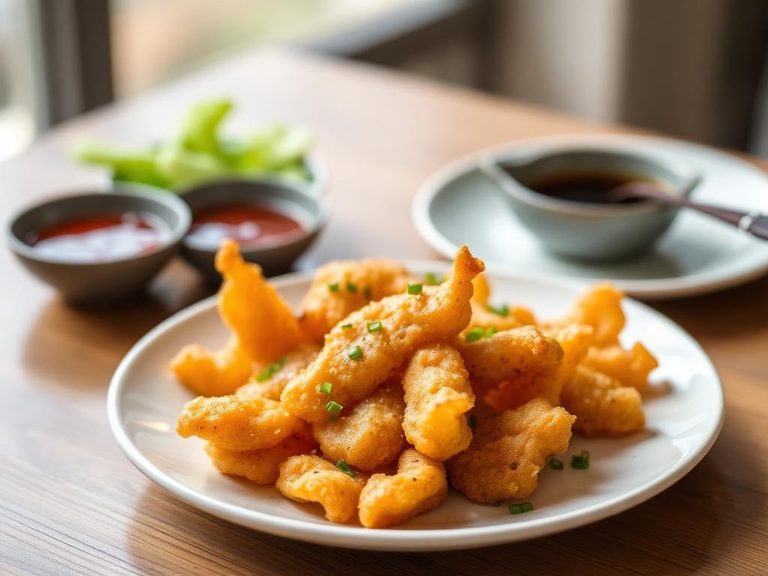
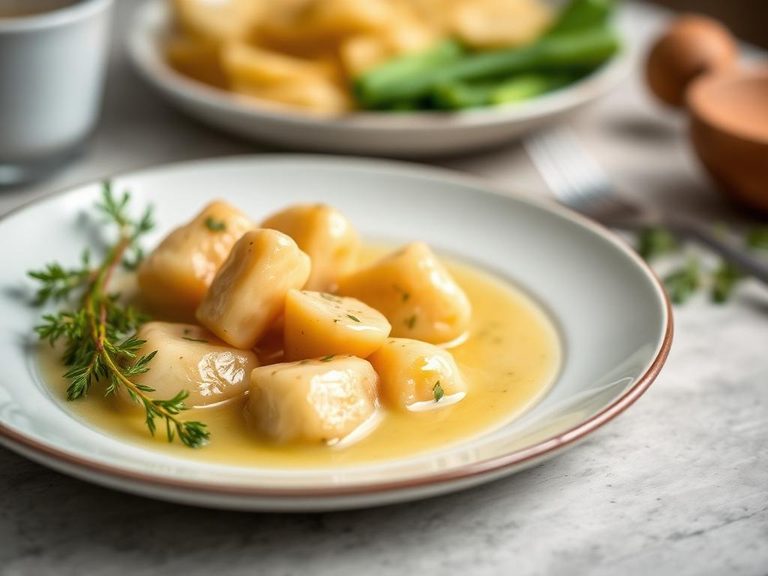
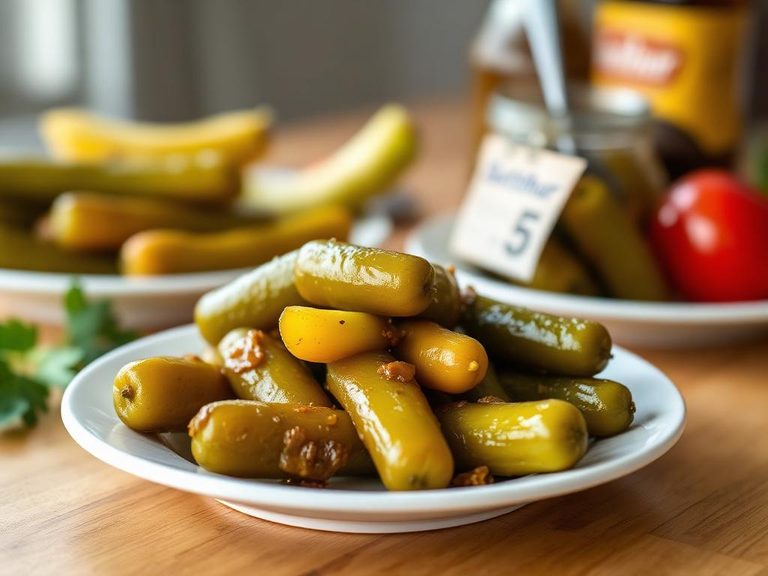
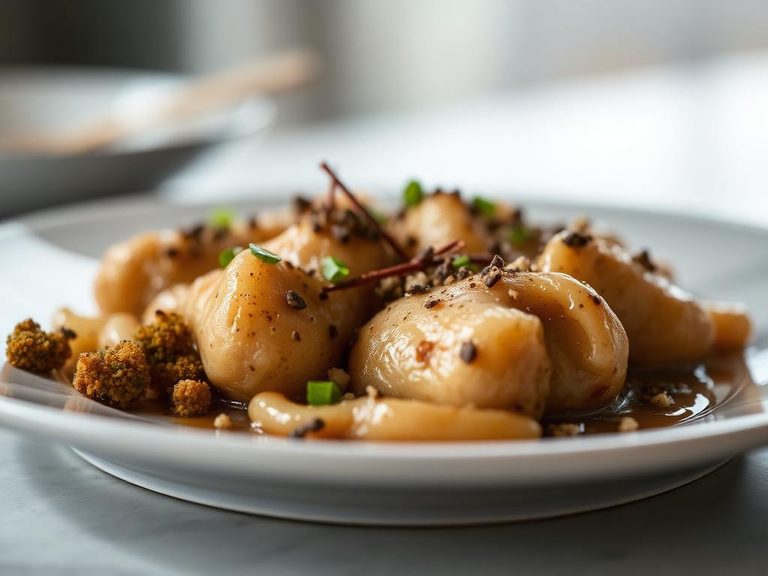
Simmered butterbur with soy sauce and mirin, known as Fuki no Tō in Japanese cuisine, is a classic side dish made from the stalks of the butterbur plant. The dish features tender, fibrous vegetable stalks braised in a savory-sweet broth of soy sauce, mirin, and sugar, often with a touch of katsuobushi (bonito flakes) for umami. It is a traditional Japanese preparation, particularly popular during the spring season when butterbur is harvested.
🍽️ Nutrition at a glance
This dish is low in calories, fat, and protein, but provides a good amount of dietary fiber and essential minerals like potassium and vitamin C. A typical serving contains roughly 50-70 calories, making it a light and nutritious addition to a meal.
Nutrition breakdown
| Calories | 60 kcal |
| Protein | 1.5 g |
| Carbs | 12 g |
| Fat | 0.5 g |
| Fiber | 3.5 g |
| Sugar | 6 g |
| Sodium | 480 mg |
| Potassium | 320 mg |
| Vitamin C | 15 mg |
| Calcium | 45 mg |
| Iron | 0.8 mg |
| Magnesium | 20 mg |
| Phosphorus | 30 mg |
| Vitamin K | 25 µg |
| Folate | 15 µg |
Per 1 cup (150 g) · estimated, varies by recipe
💡 What's interesting
Butterbur is one of the 'sansai' (wild mountain vegetables) cherished in Japanese cuisine for its unique, slightly bitter flavor and crisp texture. Nutritionally, it is high in fiber and contains compounds that have been studied for their potential anti-inflammatory properties, though it must be prepared properly to remove naturally occurring pyrrolizidine alkaloids.