

School cafeteria lunch
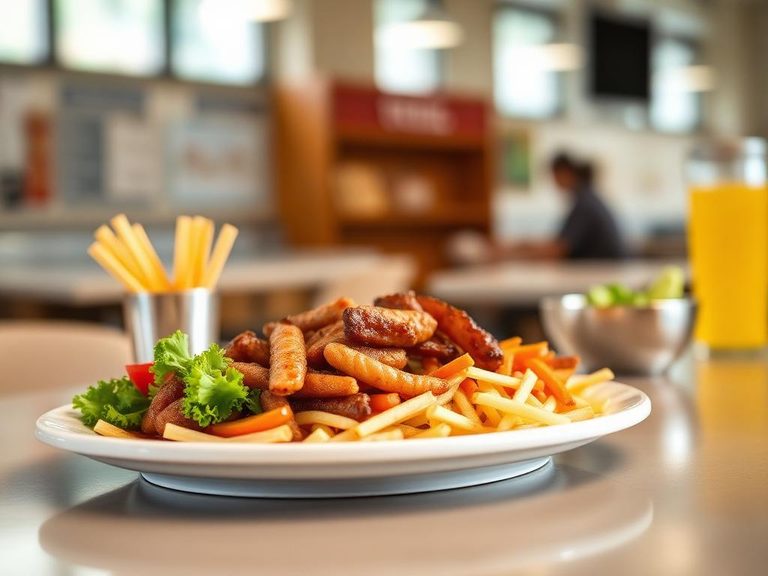
School cafeteria lunch is a standardized, mass-produced meal served in educational institutions, typically featuring a main protein like chicken nuggets or a burger patty, a starchy side such as french fries or mashed potatoes, and a simple vegetable or fruit portion. It is designed for efficiency, cost-effectiveness, and broad appeal to children and teenagers, representing a common experience in American public and private schools.
🍽️ Nutrition at a glance
This meal is generally high in carbohydrates from the starchy sides and refined grains, with moderate protein and often significant fat from fried components. It provides key nutrients like iron, vitamin C (if a fruit/vegetable is included), and calcium, but can be high in sodium and added sugars, with a rough calorie range of 500-800 kcal per serving.
Nutrition breakdown
| Calories | 650 kcal |
| Protein | 22 g |
| Carbs | 75 g |
| Fat | 28 g |
| Fiber | 5 g |
| Sugar | 12 g |
| Sodium | 1100 mg |
| Iron | 3.5 mg |
| Vitamin C | 25 mg |
| Calcium | 200 mg |
| Vitamin A | 150 mcg |
| Potassium | 450 mg |
| Phosphorus | 300 mg |
| Thiamin (B1) | 0.4 mg |
| Niacin (B3) | 6 mg |
Per 1 typical tray meal (approx. 450 g) · estimated, varies by recipe
💡 What's interesting
Culturally, the school lunch is a shared childhood memory and a subject of nostalgia and critique, often sparking debates about nutrition standards and food quality. Nutritionally, it represents a balancing act between providing adequate energy and nutrients for growing students while adhering to strict budgetary and logistical constraints.
🍽️ Related dishes








AI estimate may be inaccurate · Terms