

Salad toppings
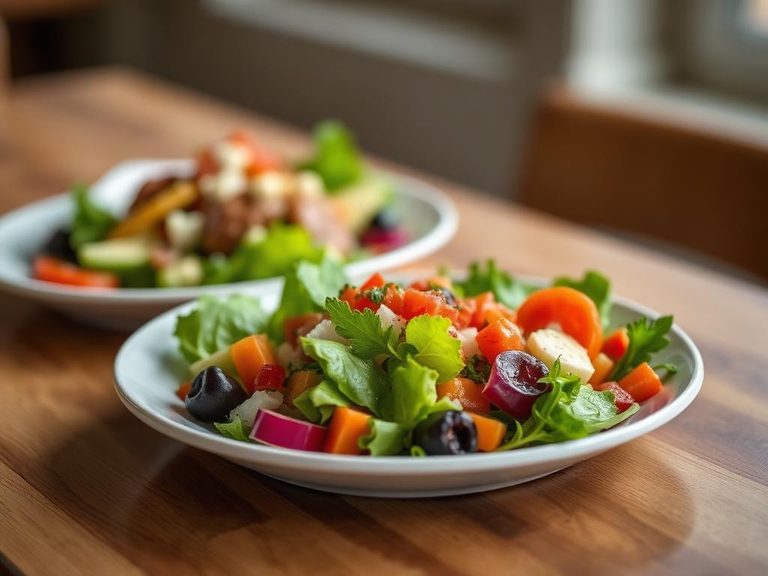
Salad toppings are the diverse array of ingredients added to a base of leafy greens to enhance flavor, texture, and nutritional value. They range from crunchy vegetables like cucumbers and carrots to proteins like grilled chicken or chickpeas, and often include cheeses, nuts, seeds, and dressings. This concept is universal, with countless variations found in cuisines worldwide.
🍳 View the full Salad toppings recipe →
🍽️ Nutrition at a glance
The nutritional profile varies widely based on the specific toppings chosen, but a typical serving can be balanced in carbs, fats, and proteins. Key nutrients often include fiber, vitamins (like A, C, and K), minerals (such as iron and calcium), and healthy fats, with a calorie range from about 150 to 400+ per serving.
Nutrition breakdown
| Calories | 15 kcal |
| Protein | 1.2 g |
| Carbs | 2.8 g |
| Fat | 0.2 g |
| Fiber | 1.5 g |
| Sugar | 1.5 g |
| Sodium | 10 mg |
| Vitamin A | 160 µg |
| Vitamin C | 12 mg |
| Vitamin K | 80 µg |
| Potassium | 280 mg |
| Folate | 50 µg |
| Manganese | 0.2 mg |
| Iron | 0.8 mg |
| Calcium | 25 mg |
Per 1 cup (100 g) · estimated, varies by recipe
💡 What's interesting
Culturally, salad toppings reflect local agriculture and culinary traditions, such as feta and olives in Greek salads or tofu and seaweed in Asian versions. Nutritionally, they allow for highly customizable meals that can cater to various dietary needs, from high-protein to low-carb diets.
🍽️ Related dishes






AI estimate may be inaccurate · Terms