

Rou Gan
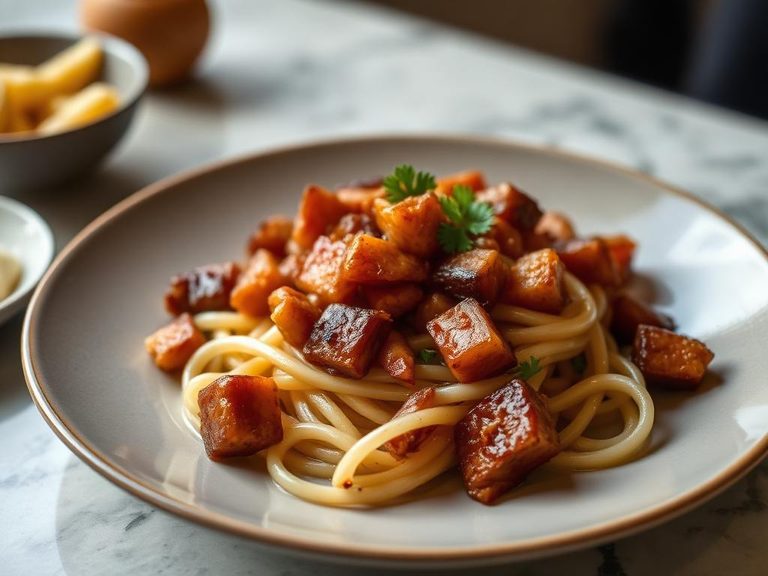
Rou Gan is a savory Chinese dish, typically from the Jiangsu region, featuring tender, thin slices of pork stir-fried with crisp vegetables like snow peas or bell peppers in a savory, slightly thickened sauce. It's a classic example of Huaiyang cuisine, known for its delicate flavors and precise knife work.
🍽️ Nutrition at a glance
This dish is primarily a good source of protein from the pork, with moderate fat content depending on the cut used and cooking oil. A typical serving provides a balanced mix of protein, carbs from vegetables and sauce, and essential minerals like iron and B vitamins.
Nutrition breakdown
| Calories | 280 kcal |
| Protein | 22 g |
| Carbs | 12 g |
| Fat | 16 g |
| Fiber | 3 g |
| Sugar | 4 g |
| Sodium | 650 mg |
| Iron | 2.5 mg |
| Potassium | 420 mg |
| Vitamin C | 15 mg |
| Vitamin B6 | 0.4 mg |
| Niacin (B3) | 6 mg |
| Phosphorus | 190 mg |
| Zinc | 3 mg |
| Selenium | 18 mcg |
Per 1 serving (approx. 200 g) · estimated, varies by recipe
💡 What's interesting
The name 'Rou Gan' literally translates to 'meat dry,' which refers to the cooking technique where the pork is quickly stir-fried to a state of being just cooked through but still juicy, not stewed or braised. This method highlights the chef's skill in controlling heat and timing.
🍽️ Related dishes



AI estimate may be inaccurate · Terms