

Root Vegetable Stew
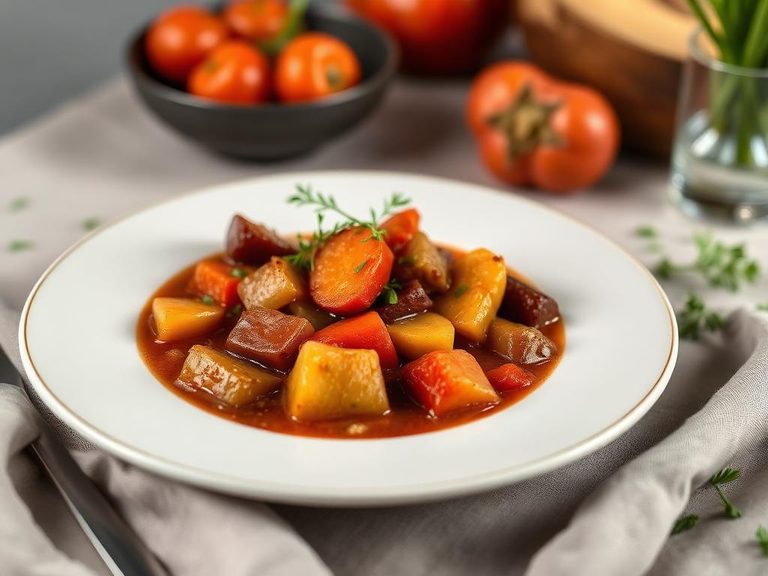
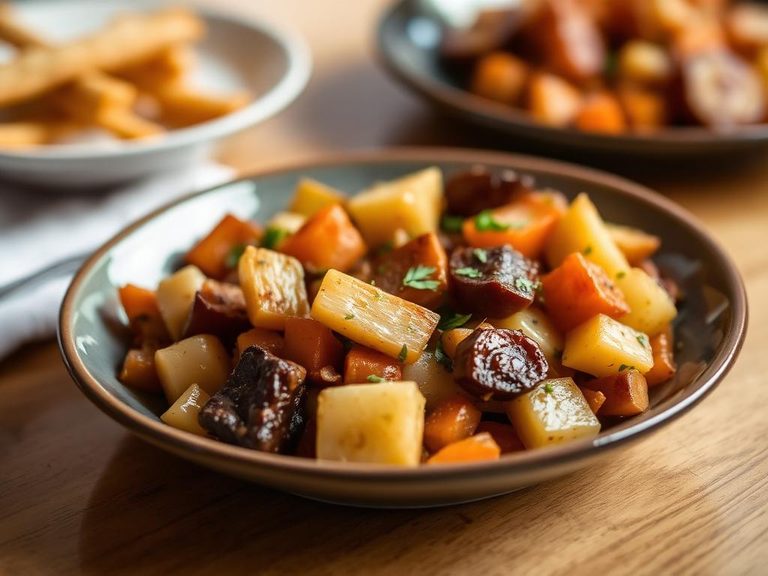
Root Vegetable Stew is a hearty, comforting dish made by slow-cooking a variety of earthy root vegetables like carrots, potatoes, parsnips, and turnips in a flavorful broth. It is a staple in many cuisines across Europe and North America, particularly valued in colder climates for its warming and nourishing qualities.
🍽️ Nutrition at a glance
This stew is primarily a source of complex carbohydrates and dietary fiber from the vegetables, with a relatively low fat and moderate protein content depending on the broth used. A typical serving provides a good dose of vitamins A and C, potassium, and antioxidants, with a rough calorie range of 200-350 per serving.
Nutrition breakdown
| Calories | 180 kcal |
| Protein | 4 g |
| Carbs | 35 g |
| Fat | 3 g |
| Fiber | 7 g |
| Sugar | 8 g |
| Sodium | 450 mg |
| Potassium | 550 mg |
| Vitamin A | 120 mcg RAE |
| Vitamin C | 15 mg |
| Vitamin K | 15 mcg |
| Folate | 40 mcg DFE |
| Manganese | 0.5 mg |
| Iron | 1.5 mg |
| Magnesium | 35 mg |
Per 1 cup (240 g) · estimated, varies by recipe
💡 What's interesting
Culturally, root vegetable stew is often associated with peasant or farmhouse cooking, representing a tradition of using humble, storable ingredients to create a satisfying meal. Nutritionally, the slow-cooking process can help break down fibers, making the nutrients more bioavailable, and the variety of colorful roots ensures a wide spectrum of phytonutrients.
🍽️ Related dishes


AI estimate may be inaccurate · Terms