

Rhubarb Jam
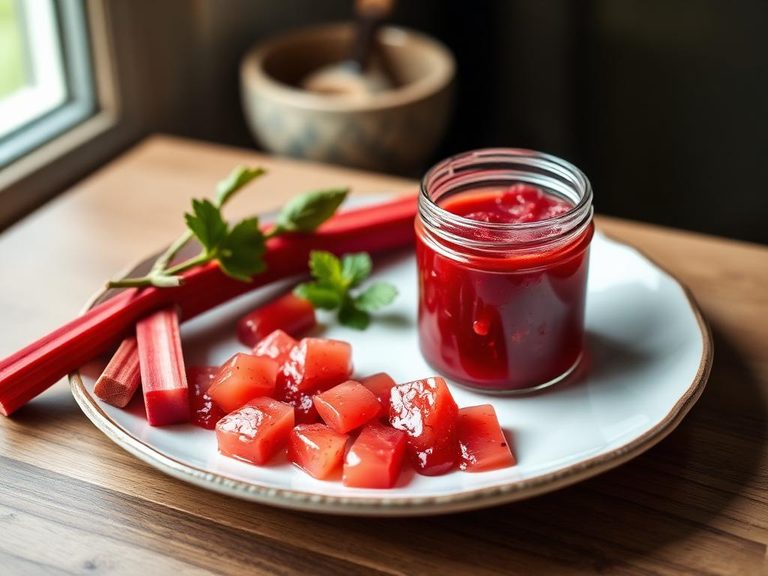
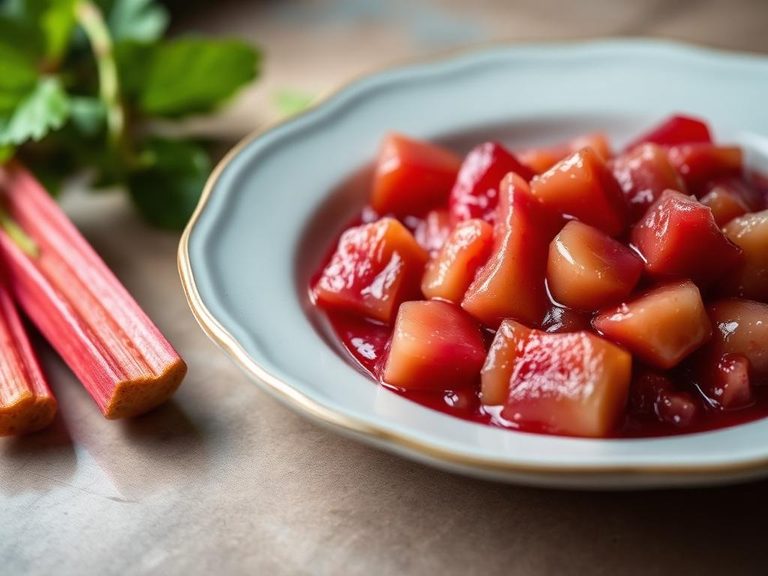
Rhubarb Jam is a sweet, tangy preserve made by cooking down chopped rhubarb stalks with sugar and often a splash of water or lemon juice until it thickens into a spreadable consistency. It's a classic homemade condiment, particularly popular in temperate regions where rhubarb grows well, such as the United Kingdom, Northern Europe, and parts of North America.
🍳 View the full Rhubarb Jam recipe →
🍽️ Nutrition at a glance
Rhubarb jam is primarily a source of carbohydrates from the added sugar and the fruit's natural sugars, with negligible fat or protein. It provides some vitamin K and antioxidants from the rhubarb, but a typical serving (about 1 tablespoon) is relatively high in calories from sugar, roughly in the 50-60 calorie range.
Nutrition breakdown
| Calories | 50 kcal |
| Protein | 0.1 g |
| Carbs | 13 g |
| Fat | 0 g |
| Fiber | 0.2 g |
| Sugar | 12 g |
| Sodium | 5 mg |
| Vitamin C | 1.5 mg |
| Vitamin K | 1.5 mcg |
| Potassium | 40 mg |
| Calcium | 10 mg |
| Manganese | 0.02 mg |
| Vitamin A | 3 mcg RAE |
| Magnesium | 2 mg |
| Phosphorus | 3 mg |
Per 1 tablespoon (20 g) · estimated, varies by recipe
💡 What's interesting
Rhubarb is botanically a vegetable (its leafy stalks are used), but it's treated as a fruit in culinary contexts, especially for jams and pies. Nutritionally, rhubarb itself is very low in calories and high in fiber, but the jam-making process significantly increases the sugar content, transforming it into a sweet treat.
🍽️ Related dishes

AI estimate may be inaccurate · Terms