

Rhubarb Compote
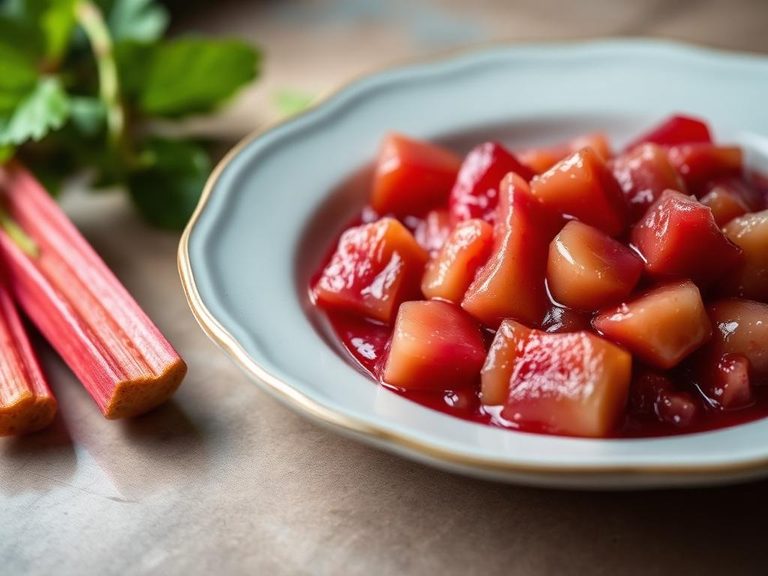
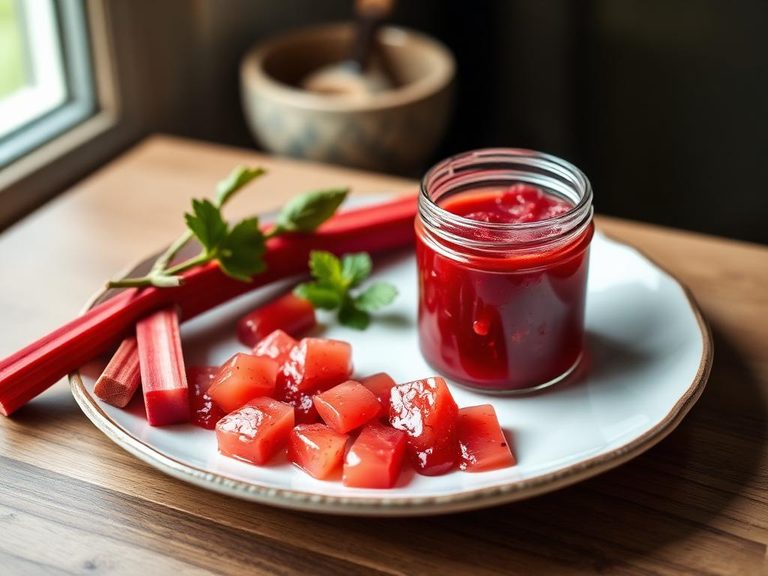
Rhubarb compote is a sweet-tart fruit preserve made by stewing chopped rhubarb stalks with sugar and often a splash of water or citrus juice until they break down into a soft, saucy consistency. Originating in Europe and popular in both British and Scandinavian cuisines, it's a classic way to preserve the short spring harvest of this unique vegetable-fruit. It's commonly served as a topping for yogurt, oatmeal, pancakes, or desserts like crumbles and custards.
🍳 View the full Rhubarb Compote recipe →
🍽️ Nutrition at a glance
Rhubarb compote is generally low in fat and protein, with its primary macronutrient being carbohydrates from added sugar and the rhubarb's natural fructose. It provides a good source of vitamin K and some vitamin C, and a typical 1/2-cup serving contains roughly 80-120 calories, depending on the sugar content.
Nutrition breakdown
| Calories | 150 kcal |
| Protein | 1.5 g |
| Carbs | 37 g |
| Fat | 0.5 g |
| Fiber | 3 g |
| Sugar | 30 g |
| Sodium | 10 mg |
| Potassium | 350 mg |
| Vitamin C | 10 mg |
| Vitamin K | 15 µg |
| Calcium | 100 mg |
| Manganese | 0.3 mg |
| Vitamin A | 10 µg |
| Vitamin B6 | 0.05 mg |
| Magnesium | 15 mg |
Per 1 cup (240 g) · estimated, varies by recipe
💡 What's interesting
Culturally, rhubarb occupies a fascinating botanical and culinary niche—it's a vegetable (the stalk of *Rheum rhabarbarum*) treated as a fruit in the kitchen, a tradition solidified in 18th-century England. Nutritionally, its vibrant pink-red stalks are rich in anthocyanin antioxidants, which contribute to both its color and potential health benefits.
🍽️ Related dishes

AI estimate may be inaccurate · Terms