Polish pierogi with cherry
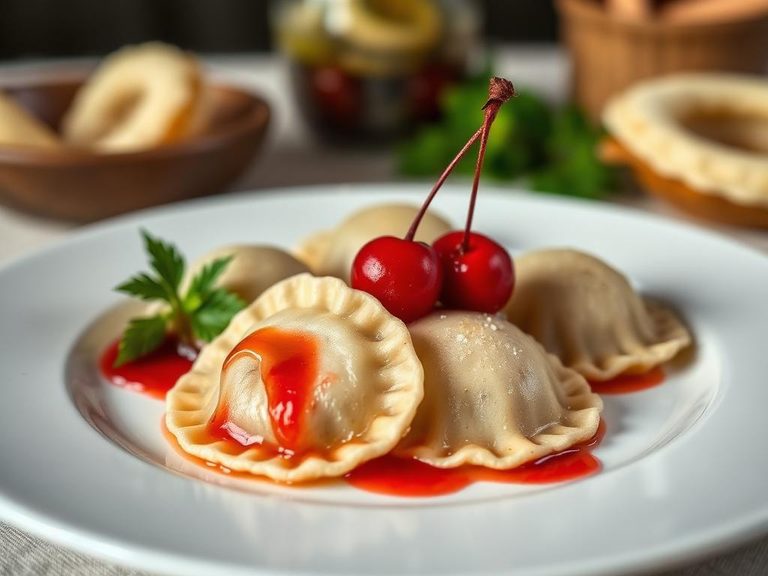
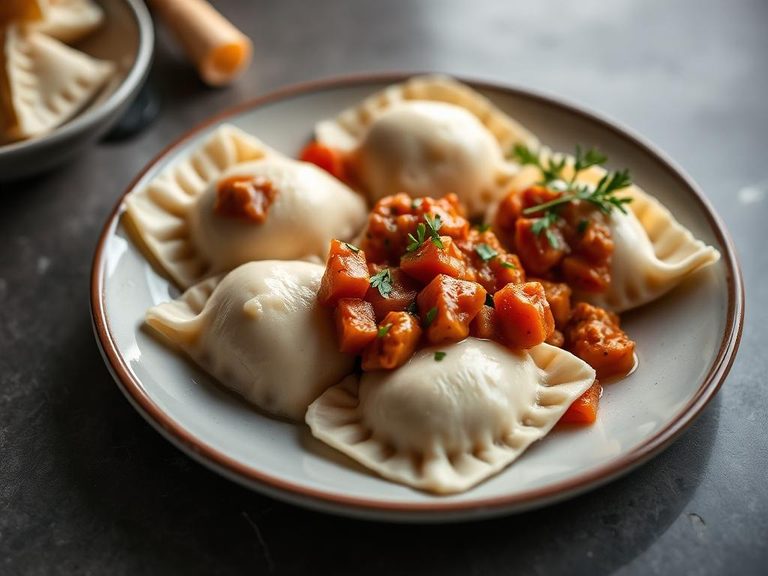
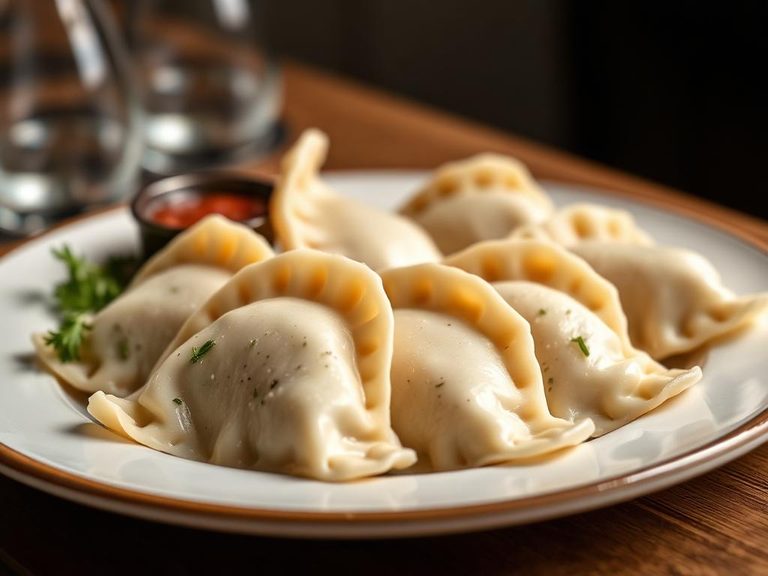
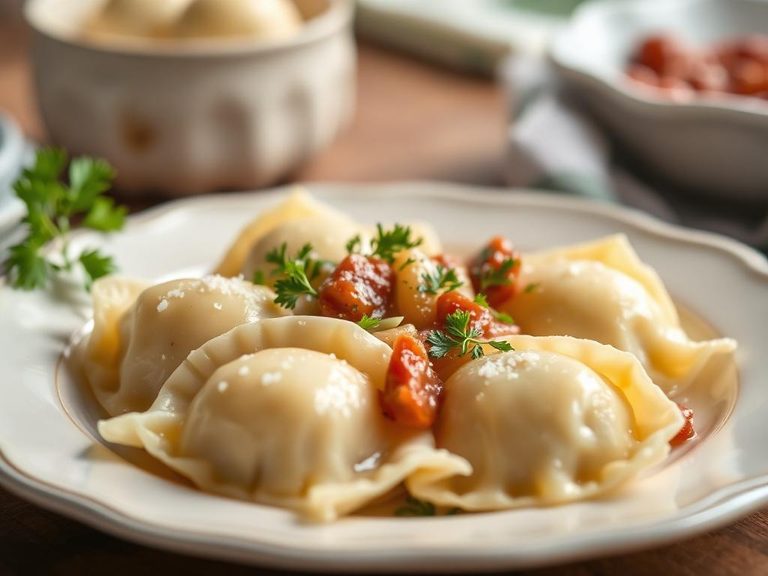
Polish pierogi with cherry are sweet dumplings made from a simple unleavened dough, filled with juicy sour cherries, then boiled and often pan-fried in butter. They are a beloved traditional dish from Poland, especially popular during the summer cherry season and at festive occasions. The filling is typically made with sour cherries, sugar, and sometimes a touch of cornstarch to thicken the juices.
🍽️ Nutrition at a glance
This dish is primarily high in carbohydrates from the dough and sugar, with a moderate amount of fat if pan-fried in butter. It provides a quick energy source, along with some vitamin C and antioxidants from the cherries. A typical serving of 4-5 pierogi contains roughly 350-450 calories.
Nutrition breakdown
| Calories | 400 kcal |
| Protein | 7 g |
| Carbs | 65 g |
| Fat | 12 g |
| Fiber | 3 g |
| Sugar | 20 g |
| Sodium | 300 mg |
| Vitamin C | 15 mg |
| Potassium | 250 mg |
| Iron | 2.5 mg |
| Calcium | 40 mg |
| Vitamin A | 20 mcg |
| Magnesium | 25 mg |
| Phosphorus | 80 mg |
| Manganese | 0.4 mg |
Per 4 pierogi (approx. 200 g) · estimated, varies by recipe
💡 What's interesting
Culturally, sweet pierogi like these highlight the versatility of the dish in Polish cuisine, which can range from savory to dessert. Nutritionally, the sour cherries offer beneficial compounds like anthocyanins, which are known for their anti-inflammatory properties.