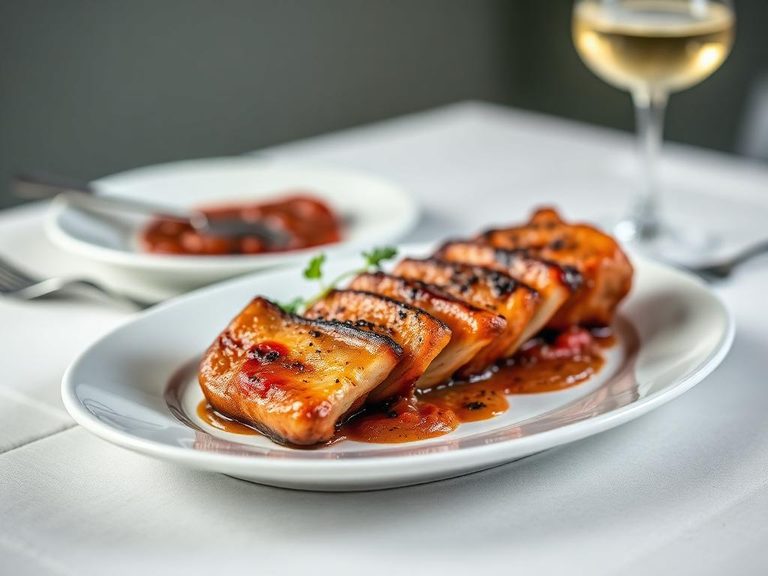
Orecchie di Maiale
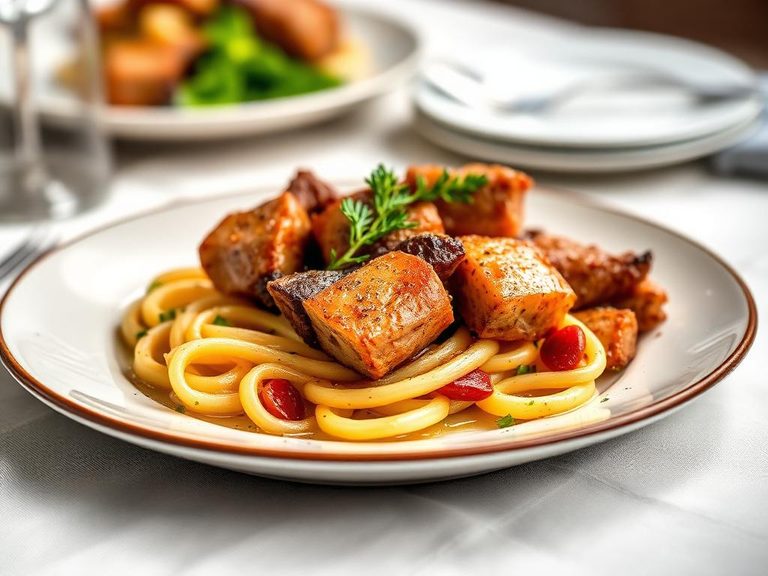
Orecchie di Maiale, or 'pig's ears,' is a traditional Italian antipasto or street food dish, typically braised or fried until crispy on the outside and tender within. The primary ingredient is pig's ears, often seasoned with garlic, bay leaves, and vinegar, and served sliced with olive oil and herbs. It is a specialty of central and southern Italian regions like Tuscany and Sicily.
🍽️ Nutrition at a glance
This dish is high in protein and fat, with very few carbohydrates, and is a notable source of collagen, gelatin, and minerals like calcium and phosphorus. A typical serving contains approximately 250-350 calories.
Nutrition breakdown
| Calories | 310 kcal |
| Protein | 18 g |
| Carbs | 2 g |
| Fat | 26 g |
| Fiber | 0 g |
| Sugar | 0 g |
| Sodium | 480 mg |
| Collagen | High (primary structural protein) |
| Calcium | 95 mg |
| Phosphorus | 180 mg |
| Iron | 1.5 mg |
| Zinc | 2.5 mg |
| Vitamin B12 | 0.8 µg |
| Selenium | 12 µg |
| Cholesterol | 85 mg |
Per 1 serving (150 g), about 3-4 slices · estimated, varies by recipe
💡 What's interesting
Culturally, it is a prime example of 'cucina povera' (peasant cooking), transforming a humble, often discarded part into a flavorful delicacy. Nutritionally, its high collagen content is prized for potential benefits to skin, joint, and gut health.