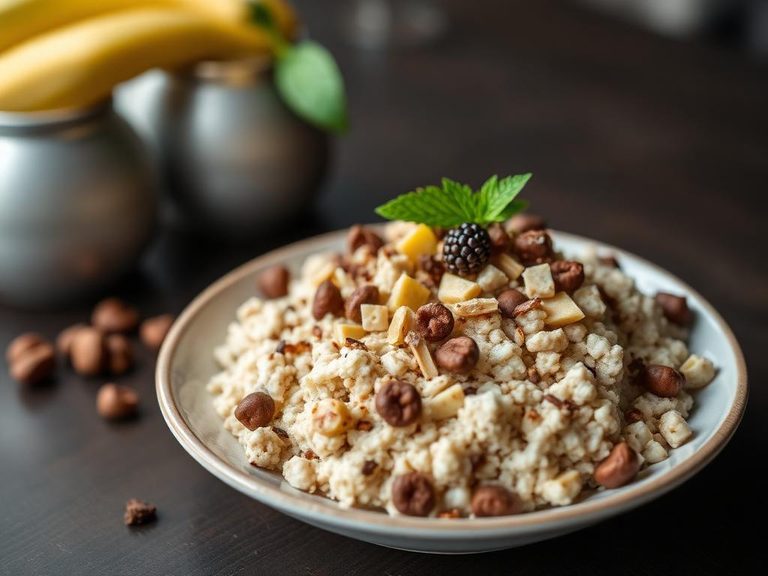
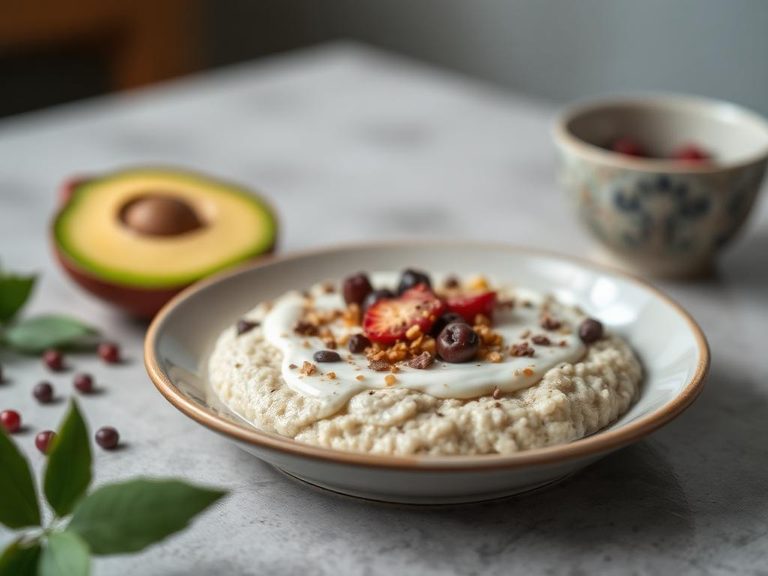
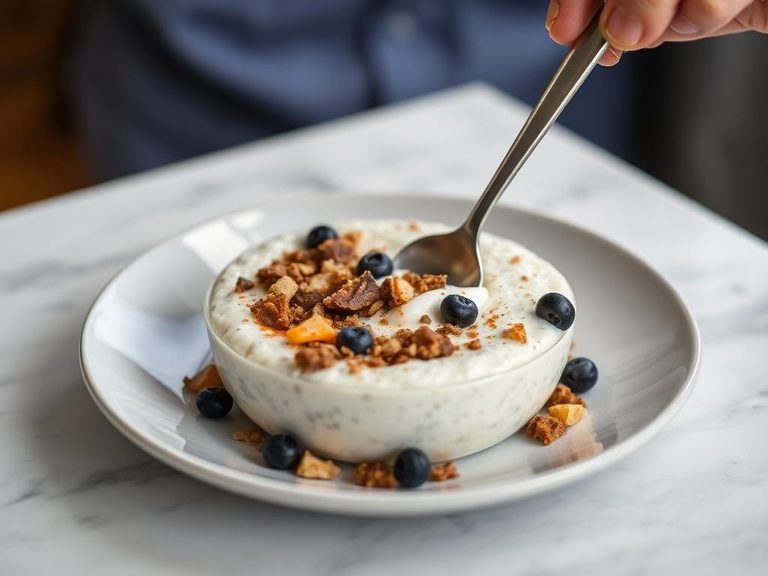
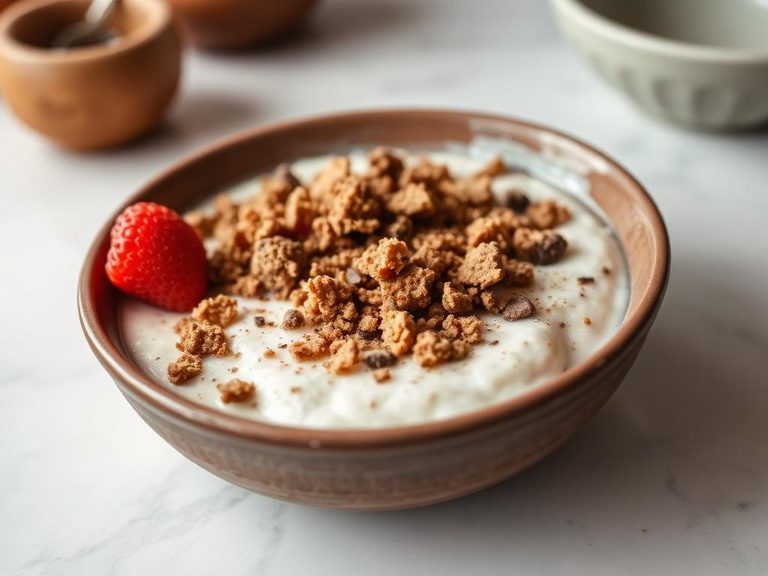
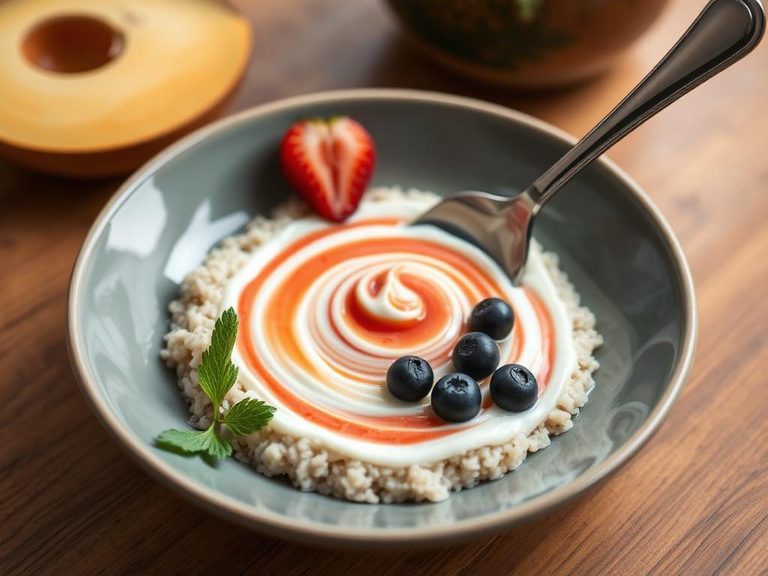
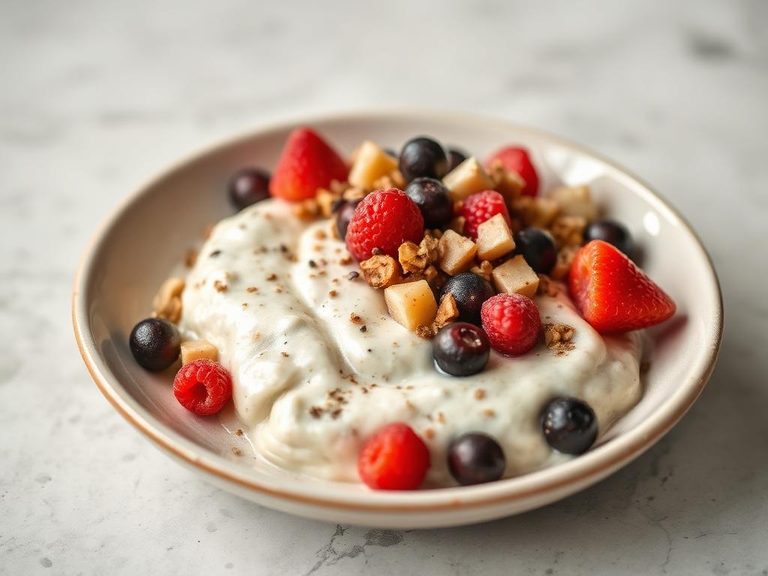
Mixed into yogurt or oatmeal for a fruity flavor boost.
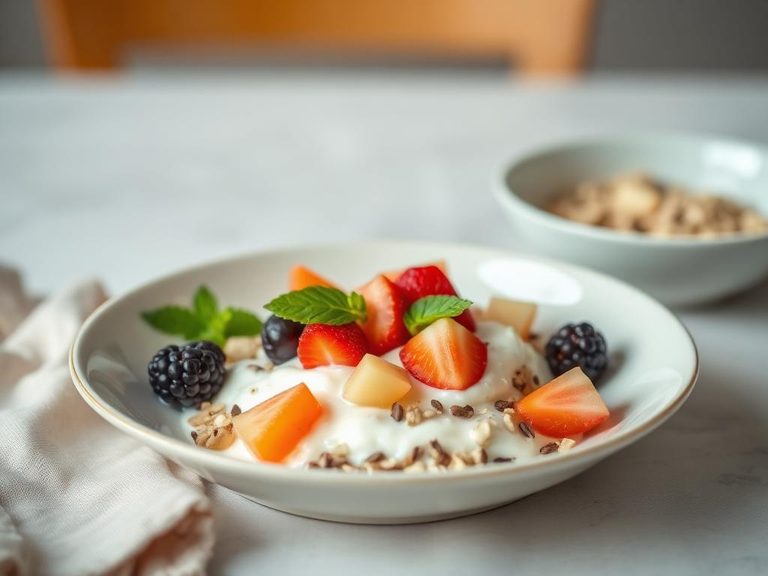
This is a versatile preparation method rather than a single dish, where fresh or frozen fruit is mixed into creamy yogurt or warm oatmeal to add natural sweetness, texture, and a burst of flavor. The base ingredients are simply the fruit of choice (like berries, banana, or mango) combined with plain yogurt or cooked oats. This style of eating is common worldwide, from American breakfast bowls to European muesli.
🍽️ Nutrition at a glance
The dish is typically moderate in carbohydrates, primarily from the fruit's natural sugars and the oats or yogurt's lactose, with a good amount of dietary fiber. It provides key nutrients like vitamin C, potassium, and probiotics (if using live-culture yogurt), and a standard serving usually ranges from 150 to 250 calories, depending on the specific ingredients and portion sizes.
Nutrition breakdown
| Calories | 190 kcal |
| Protein | 18 g |
| Carbs | 22 g |
| Fat | 5 g |
| Fiber | 4 g |
| Sugar | 14 g |
| Sodium | 60 mg |
| Calcium | 200 mg |
| Potassium | 380 mg |
| Vitamin C | 15 mg |
| Phosphorus | 220 mg |
| Vitamin B12 | 1.2 mcg |
| Riboflavin (B2) | 0.3 mg |
| Magnesium | 30 mg |
| Zinc | 1.5 mg |
Per 1 cup (240 g) of plain Greek yogurt mixed with 1/2 cup (75 g) of mixed berries · estimated, varies by recipe
💡 What's interesting
This preparation is nutritionally interesting because it combines the prebiotic fiber from fruit and oats with the probiotics in yogurt, creating a synergistic effect that supports gut health. Culturally, it represents a simple, adaptable concept found in many cuisines, from Turkish yogurt with fruit to American overnight oats.