Middle Eastern confectionery
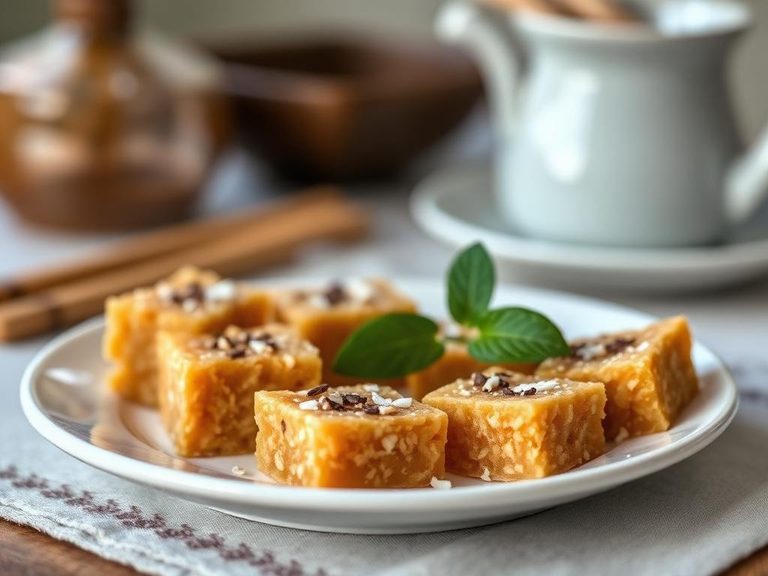
Halva is a dense, sweet confection popular across the Middle East, Central Asia, and the Mediterranean. It typically has a crumbly, fudge-like texture and is most commonly made from a base of tahini (sesame paste) or semolina, sweetened with sugar or honey. Variations include ingredients like nuts, dates, or pistachios, reflecting local culinary traditions.
🍽️ Nutrition at a glance
Halva is very high in carbohydrates from sugar and fats from tahini or oil, with a moderate amount of protein. A typical serving provides a quick energy boost and is a source of minerals like iron and magnesium.
Nutrition breakdown
| Calories | 420 kcal |
| Protein | 10 g |
| Carbs | 45 g |
| Fat | 24 g |
| Fiber | 3 g |
| Sugar | 30 g |
| Sodium | 60 mg |
| Iron | 3.5 mg |
| Magnesium | 80 mg |
| Calcium | 120 mg |
| Phosphorus | 200 mg |
| Copper | 0.5 mg |
| Manganese | 1.2 mg |
| Thiamine (B1) | 0.2 mg |
| Selenium | 8 mcg |
Per 1 piece (84 g) · estimated, varies by recipe
💡 What's interesting
Halva's unique texture comes from a process where hot sugar syrup is poured into the tahini, causing it to seize into a solid, crumbly mass. Nutritionally, the sesame base offers a good plant-based source of calcium and healthy fats.