Medication Delivery Vehicle
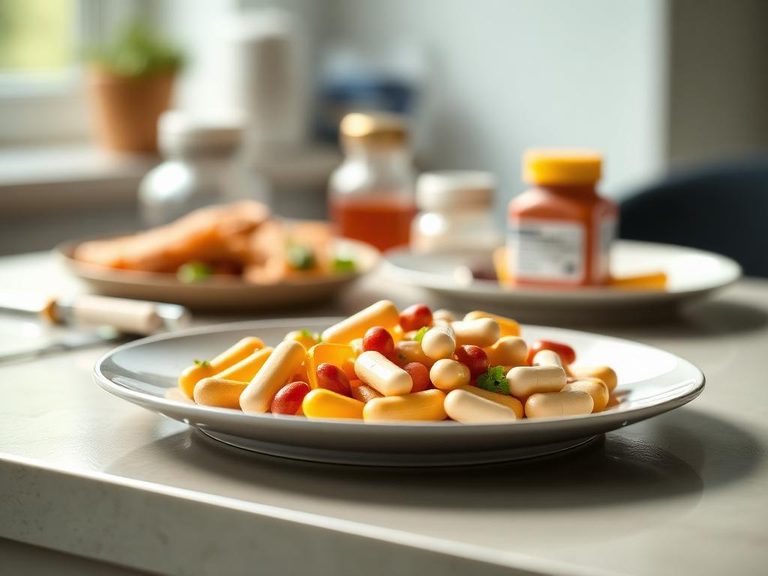
Medication Delivery Vehicle is a whimsical, non-medical term often used to describe a small, flavorful food item designed to help someone swallow a pill or supplement. It typically consists of a soft, sticky, or gelatinous base like peanut butter, honey, or a piece of soft fruit, which is used to encase the pill. This concept is a practical home remedy found in households worldwide.
🍽️ Nutrition at a glance
As a delivery method, its nutritional profile depends entirely on the chosen vehicle. A teaspoon of peanut butter adds about 30-50 calories with healthy fats and protein, while a small piece of banana adds about 10-15 calories with carbs and potassium. It is not a significant source of nutrients on its own, but rather a functional tool.
Nutrition breakdown
| Calories | 95 kcal |
| Protein | 4 g |
| Carbs | 3 g |
| Fat | 8 g |
| Fiber | 1 g |
| Sugar | 1 g |
| Sodium | 75 mg |
| Vitamin E | 1.5 mg |
| Niacin (B3) | 2.5 mg |
| Magnesium | 45 mg |
| Phosphorus | 65 mg |
| Manganese | 0.5 mg |
| Copper | 0.2 mg |
Per 1 tablespoon (16 g) of creamy peanut butter · estimated, varies by recipe
💡 What's interesting
The creativity behind a 'Medication Delivery Vehicle' highlights a universal human challenge—making something unpleasant easier to consume. Nutritionally, the best vehicles are often those that are soft, palatable, and can coat the pill effectively, turning a moment of necessity into a minor, tasty ritual.