Lotus Seed Mooncake
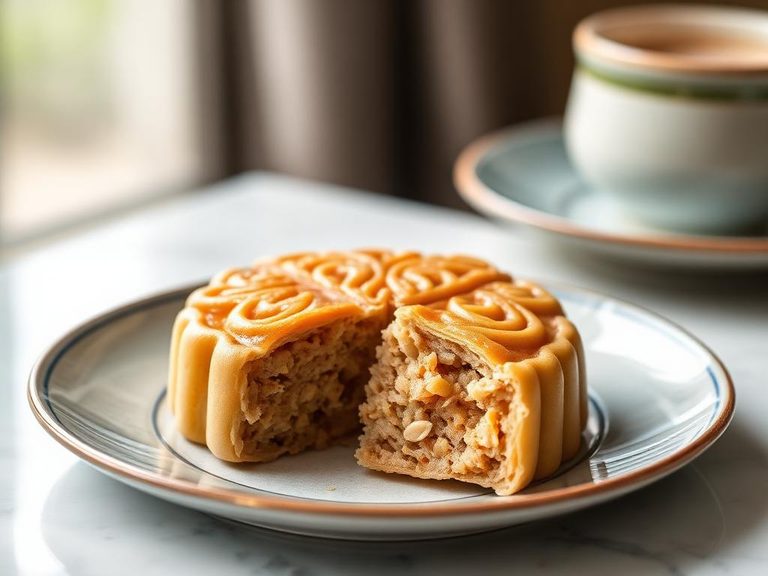
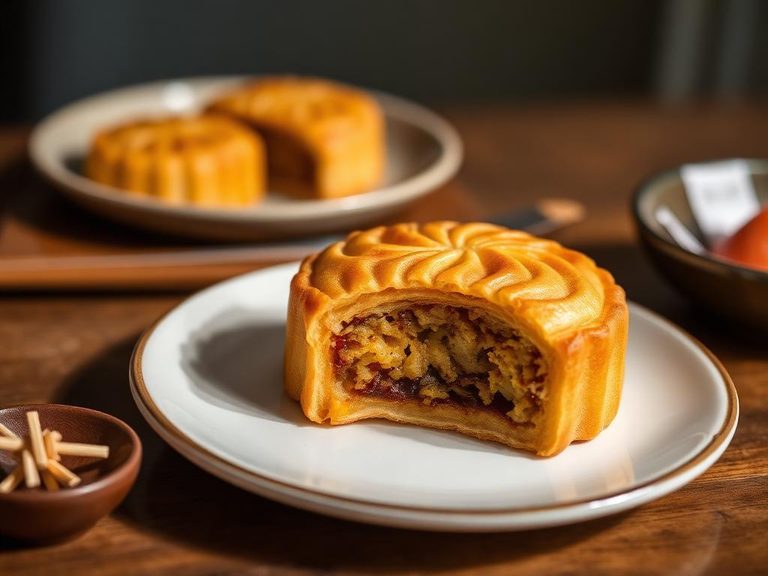
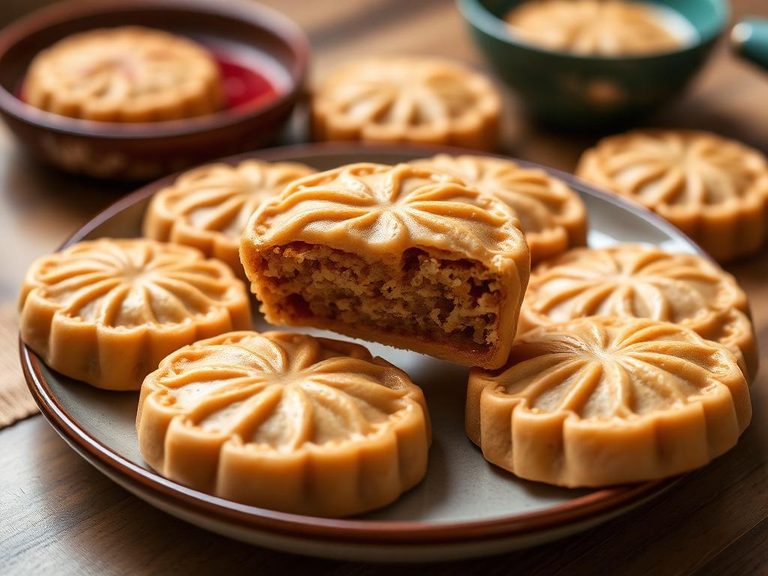
Lotus Seed Mooncake is a traditional Chinese pastry, most popular during the Mid-Autumn Festival, featuring a dense, sweet filling made from lotus seed paste encased in a thin, tender, and often golden-brown crust. The filling is typically made from dried lotus seeds, sugar, and oil, sometimes with a salted duck egg yolk center to symbolize the full moon.
🍽️ Nutrition at a glance
This dessert is high in carbohydrates and fat, providing a concentrated source of energy. A single mooncake is calorie-dense, primarily from sugars and oils, and offers small amounts of iron and potassium from the lotus seeds.
Nutrition breakdown
| Calories | 680 kcal |
| Protein | 8 g |
| Carbs | 90 g |
| Fat | 32 g |
| Fiber | 3 g |
| Sugar | 55 g |
| Sodium | 180 mg |
| Iron | 3.5 mg |
| Potassium | 250 mg |
| Magnesium | 45 mg |
| Phosphorus | 120 mg |
| Manganese | 1.2 mg |
| Copper | 0.3 mg |
| Selenium | 5 mcg |
| Vitamin B1 (Thiamine) | 0.1 mg |
Per 1 piece (185 g) · estimated, varies by recipe
💡 What's interesting
Culturally, the round shape of the mooncake symbolizes family reunion and completeness, making it a centerpiece for sharing during the festival. Nutritionally, the lotus seed paste itself contains beneficial compounds like antioxidants and minerals, though these are overshadowed by the high sugar and fat content of the traditional pastry.