

Lily Bulb and Pork Soup
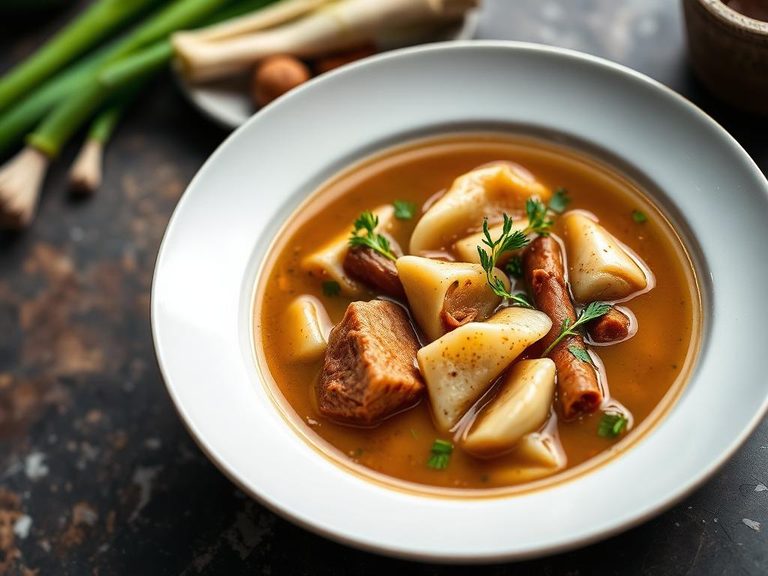
Lily Bulb and Pork Soup is a traditional Chinese soup known for its delicate, slightly sweet flavor and soothing properties. It features tender slices of pork (often lean or ribs) simmered with dried lily bulb petals, and is frequently enhanced with ingredients like goji berries, red dates, and ginger. This dish is particularly popular in Cantonese cuisine and is often enjoyed as a nourishing tonic, especially during dry or cooler seasons.
🍽️ Nutrition at a glance
This soup is generally low in carbohydrates and fat, with a moderate protein content from the pork. It is a good source of potassium and provides various vitamins and minerals, with a typical serving containing roughly 150-200 calories.
Nutrition breakdown
| Calories | 180 kcal |
| Protein | 15 g |
| Carbs | 12 g |
| Fat | 7 g |
| Fiber | 2 g |
| Sugar | 4 g |
| Sodium | 450 mg |
| Potassium | 350 mg |
| Phosphorus | 180 mg |
| Iron | 2 mg |
| Vitamin B6 | 0.3 mg |
| Niacin (B3) | 4 mg |
| Selenium | 15 mcg |
| Zinc | 2.5 mg |
| Copper | 0.15 mg |
Per 1 cup (240 g) · estimated, varies by recipe
💡 What's interesting
Culturally, the lily bulb is prized in Chinese medicine for its believed ability to moisten the lungs and calm the spirit, making this soup a comforting remedy for dry coughs or stress. Nutritionally, the lily bulb adds a unique, starchy texture and is a source of dietary fiber and antioxidants, while the slow-cooking process helps extract nutrients from the pork into the broth.
🍽️ Related dishes

AI estimate may be inaccurate · Terms