Korean Tteokbokki
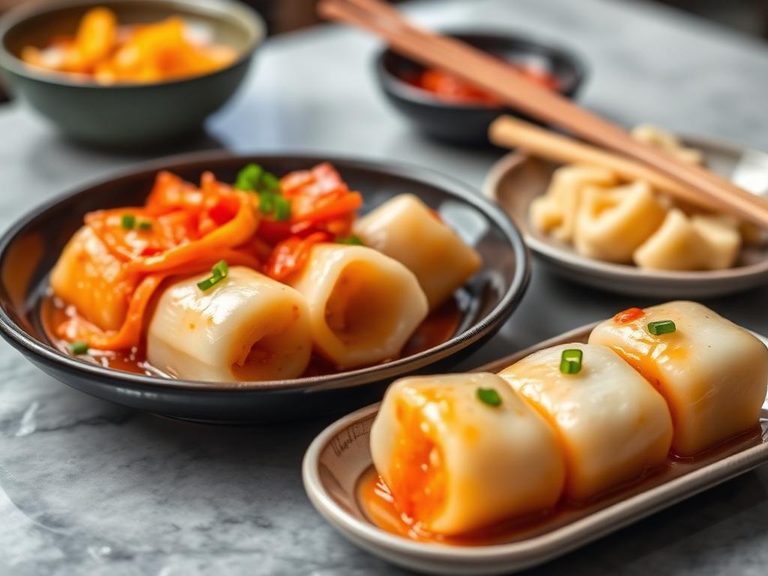
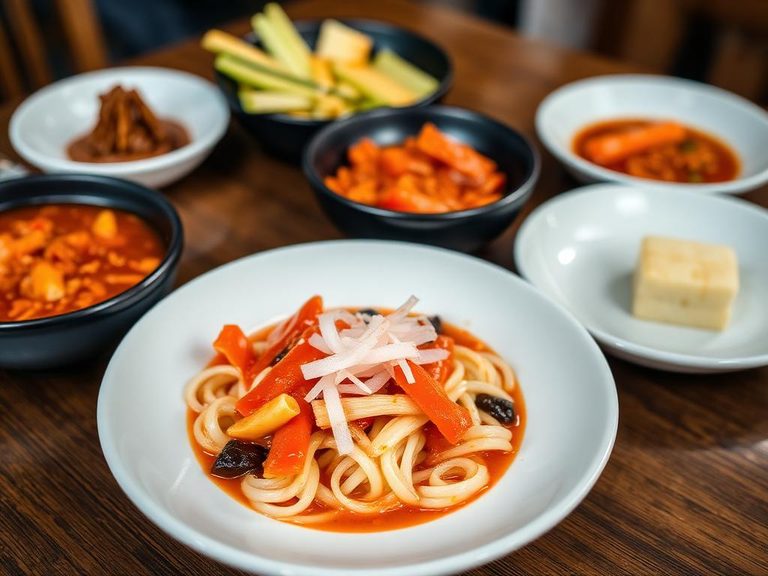
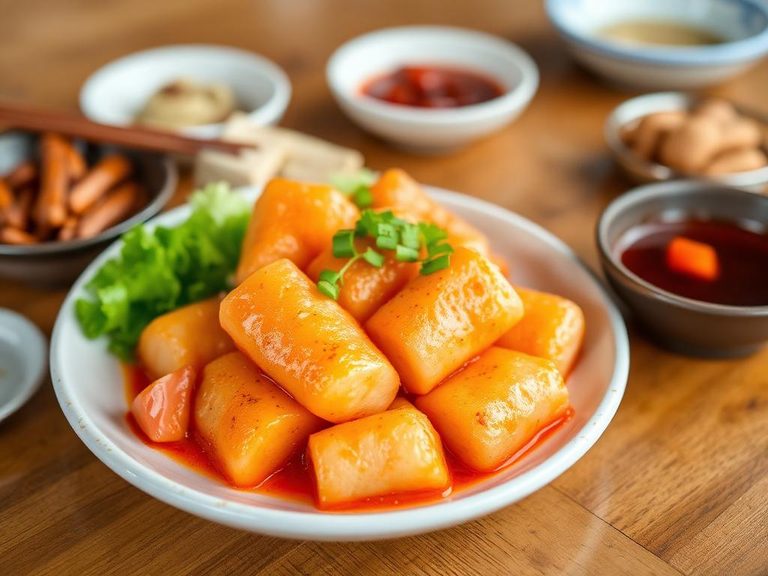
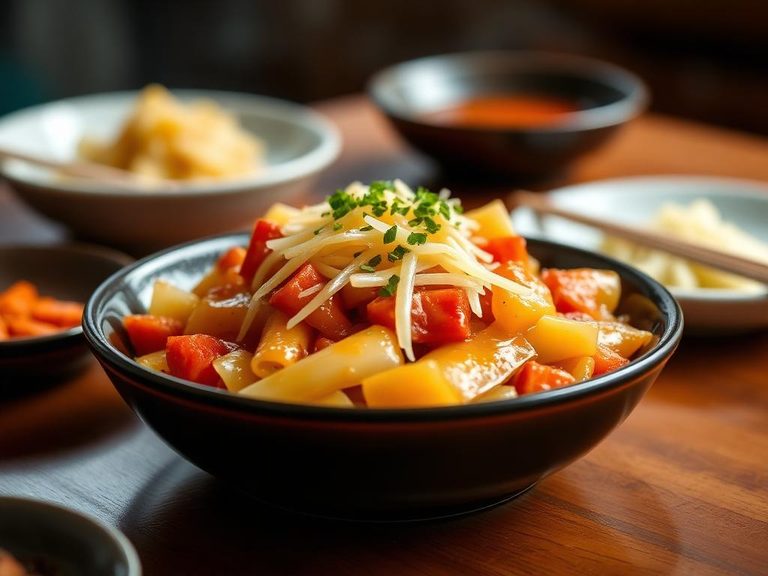
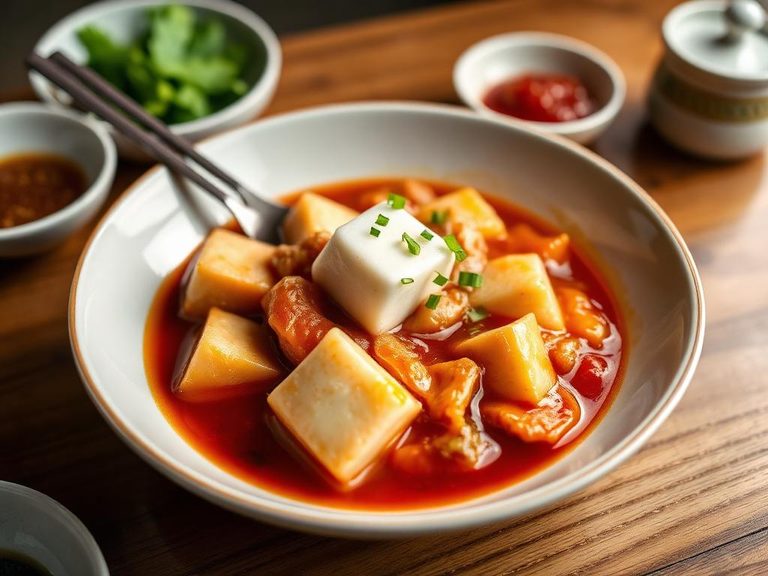
Tteokbokki is a beloved Korean street food featuring chewy cylindrical rice cakes simmered in a vibrant, spicy-sweet sauce. Its signature red color typically comes from gochujang (fermented chili paste), and common additions include fish cakes, boiled eggs, and scallions. Originating from the royal court cuisine of the Joseon dynasty, it evolved into a popular, affordable snack in the 20th century.
🍽️ Nutrition at a glance
This dish is primarily a high-carbohydrate meal from the rice cakes, with moderate protein if fish cakes and eggs are included, and relatively low fat unless prepared with added oils. It provides energy and some B vitamins, with a typical serving containing around 400-600 calories, depending on portion size and sauce richness.
Nutrition breakdown
| Calories | 450 kcal |
| Protein | 8 g |
| Carbs | 75 g |
| Fat | 12 g |
| Fiber | 3 g |
| Sugar | 10 g |
| Sodium | 1200 mg |
| Potassium | 350 mg |
| Iron | 3 mg |
| Calcium | 100 mg |
| Vitamin A | 80 mcg |
| Vitamin C | 10 mg |
| Niacin (B3) | 2 mg |
| Magnesium | 40 mg |
| Phosphorus | 120 mg |
Per 1 cup (240 g) · estimated, varies by recipe
💡 What's interesting
Culturally, tteokbokki is a quintessential example of Korean 'bunsik' (snack food) culture, symbolizing communal, affordable, and comforting street-side dining. Its unique texture comes from the 'tteok' (rice cake), which is made from non-glutinous rice flour, giving it a distinctive chewy, bouncy quality that's central to its appeal.