

Jute Leaf Stew
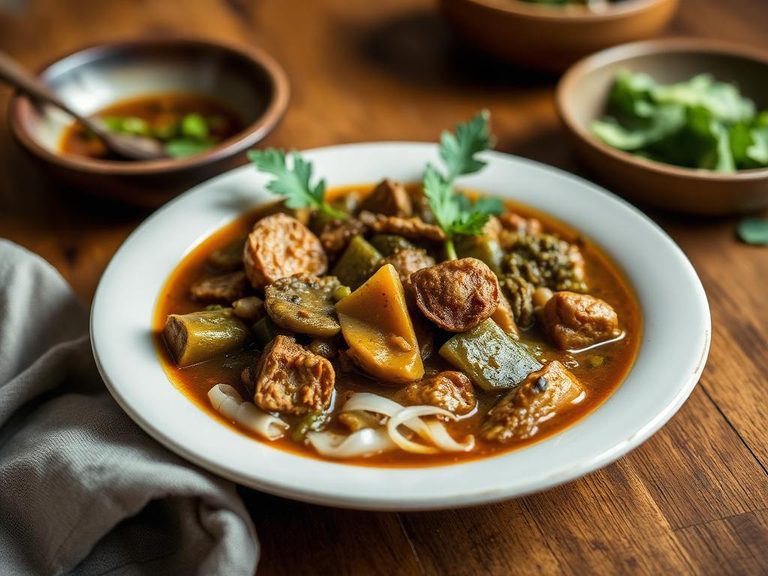
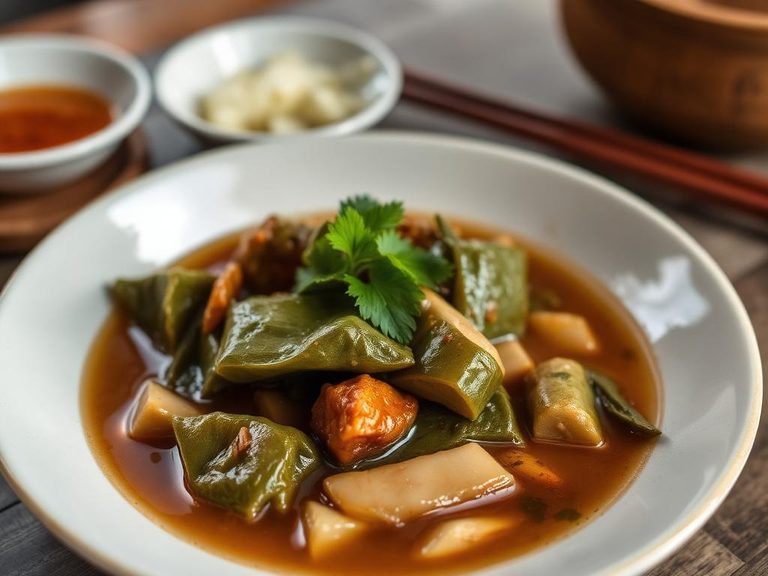
Jute Leaf Stew, known as 'Ewedu' in Yoruba or 'Rauwah' in Hausa, is a popular West African soup made from the leaves of the jute plant (Corchorus olitorius). It is typically prepared by boiling the leaves until they form a mucilaginous (slimy) texture, often blended with ingredients like locust beans (iru), crayfish, peppers, and various seasonings, and is commonly served alongside staples like pounded yam or fufu.
🍽️ Nutrition at a glance
This dish is low in fat and carbohydrates but provides a good source of plant-based protein, especially when cooked with additions like crayfish or locust beans. It is particularly rich in vitamins A and C, calcium, and iron, with a typical serving containing roughly 80-120 calories.
Nutrition breakdown
| Calories | 100 kcal |
| Protein | 7 g |
| Carbs | 12 g |
| Fat | 2.5 g |
| Fiber | 4 g |
| Sugar | 2 g |
| Sodium | 350 mg |
| Vitamin A | 450 µg RAE |
| Vitamin C | 30 mg |
| Calcium | 120 mg |
| Iron | 3.5 mg |
| Potassium | 350 mg |
| Magnesium | 45 mg |
| Folate | 80 µg |
| Vitamin K | 45 µg |
Per 1 cup (240 g) · estimated, varies by recipe
💡 What's interesting
Culturally, the unique slimy texture of the stew is highly prized in West African cuisine and is considered essential for properly eating certain swallows like amala. Nutritionally, the jute leaf itself is a powerhouse, often called a 'super vegetable' for its high antioxidant content and potential digestive benefits from its soluble fiber.
🍽️ Related dishes


AI estimate may be inaccurate · Terms