

Homemade yogurt or kefir
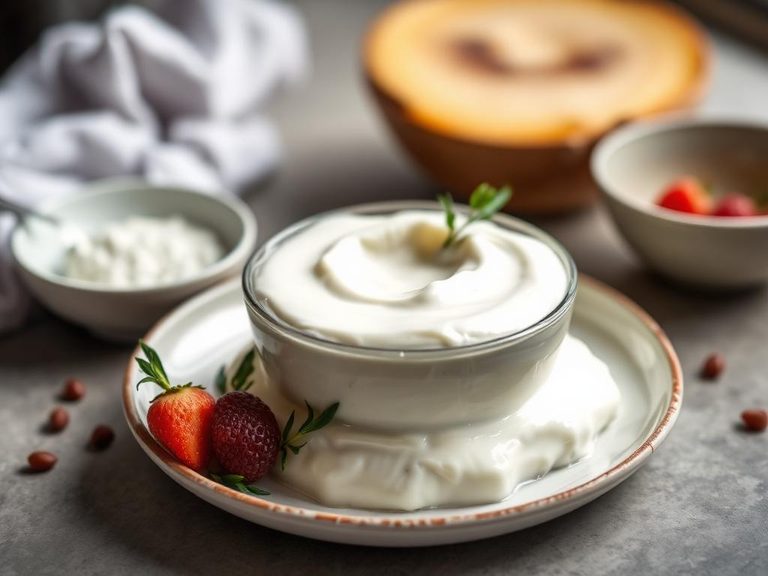
Homemade yogurt and kefir are fermented dairy beverages or semi-solids made by adding live bacterial and yeast cultures to milk. They are staples in many global cuisines, from the Middle East and the Balkans to the Caucasus region and Eastern Europe. The process transforms milk into a tangy, creamy product with a unique texture and flavor.
🍳 View the full Homemade yogurt or kefir recipe →
🍽️ Nutrition at a glance
This dish is a good source of protein and calcium, with a moderate amount of fat depending on the milk used. A typical one-cup serving contains around 100-150 calories, and it is generally low in carbohydrates while providing beneficial probiotics for gut health.
Nutrition breakdown
| Calories | 150 kcal |
| Protein | 8 g |
| Carbs | 12 g |
| Fat | 8 g |
| Fiber | 0 g |
| Sugar | 12 g |
| Sodium | 105 mg |
| Calcium | 300 mg |
| Phosphorus | 230 mg |
| Potassium | 380 mg |
| Vitamin B12 | 0.8 mcg |
| Riboflavin (B2) | 0.3 mg |
| Magnesium | 30 mg |
| Zinc | 1.0 mg |
| Selenium | 9 mcg |
Per 1 cup (240 g) · estimated, varies by recipe
💡 What's interesting
Culturally, these fermented milks have been preserved and consumed for thousands of years, often as a way to extend the shelf life of milk. Nutritionally, the fermentation process breaks down lactose, making them easier to digest for many people with lactose intolerance, and they are renowned for their probiotic content which supports a healthy microbiome.
🍽️ Related dishes







AI estimate may be inaccurate · Terms