

Kefir

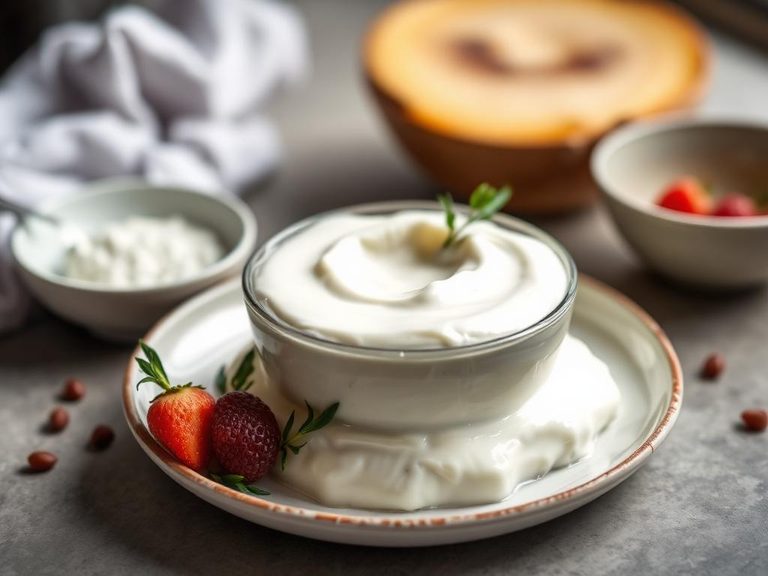
Kefir is a fermented milk drink with a creamy, slightly tangy flavor and a thin, pourable consistency. It's made by adding kefir grains—a symbiotic culture of bacteria and yeast—to milk, which ferments over 24 hours. Originating from the Caucasus region, it's a traditional staple often enjoyed as a refreshing beverage.
🍽️ Nutrition at a glance
Kefir is a good source of protein and typically contains less lactose than regular milk due to fermentation. It provides calcium, B vitamins, and probiotics, with a calorie range of roughly 100-150 per cup depending on the milk fat content.
Nutrition breakdown
| Calories | 110 kcal |
| Protein | 8 g |
| Carbs | 12 g |
| Fat | 3 g |
| Fiber | 0 g |
| Sugar | 12 g |
| Sodium | 105 mg |
| Calcium | 300 mg |
| Phosphorus | 230 mg |
| Potassium | 380 mg |
| Vitamin B12 | 0.5 mcg |
| Riboflavin (B2) | 0.3 mg |
| Magnesium | 30 mg |
| Zinc | 1.0 mg |
| Vitamin A | 50 IU |
Per 1 cup (240 g) · estimated, varies by recipe
💡 What's interesting
Kefir grains are a living, symbiotic culture that can be reused indefinitely to make new batches, making it a sustainable and self-perpetuating food. It's often called 'champagne of milk' for its effervescent quality and is valued in many cultures for its potential digestive benefits.
🍽️ Related dishes






AI estimate may be inaccurate · Terms