

Halloween Trick-or-Treat Bag
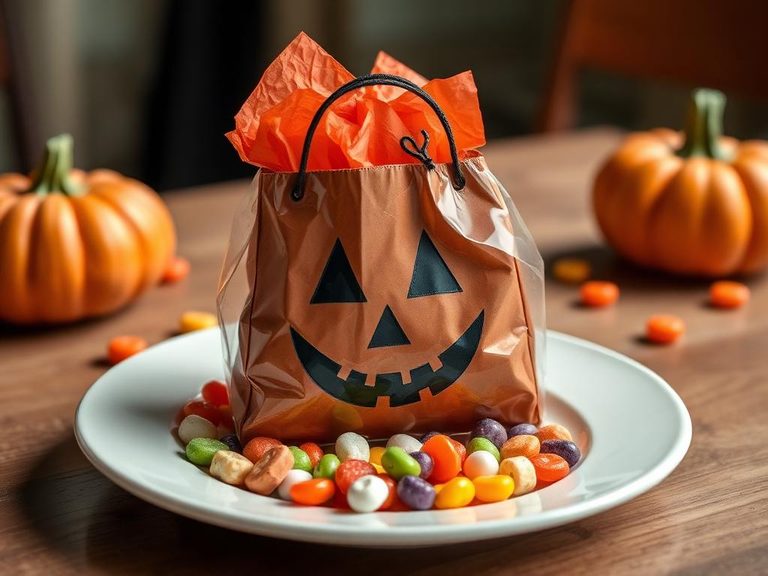
The 'Halloween Trick-or-Treat Bag' is not a single dish but a collection of assorted candies and sweets, typically including chocolate bars, hard candies, and gummy treats. These confections are primarily composed of sugar, corn syrup, cocoa, and various flavorings, and are a staple of the Halloween tradition in the United States and Canada. The concept originated from the practice of children dressing in costumes and going door-to-door to collect treats on October 31st.
🍽️ Nutrition at a glance
This treat is exceptionally high in carbohydrates, specifically added sugars, and often contains significant amounts of fat from chocolate and oils, with negligible protein. A typical serving (e.g., a fun-size candy bar) can range from 70 to 150 calories, providing a quick energy spike but little nutritional value.
Nutrition breakdown
| Calories | 600 kcal |
| Protein | 4 g |
| Carbs | 95 g |
| Fat | 25 g |
| Fiber | 2 g |
| Sugar | 70 g |
| Sodium | 150 mg |
| Sugars | 70 g |
| Saturated Fat | 10 g |
| Calcium | 20 mg |
| Iron | 0.5 mg |
| Potassium | 100 mg |
| Vitamin C | 0 mg |
| Vitamin A | 0 µg |
| Cholesterol | 5 mg |
Per 1 bag (approx. 150 g) · estimated, varies by recipe
💡 What's interesting
Culturally, the trick-or-treat bag represents a modern, commercialized evolution of ancient Samhain traditions, where food was left out for spirits. Nutritionally, it's unique as a 'sometimes food' that serves as a primary source of added sugar for many children during the fall season, highlighting the tension between festive indulgence and dietary guidelines.
🍽️ Related dishes




AI estimate may be inaccurate · Terms