

Gonad fry
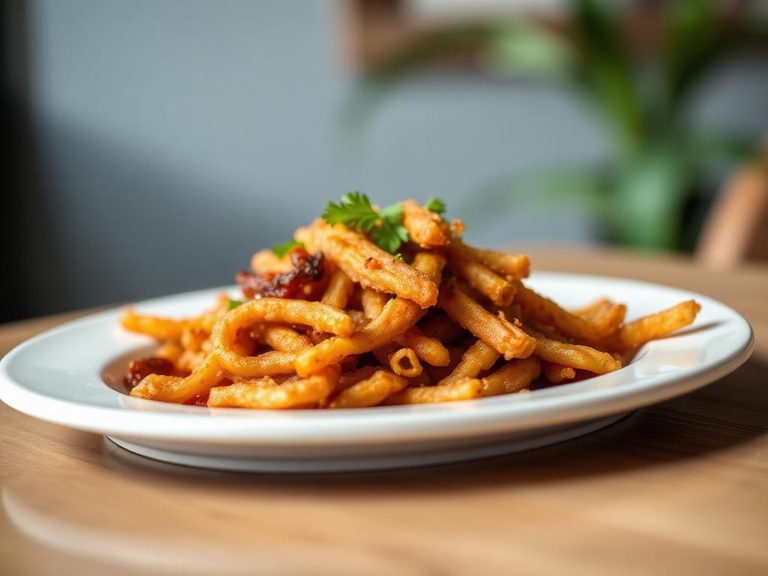
Gonad fry is a popular seafood dish, particularly in coastal regions of Japan (where it's known as 'shirako') and parts of Southeast Asia. It typically consists of the fried reproductive organs (milt or roe) of fish like cod, pufferfish, or salmon, often prepared with a light batter or flour coating and pan-fried until crispy.
🍽️ Nutrition at a glance
This dish is very high in protein and healthy fats, with minimal carbohydrates. It is a rich source of omega-3 fatty acids, vitamin B12, and selenium, with a rough calorie estimate of 250-350 kcal per 100g serving.
Nutrition breakdown
| Calories | 240 kcal |
| Protein | 18 g |
| Carbs | 5 g |
| Fat | 16 g |
| Fiber | 0.5 g |
| Sugar | 0.5 g |
| Sodium | 320 mg |
| Vitamin B12 | 12 mcg |
| Selenium | 45 mcg |
| Phosphorus | 280 mg |
| Omega-3 (EPA+DHA) | 1.2 g |
| Vitamin D | 6 mcg |
| Zinc | 2.5 mg |
| Vitamin B2 (Riboflavin) | 0.4 mg |
| Choline | 85 mg |
Per 1 piece (approx. 80 g) · estimated, varies by recipe
💡 What's interesting
Culinarily, it's prized for its unique creamy, custard-like interior contrasting with a crispy exterior. Nutritionally, fish gonads are a highly concentrated source of certain nutrients, making them a traditional delicacy believed to have vitality-boosting properties.
🍽️ Related dishes

AI estimate may be inaccurate · Terms