Glug-marinated meats
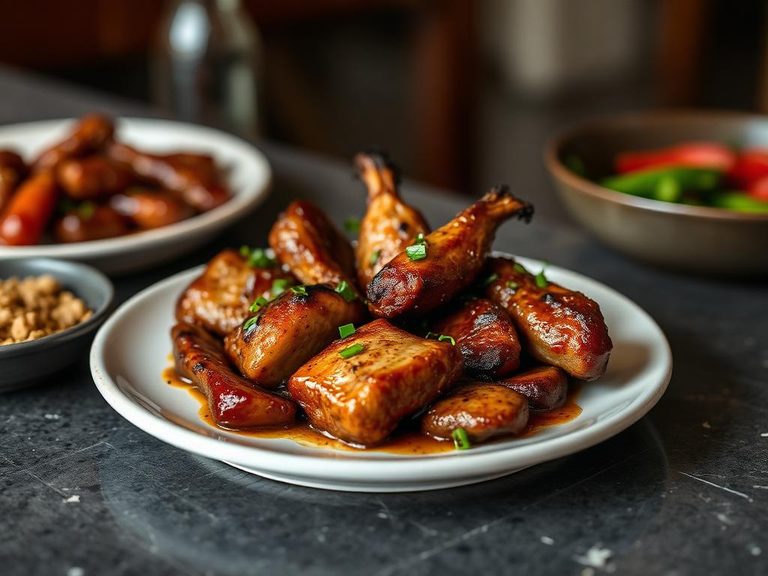
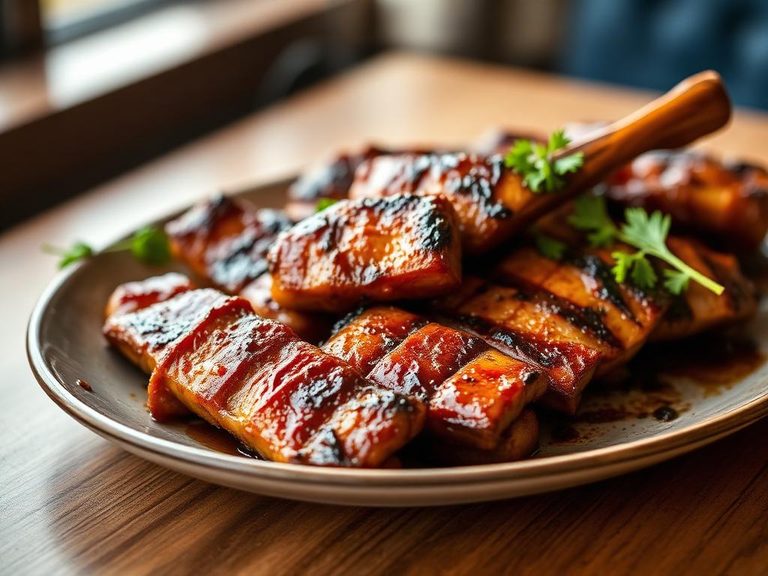
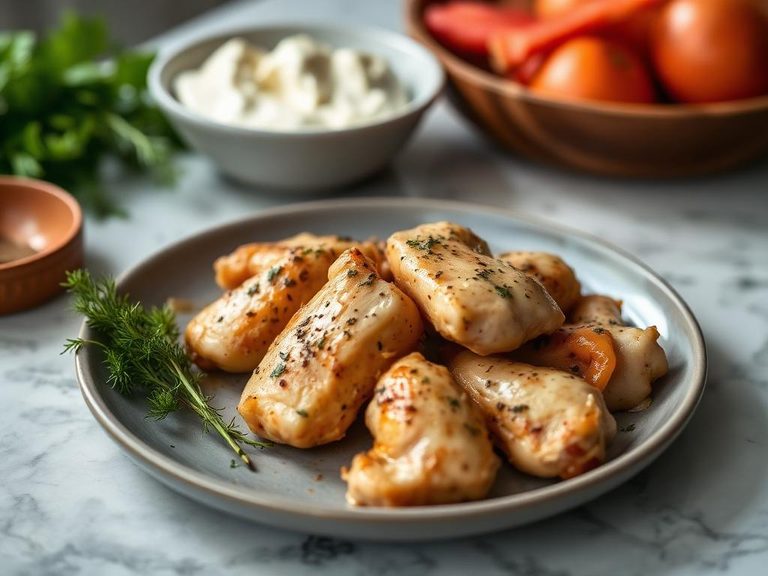
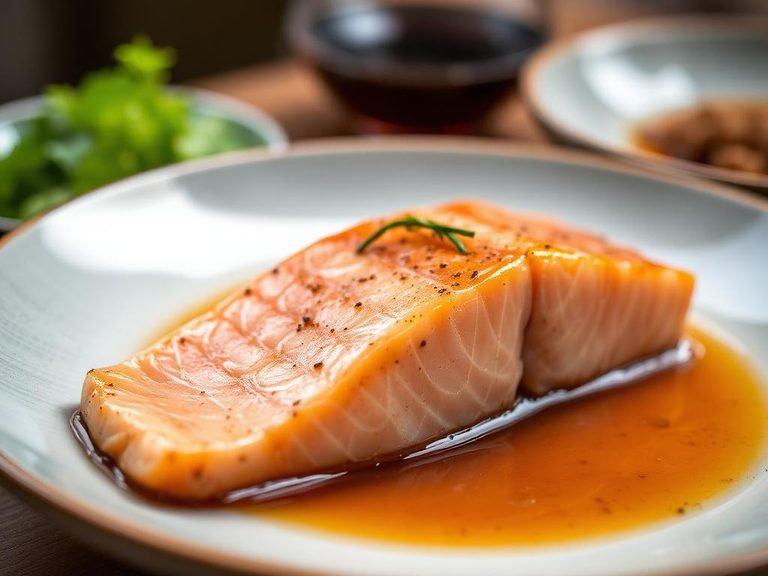
Glug-marinated meats are a traditional preparation where cuts of meat are submerged in a flavorful, often herb-infused, liquid mixture (the 'glug') for an extended period to tenderize and infuse deep flavor. The marinade typically includes ingredients like vinegar, wine, or citrus juice, along with garlic, herbs, and spices. This technique is common in various cuisines, particularly in Mediterranean and Eastern European cooking, as a method to prepare tougher cuts for grilling, roasting, or stewing.
🍽️ Nutrition at a glance
This dish is primarily high in protein and fat, with negligible carbohydrates unless the marinade includes sugary components. It is a good source of iron, zinc, and B vitamins, especially B12, from the meat. A typical serving of cooked, marinated meat (like a 4-ounce portion) generally falls in the range of 250-350 calories.
Nutrition breakdown
| Calories | 300 kcal |
| Protein | 28 g |
| Carbs | 2 g |
| Fat | 20 g |
| Fiber | 0 g |
| Sugar | 1 g |
| Sodium | 450 mg |
| Iron | 2.8 mg |
| Zinc | 5.5 mg |
| Vitamin B12 | 2.5 mcg |
| Niacin (B3) | 6 mg |
| Phosphorus | 190 mg |
| Selenium | 22 mcg |
| Potassium | 320 mg |
| Vitamin B6 | 0.4 mg |
Per 4 oz (113 g) cooked marinated meat (e.g., beef or lamb) · estimated, varies by recipe
💡 What's interesting
The 'glug' marinade serves a dual purpose: the acidic component (like vinegar or wine) helps break down muscle fibers in tougher, more economical cuts of meat, making them tender, while the aromatic ingredients impart complex flavors that penetrate deeply. Nutritionally, marinating with acidic or enzymatic ingredients (like in some fruit juices) can slightly alter the protein structure, potentially making certain nutrients more bioavailable.