

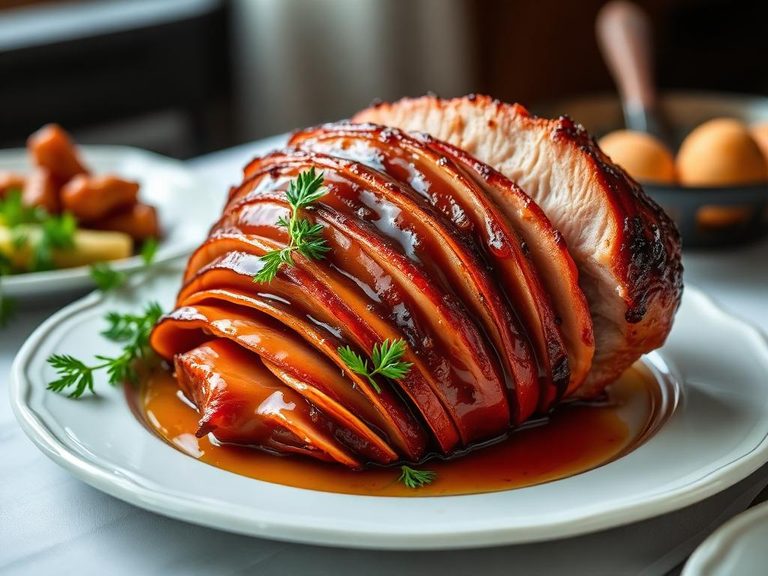
Glaze for baked ham
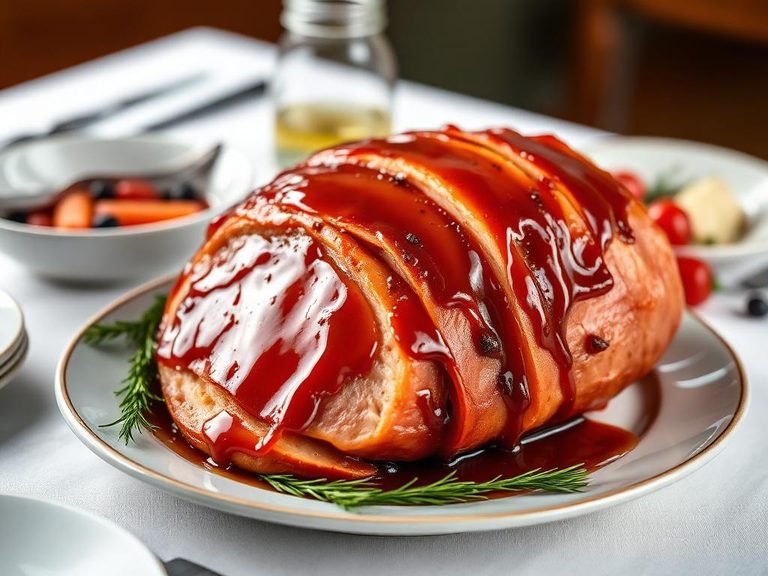
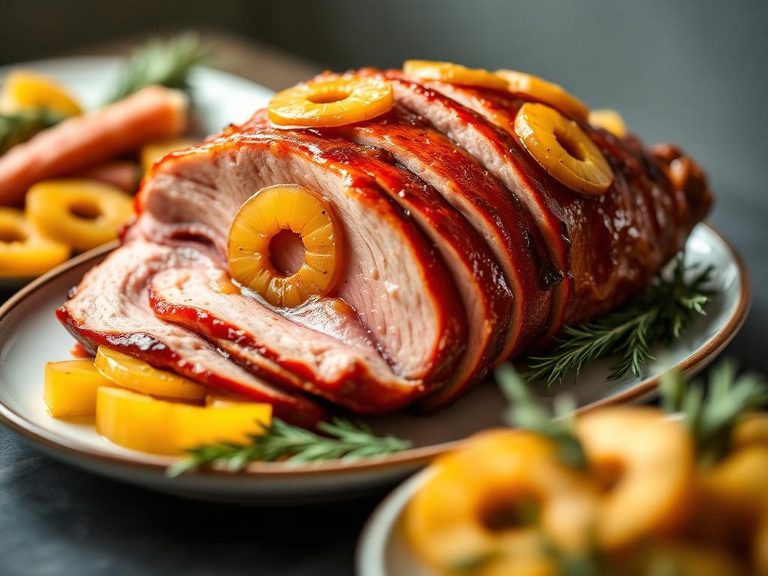
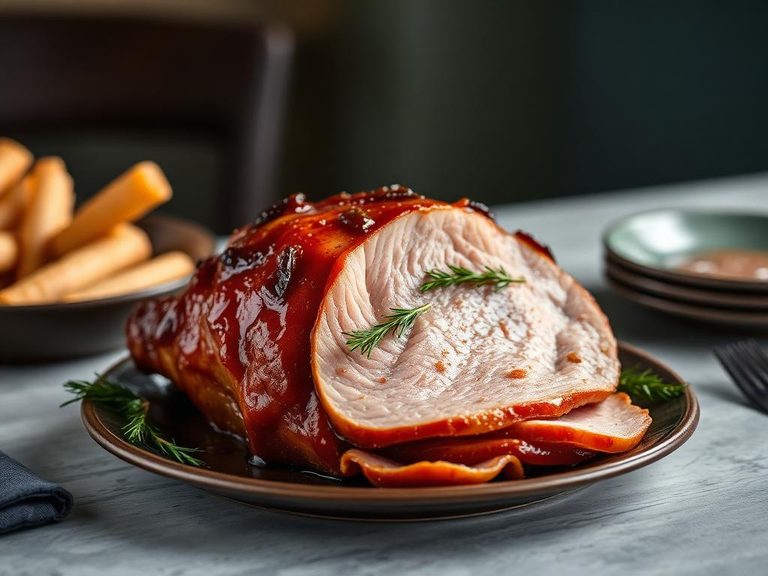
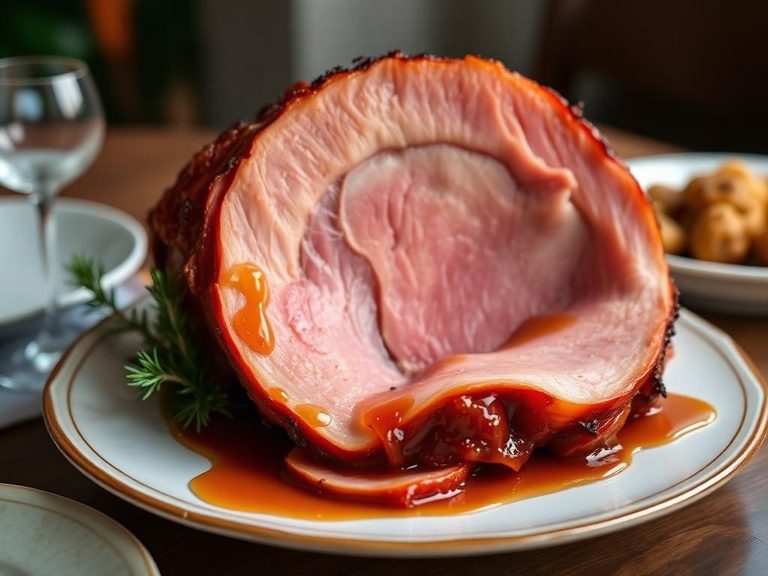
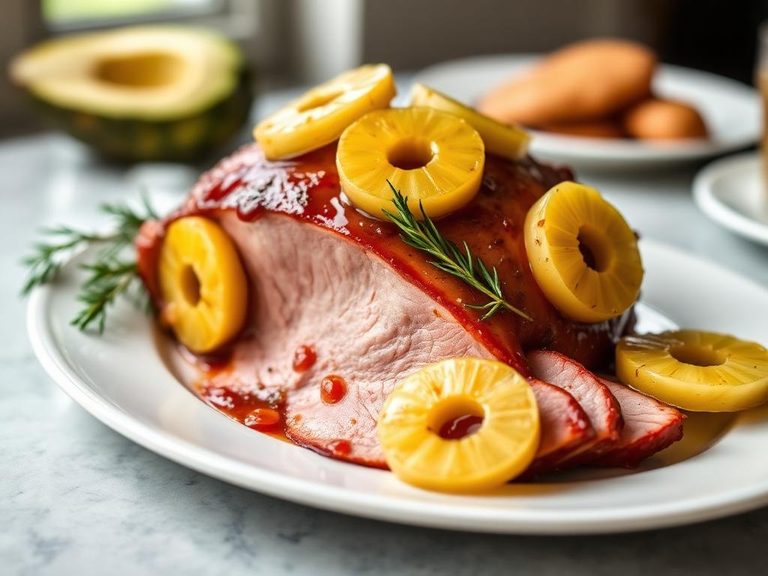
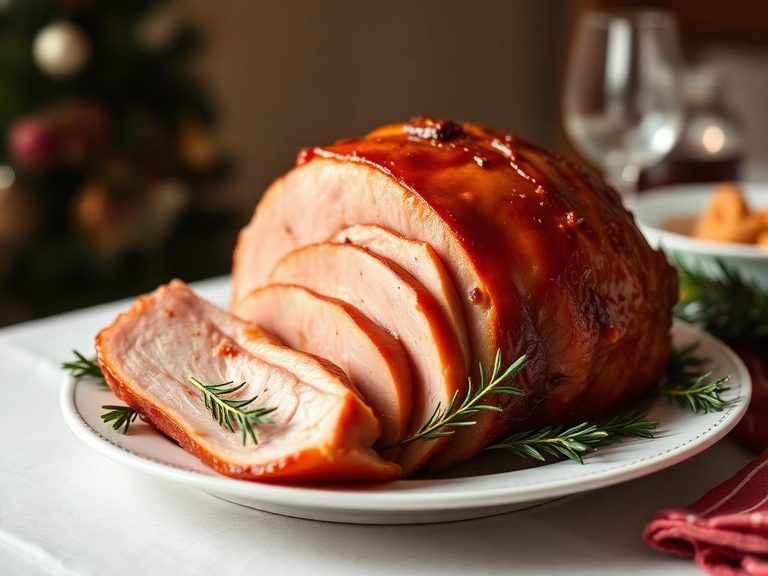
A glaze for baked ham is a sweet and savory coating applied to a ham before or during baking, typically made from ingredients like brown sugar, honey, maple syrup, mustard, and spices such as cloves or cinnamon. It caramelizes in the oven, creating a glossy, flavorful crust. This preparation is a staple in American and European holiday cuisine, especially for Christmas and Easter.
🍽️ Nutrition at a glance
The glaze is generally high in carbohydrates and sugars from its sweet base, with minimal protein or fat unless added via ingredients like butter or fruit juices. A typical serving (about 2 tablespoons) can range from 50 to 100 calories, providing quick energy but limited essential nutrients.
Nutrition breakdown
| Calories | 180 kcal |
| Protein | 0.2 g |
| Carbs | 45 g |
| Fat | 0.1 g |
| Fiber | 0 g |
| Sugar | 42 g |
| Sodium | 320 mg |
| Potassium | 45 mg |
| Iron | 0.2 mg |
| Vitamin C | 1 mg |
| Calcium | 10 mg |
| Magnesium | 5 mg |
| Phosphorus | 15 mg |
| Niacin (B3) | 0.1 mg |
| Manganese | 0.1 mg |
Per 1/4 cup (80 g) · estimated, varies by recipe
💡 What's interesting
Culturally, the glaze transforms a simple ham into a celebratory centerpiece, often passed down through family recipes. Nutritionally, it adds flavor without significantly altering the ham's protein content, but its high sugar means it's best enjoyed in moderation as part of a balanced meal.
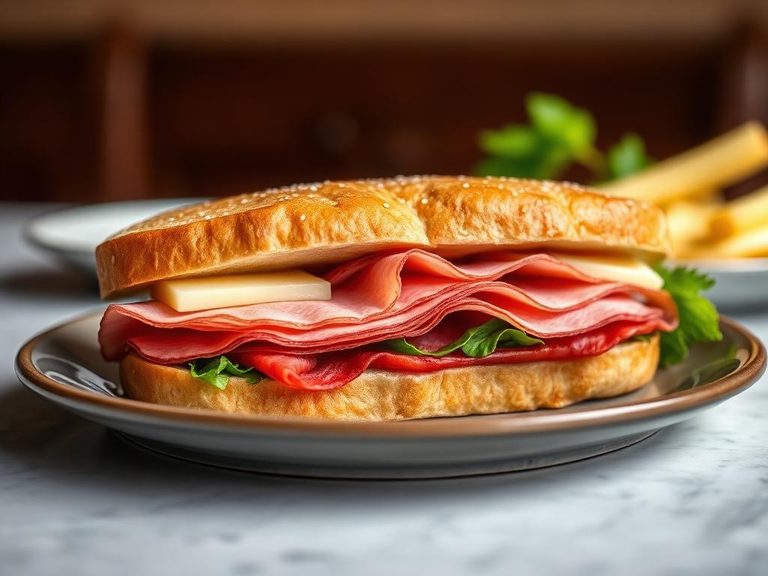
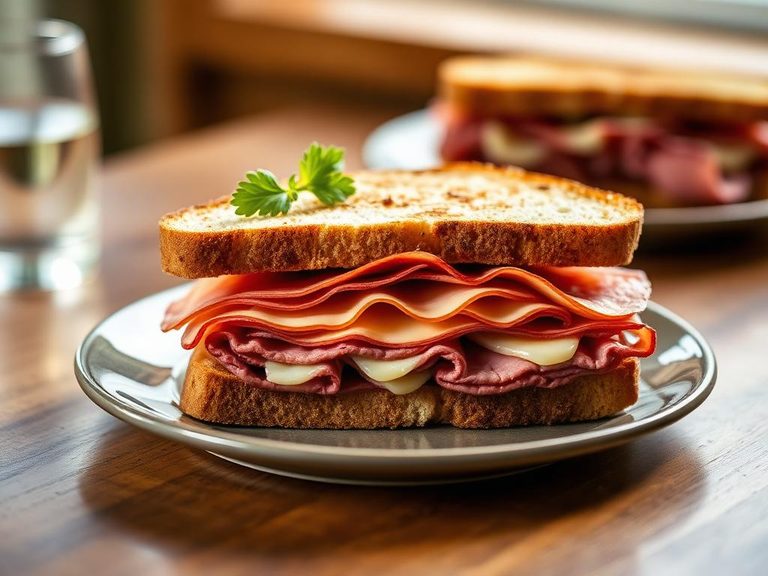
🍽️ Related dishes
AI estimate may be inaccurate · Terms