

Danish carrot salad
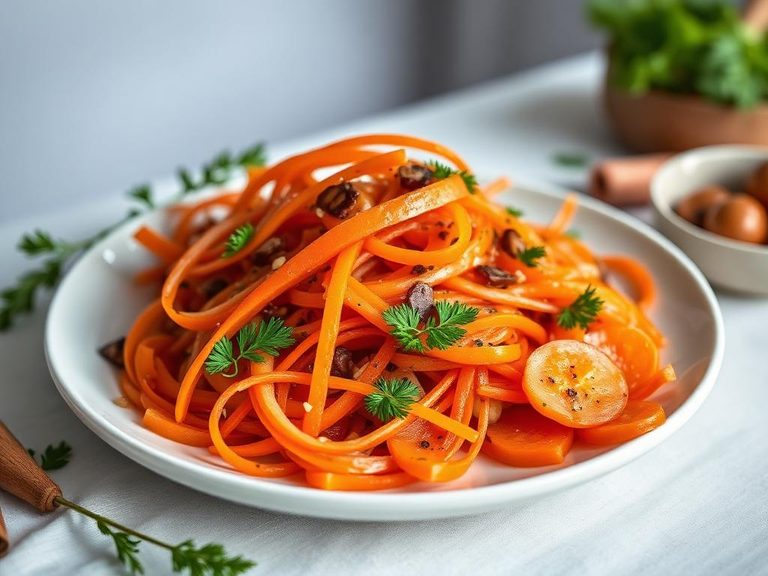
Danish carrot salad, or gulerodssalat, is a simple, refreshing side dish from Denmark made primarily from grated raw carrots. It's typically dressed with a light vinaigrette of oil, vinegar, sugar, and sometimes a touch of mustard, and is a staple on Danish lunch and dinner tables. The salad is known for its bright, sweet-and-sour flavor and crunchy texture.
🍽️ Nutrition at a glance
This salad is a low-calorie, low-fat dish that is a good source of dietary fiber and carbohydrates from natural sugars. It provides a significant amount of vitamin A (from beta-carotene) and potassium, with a typical serving containing roughly 100-150 calories.
Nutrition breakdown
| Calories | 120 kcal |
| Protein | 1.2 g |
| Carbs | 18 g |
| Fat | 5.5 g |
| Fiber | 3.5 g |
| Sugar | 11 g |
| Sodium | 180 mg |
| Vitamin A | 1200 µg RAE |
| Potassium | 350 mg |
| Vitamin K | 10 µg |
| Vitamin B6 | 0.15 mg |
| Manganese | 0.2 mg |
| Biotin | 6 µg |
| Vitamin C | 6 mg |
| Folate | 25 µg |
Per 1 cup (150 g) · estimated, varies by recipe
💡 What's interesting
Culturally, gulerodssalat is a classic example of the Danish 'smørrebrød' (open-faced sandwich) side or a simple accompaniment to fried foods like frikadeller (meatballs). Its simplicity and use of a basic, affordable vegetable reflect a traditional Nordic emphasis on preserving and enjoying seasonal produce in straightforward preparations.
🍽️ Related dishes




AI estimate may be inaccurate · Terms