Cassoulet (French)
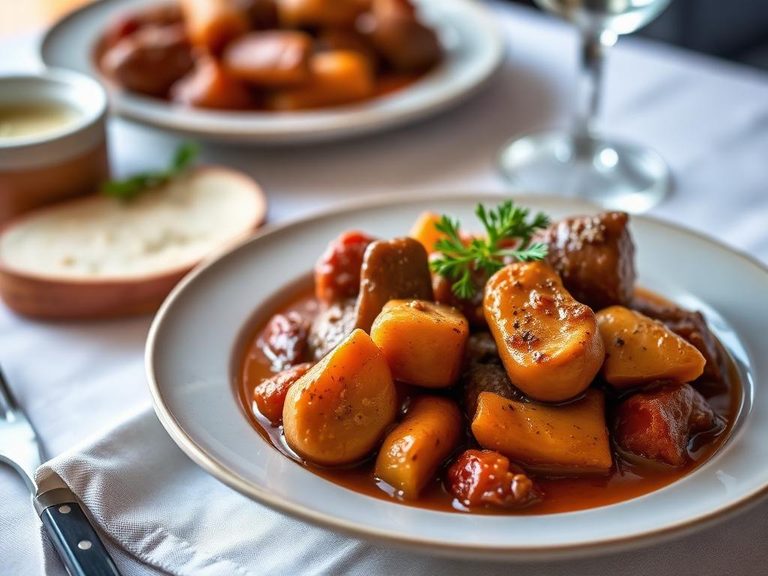
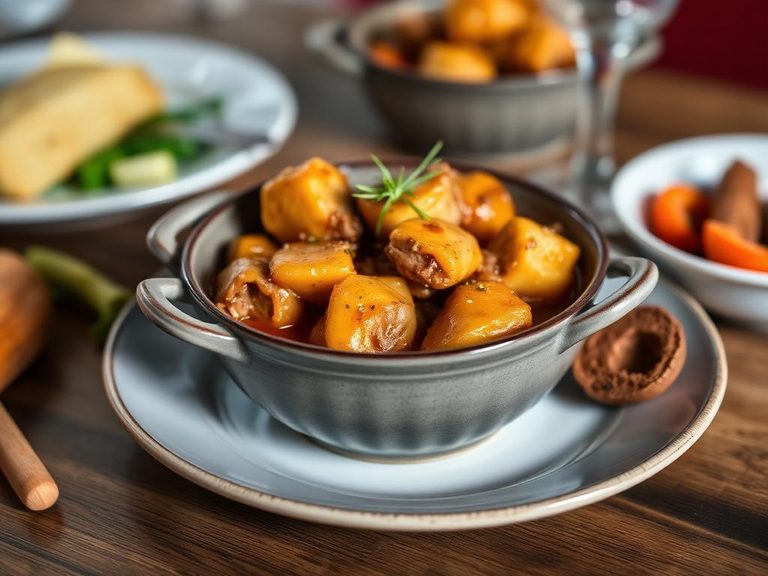
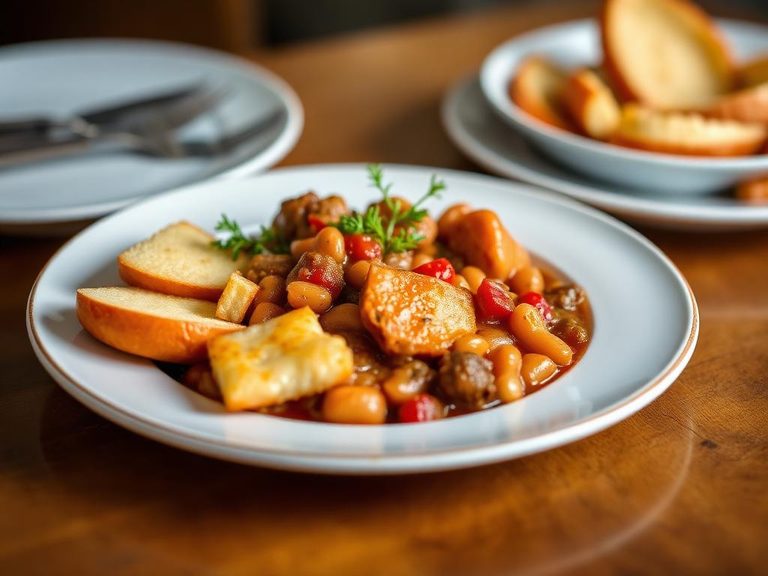
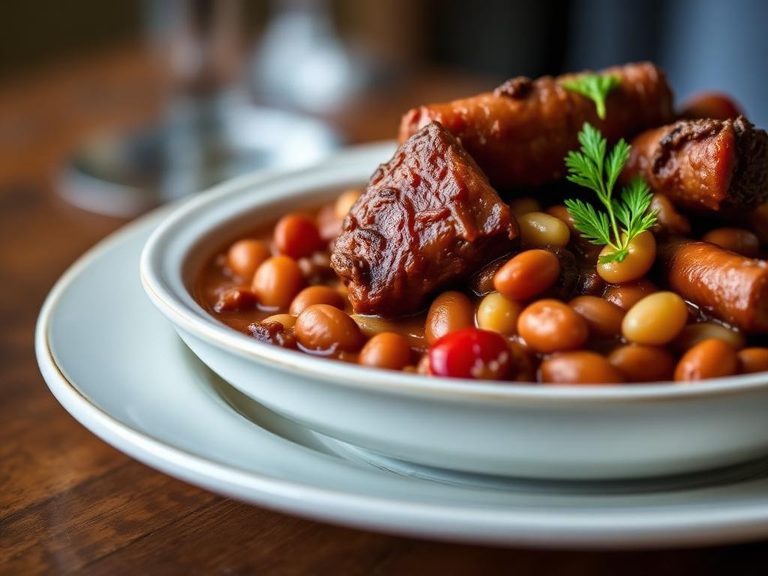
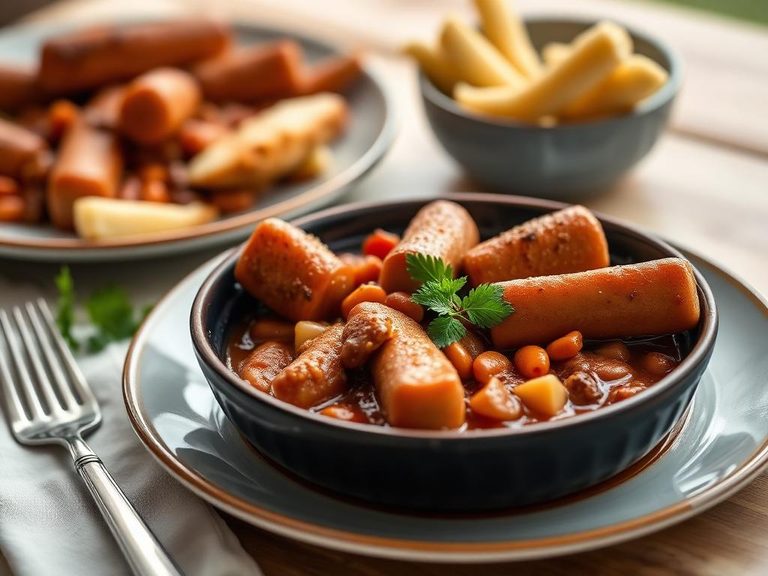
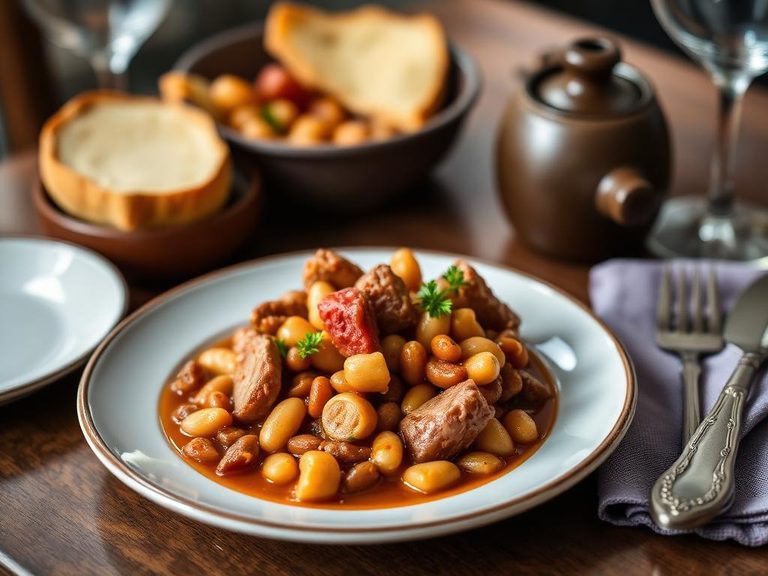
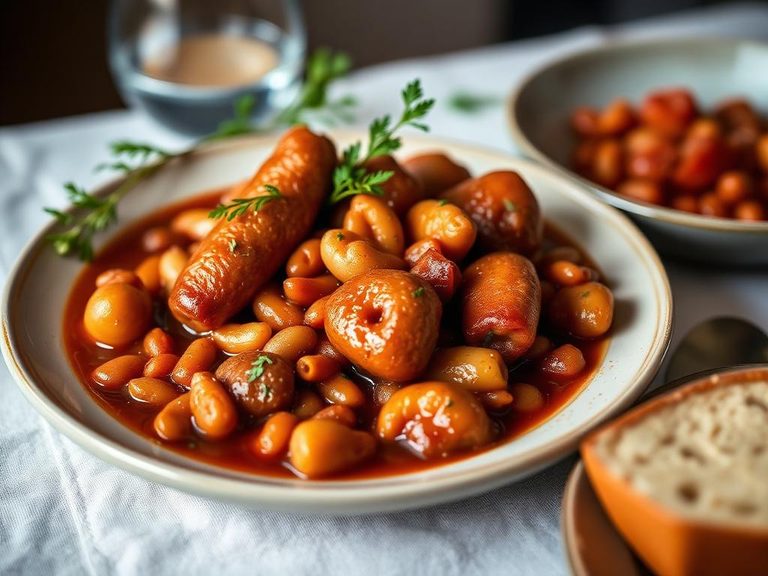
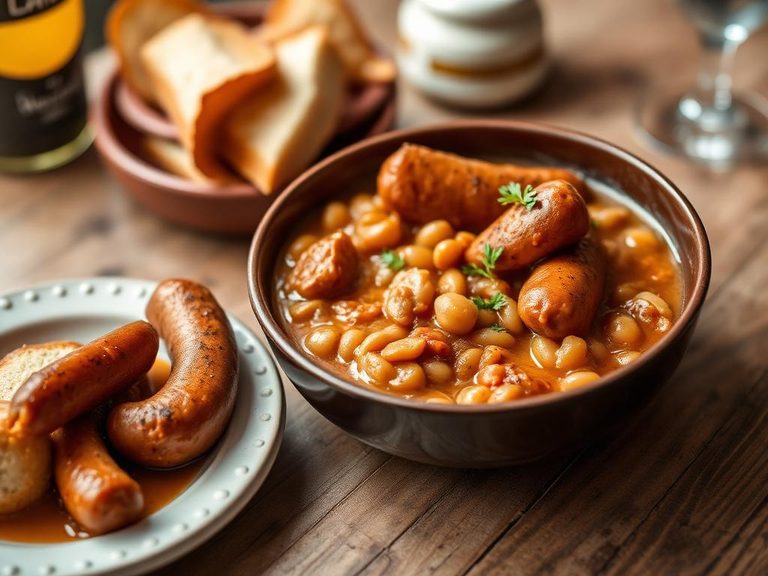
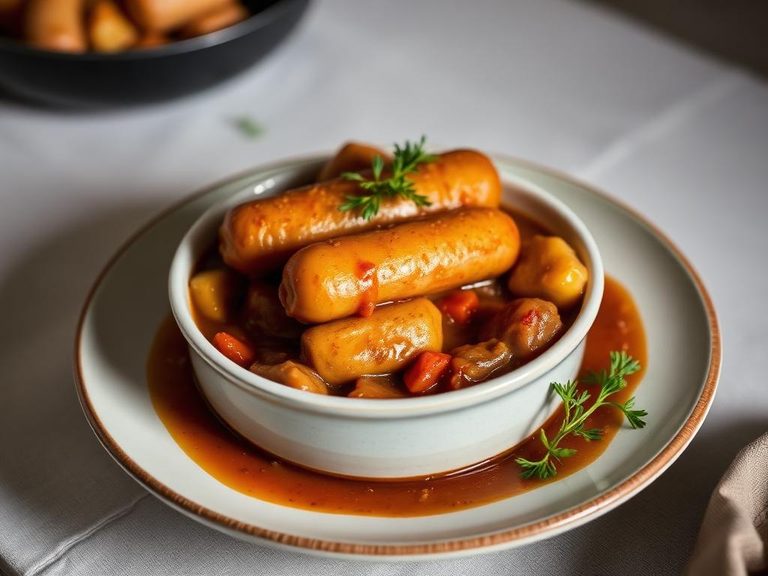
Cassoulet is a rich, slow-cooked casserole originating from the south of France, particularly the regions of Languedoc and Gascony. It is a hearty, bean-based dish traditionally made with white beans (like Tarbais or Lingua), various meats such as duck or goose confit, pork sausage, and sometimes lamb, all simmered together in a savory broth.
🍽️ Nutrition at a glance
This dish is quite high in both fat and protein due to its generous use of meats and confit, with a moderate amount of carbohydrates from the beans. A typical serving provides a substantial amount of iron, zinc, and B vitamins, and can range from 600 to over 1000 calories depending on the recipe and portion size.
Nutrition breakdown
| Calories | 450 kcal |
| Protein | 30 g |
| Carbs | 25 g |
| Fat | 28 g |
| Fiber | 4 g |
| Sugar | 3 g |
| Sodium | 950 mg |
| Iron | 4 mg |
| Zinc | 6 mg |
| Potassium | 450 mg |
| Phosphorus | 300 mg |
| Niacin (B3) | 8 mg |
| Vitamin B6 | 0.5 mg |
| Vitamin B12 | 2.5 mcg |
| Selenium | 20 mcg |
Per 1 cup (240 g) · estimated, varies by recipe
💡 What's interesting
Culturally, cassoulet is a celebrated peasant dish that embodies communal feasting and regional pride, with towns like Castelnaudary, Carcassonne, and Toulouse each claiming the 'authentic' version. Nutritionally, the slow-cooking process makes the beans' nutrients highly digestible, and the combination of animal fats and plant-based protein creates a very satiating meal.