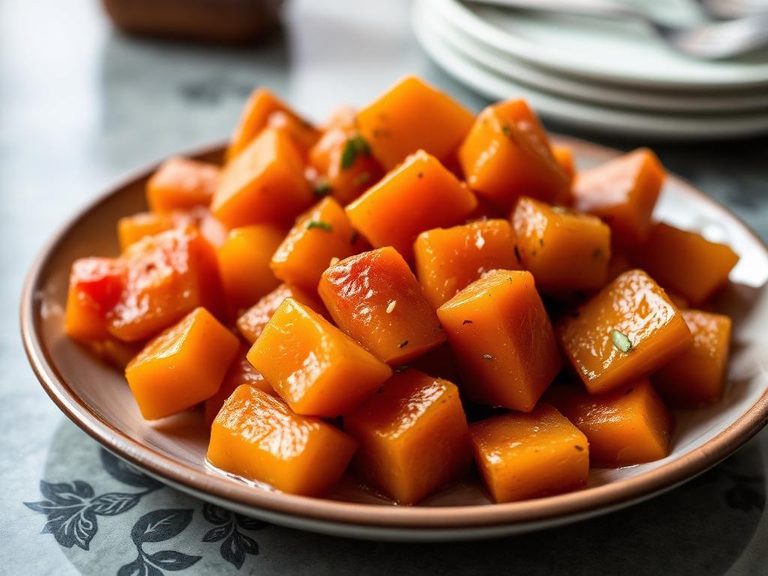
Candied jujubes
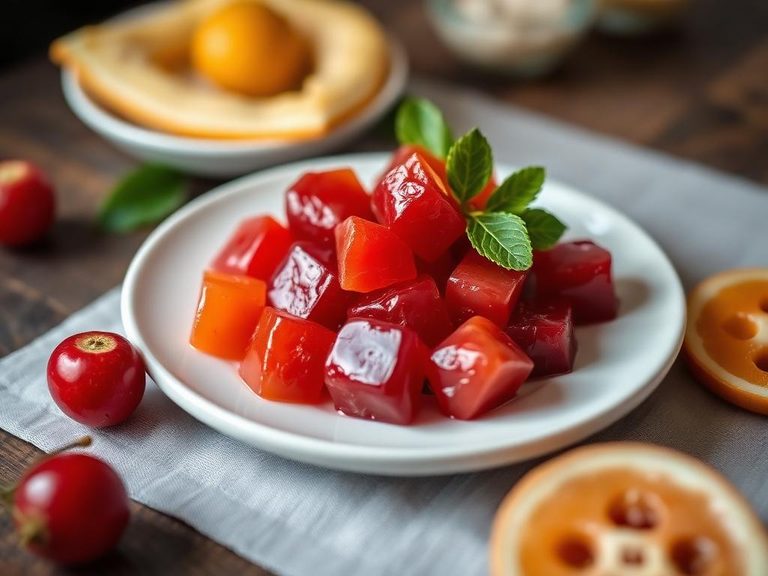
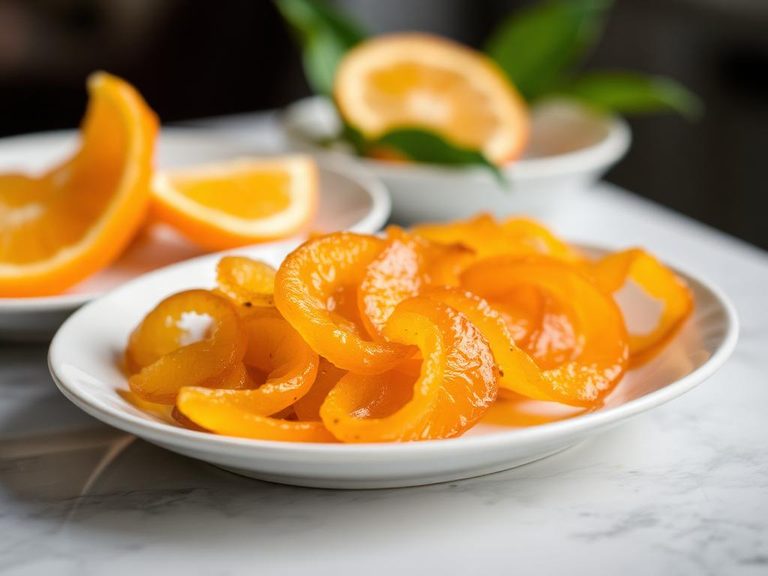
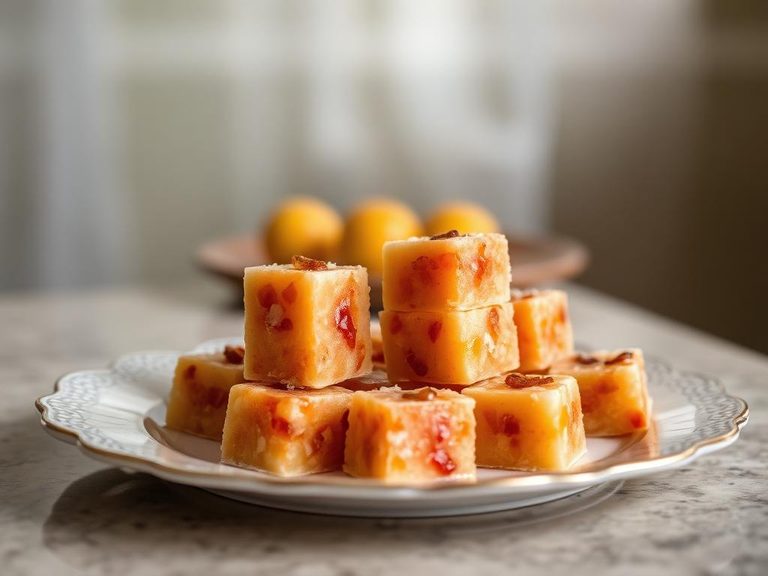
Candied jujubes, also known as 'hongzao tang' or 'jujube candy,' are a traditional Chinese confection made by simmering dried jujubes (red dates) in a sugar syrup until they become glossy, sweet, and chewy. They are a popular snack and festive treat, often enjoyed during holidays like the Lunar New Year.
🍽️ Nutrition at a glance
This dish is very high in carbohydrates, primarily from natural fruit sugars and added sugar, with minimal fat and protein. A typical serving provides a quick energy boost and is a good source of potassium and some B vitamins.
Nutrition breakdown
| Calories | 210 kcal |
| Protein | 1.5 g |
| Carbs | 52 g |
| Fat | 0.5 g |
| Fiber | 3 g |
| Sugar | 45 g |
| Sodium | 15 mg |
| Potassium | 380 mg |
| Vitamin C | 15 mg |
| Iron | 1.2 mg |
| Magnesium | 25 mg |
| Phosphorus | 40 mg |
| Niacin (B3) | 0.8 mg |
| Vitamin B6 | 0.1 mg |
| Copper | 0.15 mg |
Per 1/2 cup (about 80 g) · estimated, varies by recipe
💡 What's interesting
Culturally, candied jujubes are deeply symbolic in Chinese tradition, representing prosperity, sweetness, and good health, often given as a gift. Nutritionally, the jujube fruit itself is known for its high vitamin C content and is used in traditional medicine for its calming properties.