

Buñuelos de Rodilla
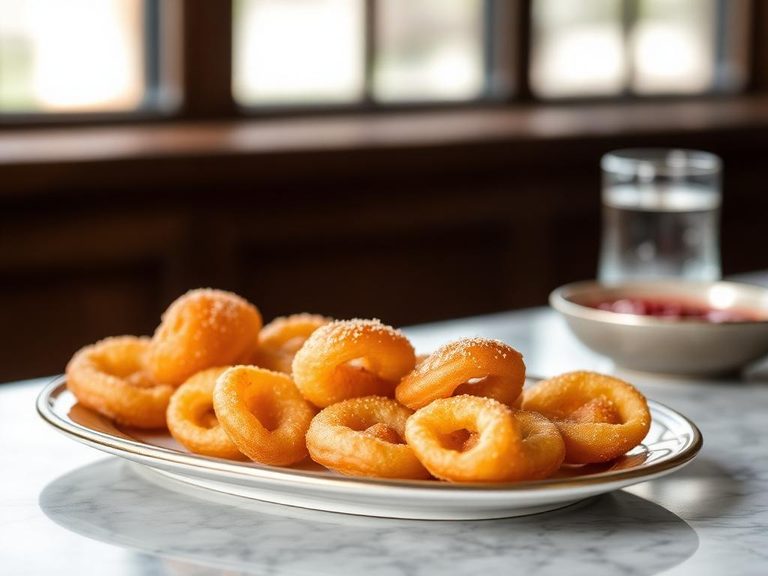
Buñuelos de Rodilla are traditional Spanish pastries rolled out very thin and fried until golden and crispy, often dusted with sugar or drizzled with honey. They are made from a simple dough of flour, eggs, and a splash of anise-flavored wine or water, then shaped into large, delicate rounds. This dish is particularly popular in regions like Andalusia and Castilla-La Mancha, especially during Christmas and other festive celebrations.
🍳 View the full Buñuelos de Rodilla recipe →
🍽️ Nutrition at a glance
As a fried pastry, buñuelos de rodilla are high in carbohydrates and fat, providing quick energy but little protein. A typical serving (about two medium pieces) contains roughly 250-350 calories, with the main nutrients coming from the refined flour and the oil absorbed during frying.
Nutrition breakdown
| Calories | 320 kcal |
| Protein | 5 g |
| Carbs | 42 g |
| Fat | 15 g |
| Fiber | 2 g |
| Sugar | 8 g |
| Sodium | 200 mg |
| Iron | 2.5 mg |
| Calcium | 45 mg |
| Potassium | 120 mg |
| Vitamin B1 (Thiamine) | 0.2 mg |
| Vitamin B2 (Riboflavin) | 0.1 mg |
| Vitamin B3 (Niacin) | 1.8 mg |
| Magnesium | 20 mg |
| Phosphorus | 65 mg |
Per 2 pieces (approx. 80 g) · estimated, varies by recipe
💡 What's interesting
What makes buñuelos de rodilla culturally unique is their association with communal family preparation during holidays, where rolling the dough paper-thin is a skill passed down through generations. Nutritionally, their extreme thinness creates a large surface area, making them exceptionally crispy while also allowing them to absorb more frying oil compared to thicker pastries.
AI estimate may be inaccurate · Terms