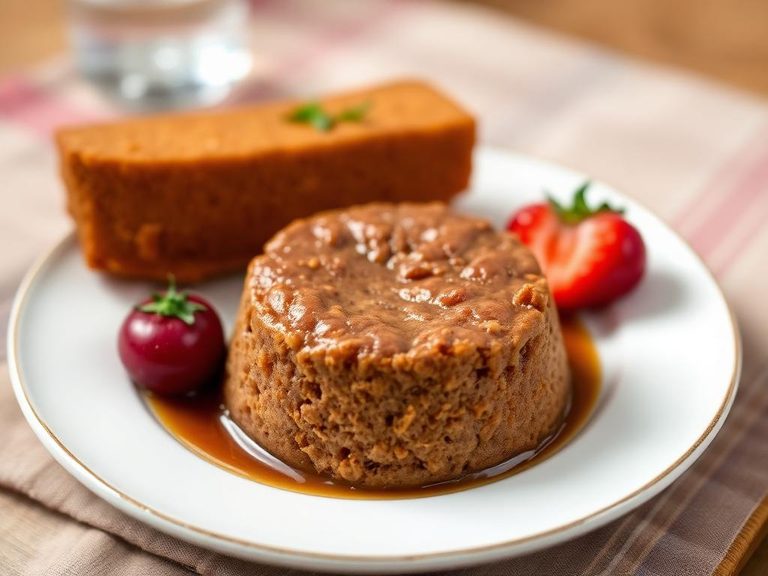
British Suet Crust Pastry

British suet crust pastry is a traditional, rich pastry made from wheat flour and shredded suet (the hard fat found around the kidneys of beef or mutton). It is a staple of British home cooking, used to encase savoury fillings in dishes like steak and kidney pudding or sweet fillings in spotted dick. The pastry is known for its distinctive light, fluffy, and slightly crumbly texture when steamed, or a crisp, short texture when baked.
🍽️ Nutrition at a glance
This pastry is high in fat and calories due to the suet, with a moderate amount of carbohydrates from the flour. It provides energy and some fat-soluble vitamins, but is not a significant source of protein or fibre.
Nutrition breakdown
| Calories | 380 kcal |
| Protein | 6 g |
| Carbs | 35 g |
| Fat | 24 g |
| Fiber | 1.5 g |
| Sugar | 1 g |
| Sodium | 450 mg |
| Iron | 2.5 mg |
| Thiamin (B1) | 0.3 mg |
| Niacin (B3) | 4 mg |
| Vitamin B12 | 0.2 µg |
| Phosphorus | 80 mg |
| Selenium | 15 µg |
| Zinc | 1.2 mg |
| Calcium | 30 mg |
Per 1 piece (approx. 100g) · estimated, varies by recipe
💡 What's interesting
Culturally, suet pastry is a cornerstone of British 'comfort food,' with recipes passed down through generations. Nutritionally, the use of animal fat (suet) is unique, giving it a higher melting point than butter, which creates its characteristic airy texture when steamed.