

Breakfast Cereal
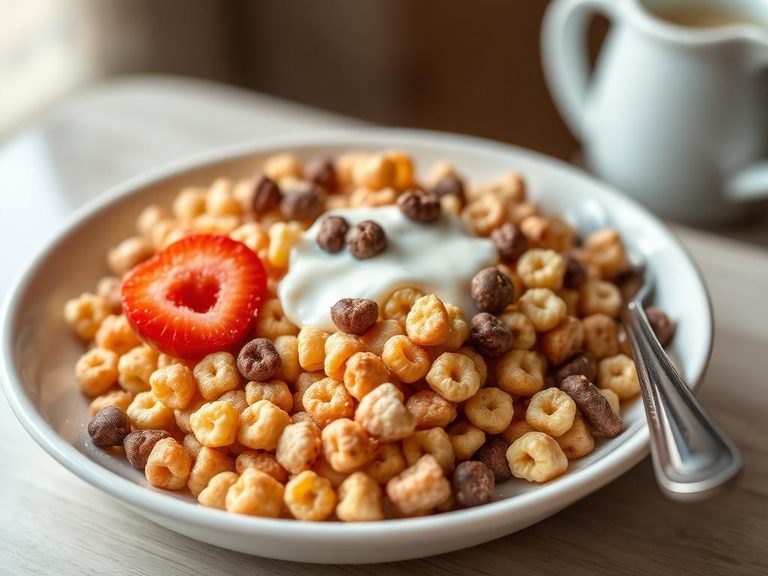
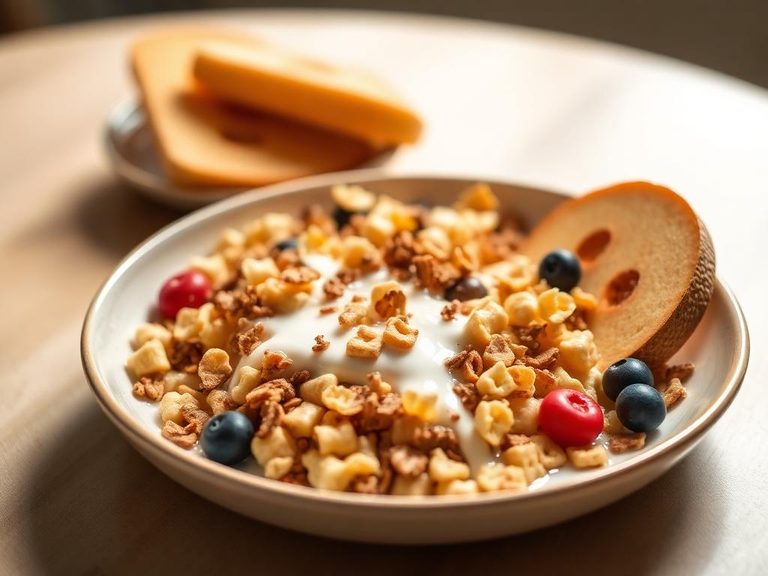
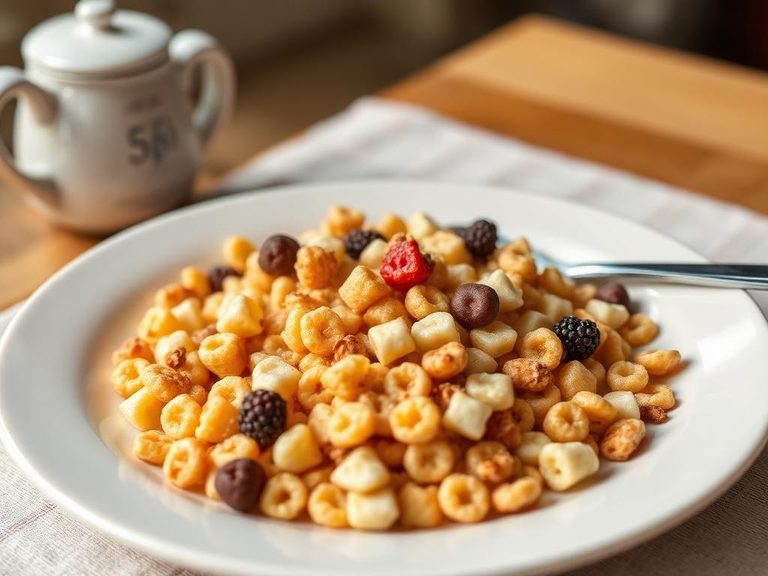
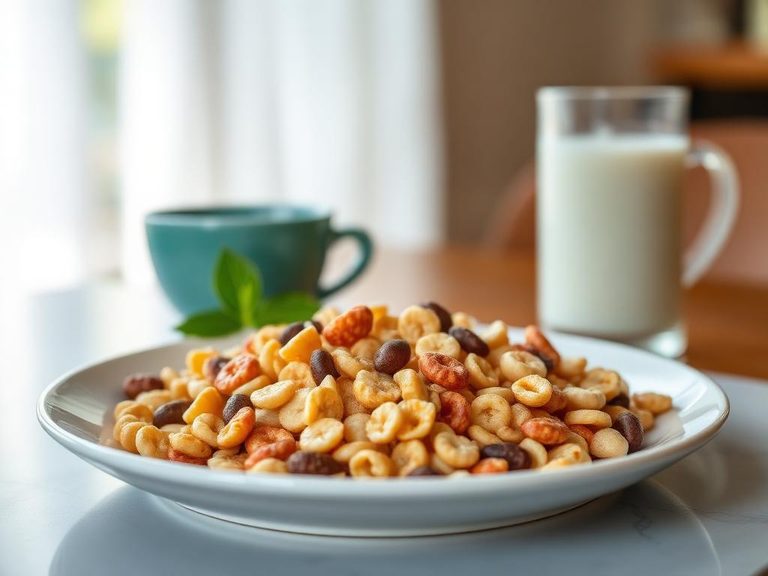
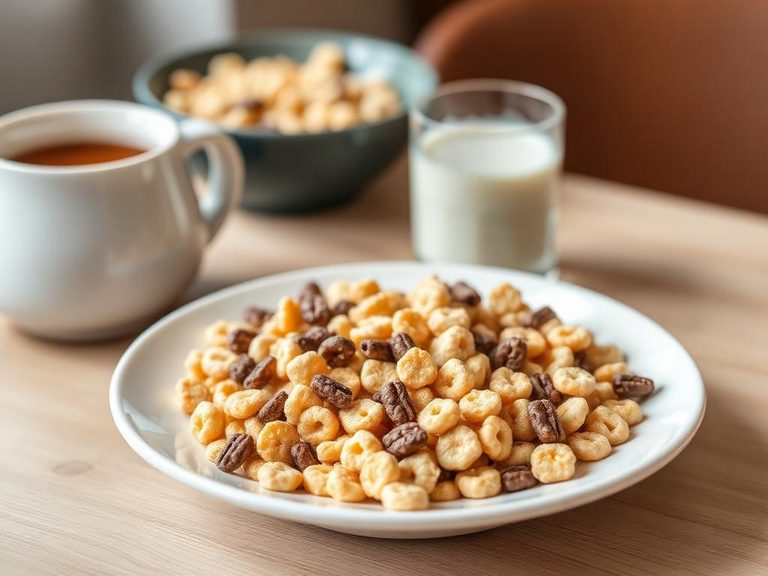
Breakfast cereal served with milk is a quick, convenient morning meal made from processed grains, often shaped into flakes, puffs, or O's, and paired with cold milk. Originating in the United States in the late 19th century, it has become a global staple, especially in Western countries, with countless flavors and fortified varieties.
🍽️ Nutrition at a glance
Most breakfast cereals are high in carbohydrates, especially from added sugars, and provide a moderate amount of fiber if whole-grain based. A typical serving with milk offers around 150-250 calories, along with key nutrients like iron, B vitamins, and calcium from the milk.
Nutrition breakdown
| Calories | 170 kcal |
| Protein | 5 g |
| Carbs | 32 g |
| Fat | 2.5 g |
| Fiber | 3 g |
| Sugar | 12 g |
| Sodium | 210 mg |
| Calcium | 130 mg |
| Iron | 8 mg |
| Potassium | 160 mg |
| Vitamin D | 1.5 mcg |
| Vitamin B12 | 0.9 mcg |
| Riboflavin (B2) | 0.4 mg |
| Phosphorus | 100 mg |
| Magnesium | 25 mg |
Per 1 cup cereal (30 g) with 1/2 cup milk (120 g) · estimated, varies by recipe
💡 What's interesting
Culturally, it revolutionized the concept of a quick, ready-to-eat breakfast, reflecting modern busy lifestyles. Nutritionally, many cereals are fortified with vitamins and minerals, making them a significant source of micronutrients for many people, though they can also be a hidden source of sugar.
🍽️ Related dishes

AI estimate may be inaccurate · Terms