

Bread dumplings (Knödel)
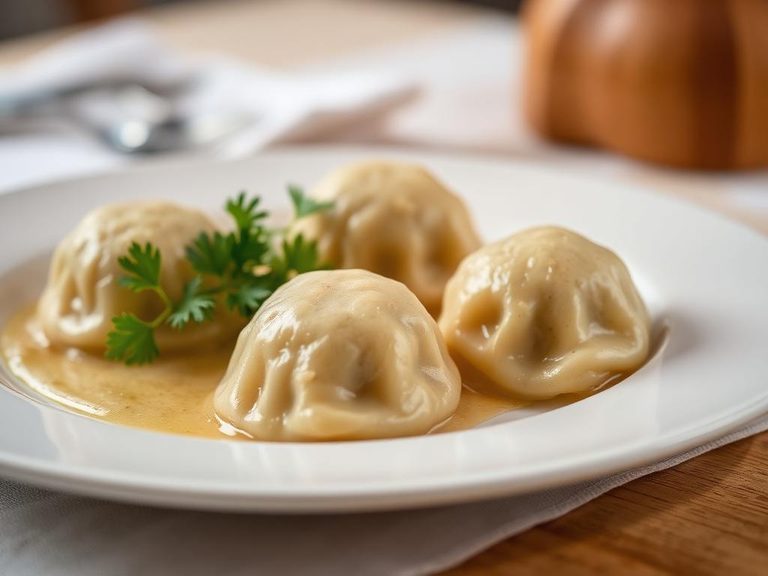
Bread dumplings, or Knödel, are a hearty, traditional dish from Central Europe, particularly popular in Austria, Germany, and the Czech Republic. They are savory dumplings made from stale bread cubes, milk, eggs, and herbs like parsley, often formed into balls and boiled or steamed until fluffy.
🍽️ Nutrition at a glance
This dish is high in carbohydrates from the bread base, with moderate fat and protein from eggs and any added butter or milk. A typical serving provides a good source of energy and some B vitamins, with a rough calorie count of around 300-400 per dumpling depending on size and recipe.
Nutrition breakdown
| Calories | 220 kcal |
| Protein | 8 g |
| Carbs | 38 g |
| Fat | 4 g |
| Fiber | 2 g |
| Sugar | 3 g |
| Sodium | 580 mg |
| Iron | 2.1 mg |
| Thiamin (B1) | 0.3 mg |
| Niacin (B3) | 2.8 mg |
| Folate | 65 mcg |
| Selenium | 15 mcg |
| Manganese | 0.5 mg |
| Phosphorus | 95 mg |
| Magnesium | 25 mg |
Per 2 pieces (approx. 200 g) · estimated, varies by recipe
💡 What's interesting
Culturally, Knödel is a classic example of resourceful cooking, transforming leftover bread into a comforting staple often served alongside roasts or goulash. Nutritionally, its use of stale bread helps reduce food waste while offering a filling, fiber-rich option in traditional meals.
🍽️ Related dishes


AI estimate may be inaccurate · Terms