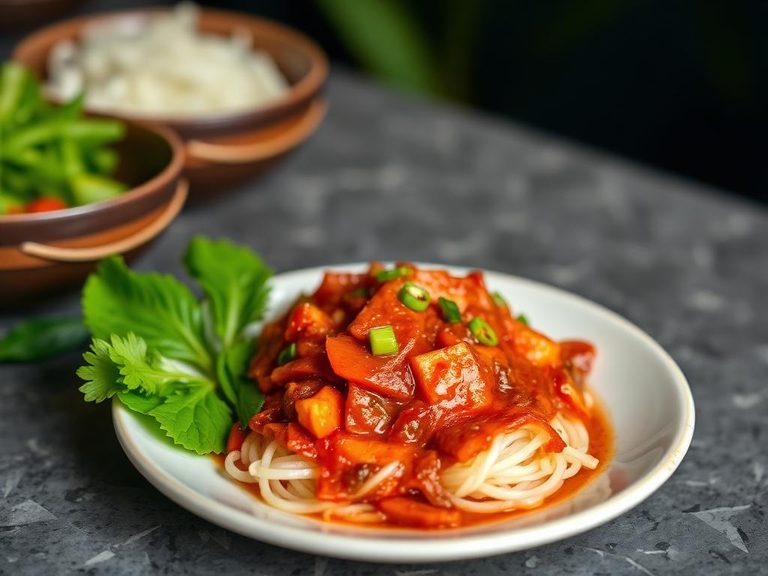
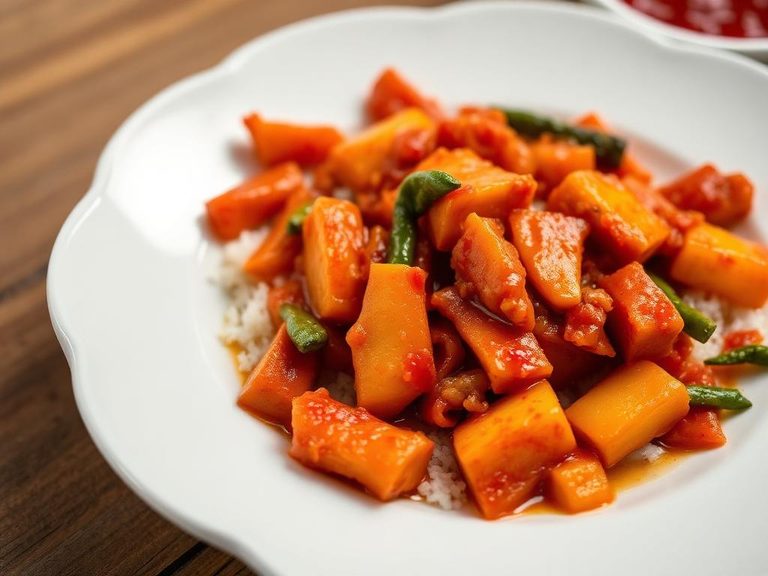
Blanched as a simple side dish with sambal
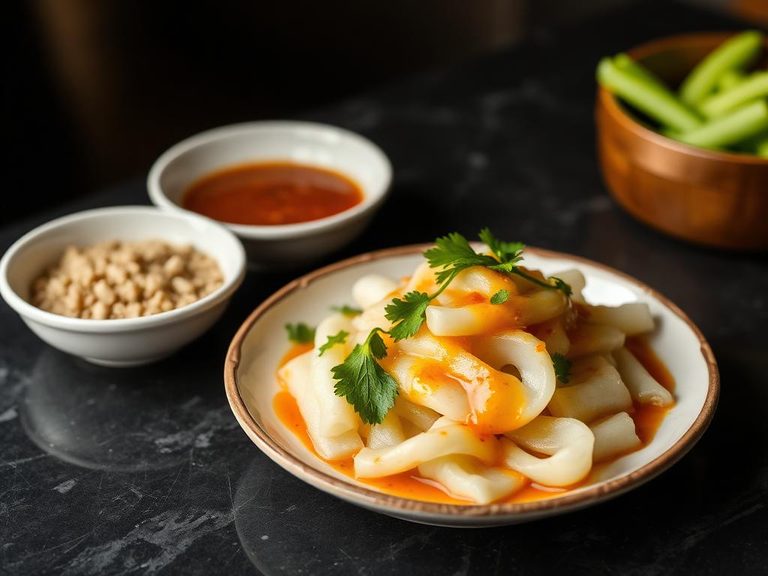
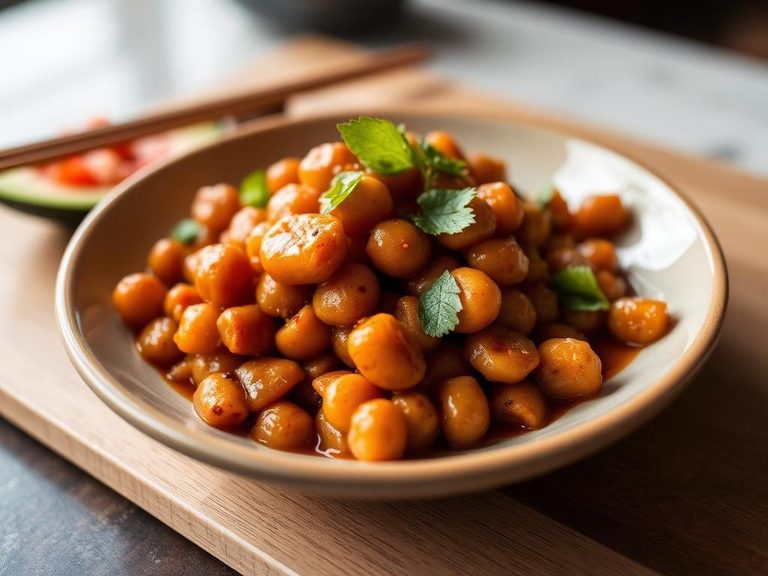
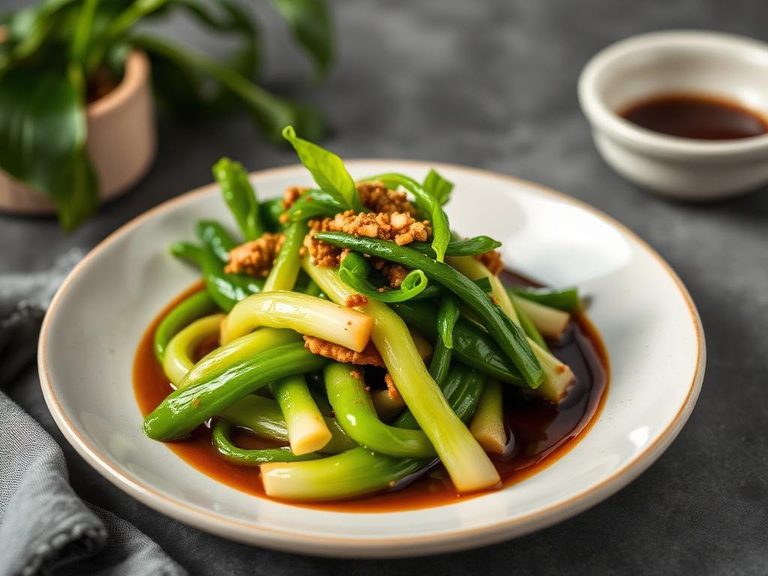
This dish features blanched green vegetables, most commonly kangkung (water spinach) or sawi (mustard greens), served with a side of spicy sambal. It is a staple side dish in Indonesian, Malaysian, and Singaporean cuisine, known for its simplicity and fresh flavors. The sambal provides a fiery, flavorful contrast to the mild, crisp-tender vegetables.
🍽️ Nutrition at a glance
The dish is very low in calories and carbohydrates, with virtually no fat, making it a light and healthy addition to a meal. It is a good source of dietary fiber and provides essential vitamins like Vitamin A and Vitamin C, as well as minerals like iron and potassium.
Nutrition breakdown
| Calories | 45 kcal |
| Protein | 3.5 g |
| Carbs | 5 g |
| Fat | 1.5 g |
| Fiber | 3 g |
| Sugar | 2 g |
| Sodium | 350 mg |
| Vitamin A | 180 mcg RAE |
| Vitamin C | 25 mg |
| Iron | 2.5 mg |
| Potassium | 320 mg |
| Calcium | 90 mg |
| Magnesium | 35 mg |
| Folate | 60 mcg |
| Manganese | 0.4 mg |
Per 1 cup (150 g) of blanched greens with 2 tablespoons (30 g) of sambal · estimated, varies by recipe
💡 What's interesting
Culturally, this dish exemplifies the Southeast Asian practice of balancing a rich, flavorful main meal with a simple, fresh vegetable side. Nutritionally, blanching helps retain more water-soluble vitamins (like Vitamin C and B vitamins) compared to boiling, while the sambal often contains capsaicin, which may have metabolism-boosting properties.