

Bialy
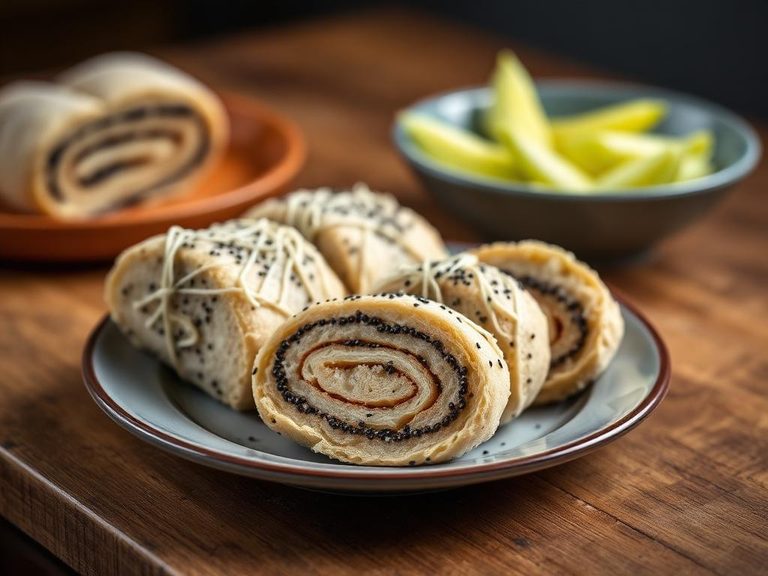
A Bialy, often confused with a bagel, is a traditional Polish bread roll characterized by its depressed center and chewy texture. Unlike a bagel, it is baked rather than boiled, and the center is typically filled with savory ingredients like diced onions, garlic, and breadcrumbs, rather than poppy seeds (which are more common on the related Makowiec roll). It originated in the Białystok region of Poland and is a staple in Polish-American bakeries.
🍳 View the full Bialy recipe →
🍽️ Nutrition at a glance
This bread roll is primarily a source of carbohydrates for energy, with a moderate amount of protein from the wheat flour. A typical serving (one roll) contains roughly 200-300 calories, with minimal fat unless topped with butter or other spreads.
Nutrition breakdown
| Calories | 370 kcal |
| Protein | 9 g |
| Carbs | 45 g |
| Fat | 18 g |
| Fiber | 2 g |
| Sugar | 18 g |
| Sodium | 290 mg |
| Iron | 2.5 mg |
| Calcium | 60 mg |
| Potassium | 110 mg |
| Thiamin (B1) | 0.3 mg |
| Niacin (B3) | 2.5 mg |
| Folate | 45 mcg |
| Phosphorus | 95 mg |
| Magnesium | 20 mg |
Per 1 roll (115 g) · estimated, varies by recipe
💡 What's interesting
Culturally, the Bialy is a symbol of Polish culinary heritage and is often enjoyed as a breakfast item or snack. Nutritionally, its unique baking method (without boiling) results in a drier, more bread-like texture compared to a bagel, making it a slightly lighter option.
AI estimate may be inaccurate · Terms