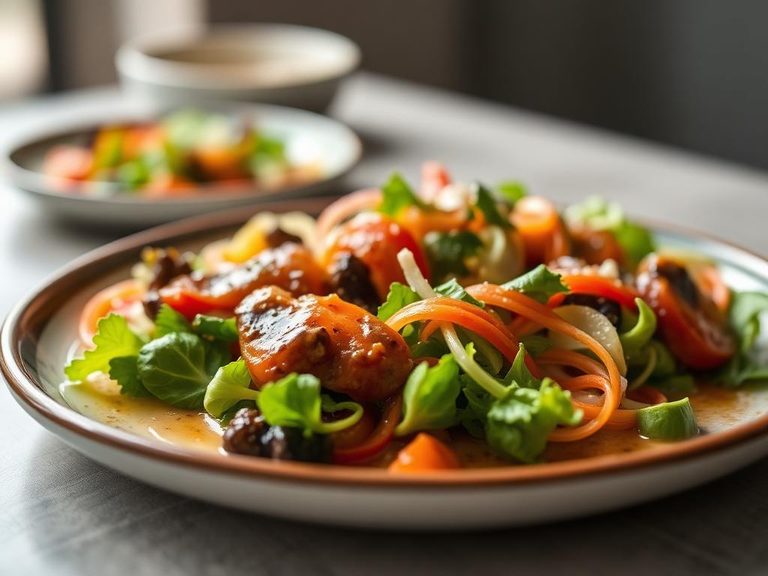
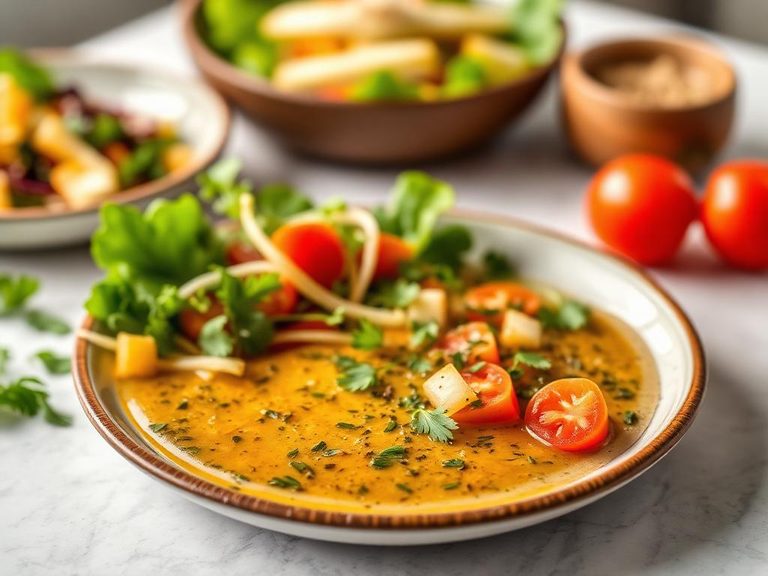
Base for a Light Salad Dressing
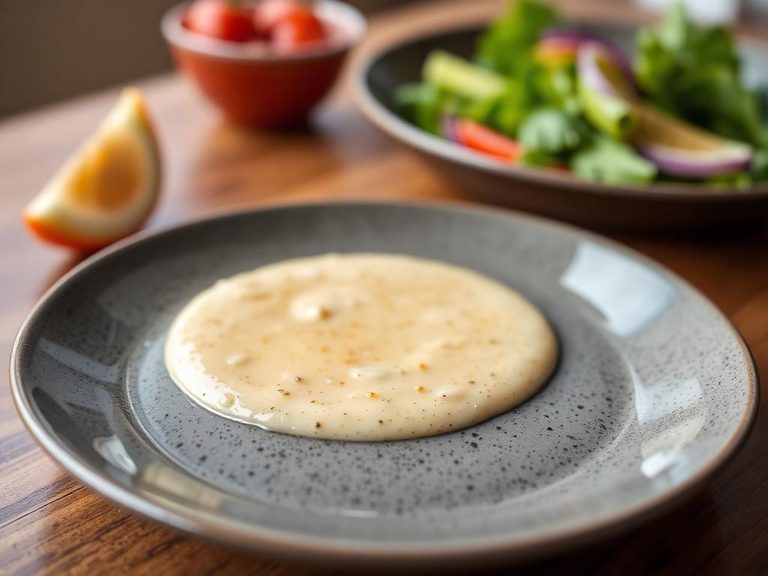
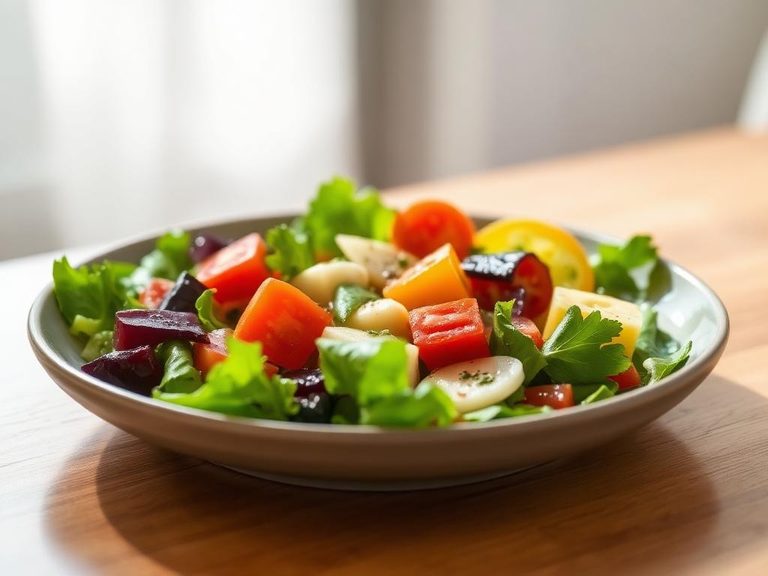
A base for a light salad dressing is a simple, versatile mixture typically made from oil, an acidic component like vinegar or lemon juice, and seasonings. It serves as a foundational recipe that can be customized with herbs, spices, or other flavorings to dress salads, marinate vegetables, or drizzle over proteins.
🍽️ Nutrition at a glance
This dressing base is primarily composed of healthy fats from the oil, with minimal carbohydrates and protein. It provides a good source of vitamin E and monounsaturated fats, with a typical serving containing around 120-150 calories.
Nutrition breakdown
| Calories | 120 kcal |
| Protein | 0 g |
| Carbs | 1 g |
| Fat | 14 g |
| Fiber | 0 g |
| Sugar | 0 g |
| Sodium | 150 mg |
| Vitamin E | 2.5 mg |
| Vitamin K | 8 mcg |
| Monounsaturated Fat | 10 g |
| Polyunsaturated Fat | 2 g |
| Sodium | 150 mg |
| Potassium | 10 mg |
Per 2 tablespoons (30 g) · estimated, varies by recipe
💡 What's interesting
This type of dressing is a cornerstone of Mediterranean cuisine, celebrated for its simplicity and health benefits. The oil-and-acid emulsion is a fundamental culinary technique that enhances the absorption of fat-soluble vitamins from the vegetables in a salad.