Base for a Light Vinaigrette
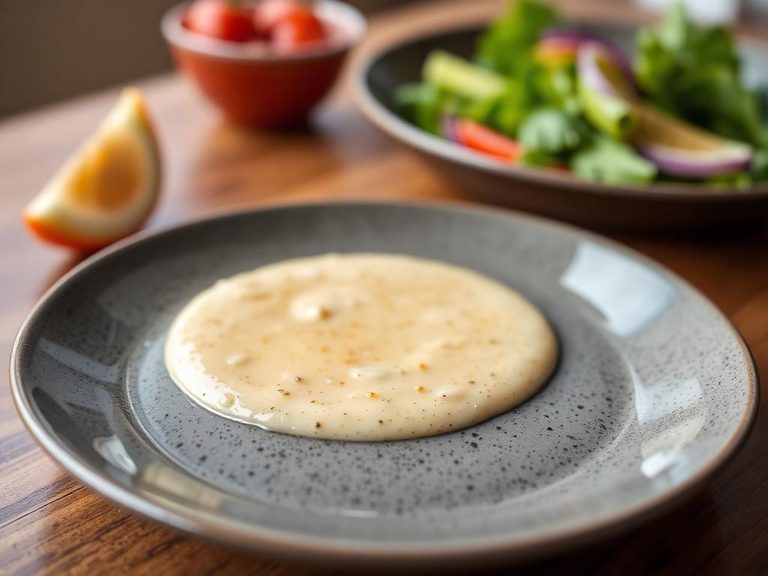
A light vinaigrette base is a simple, emulsified sauce typically made from oil, an acidic component like vinegar or citrus juice, and seasonings. It is a foundational element in Western, particularly French, cuisine, used to dress salads, marinate vegetables, or finish proteins. The classic ratio is often three parts oil to one part acid, though variations are endless.
🍽️ Nutrition at a glance
This base is high in fat, primarily from the oil, which provides healthy unsaturated fats and fat-soluble vitamins. It is very low in carbohydrates and protein, with a typical 2-tablespoon serving containing roughly 120-140 calories.
Nutrition breakdown
| Calories | 130 kcal |
| Protein | 0 g |
| Carbs | 0.5 g |
| Fat | 14.5 g |
| Fiber | 0 g |
| Sugar | 0.2 g |
| Sodium | 115 mg |
| Vitamin E | 1.9 mg |
| Vitamin K | 8.5 µg |
| Monounsaturated Fat | 10.5 g |
| Polyunsaturated Fat | 2.1 g |
| Sodium | 115 mg |
Per 2 tablespoons (30 g) · estimated, varies by recipe
💡 What's interesting
The vinaigrette is a prime example of a temporary emulsion, where vigorous whisking disperses the oil into the acid to create a creamy texture that will eventually separate. Nutritionally, the oil helps the body absorb fat-soluble vitamins (A, D, E, K) from the vegetables it's dressed.