Wagyu Steak Basting
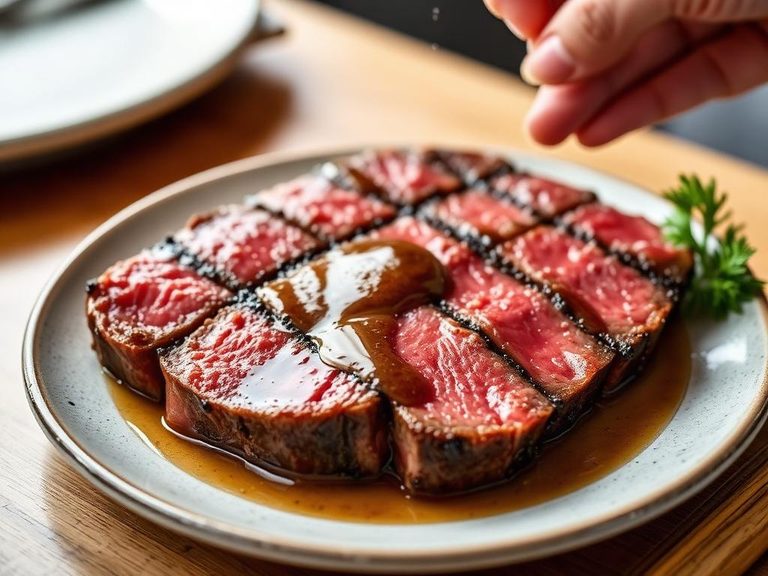
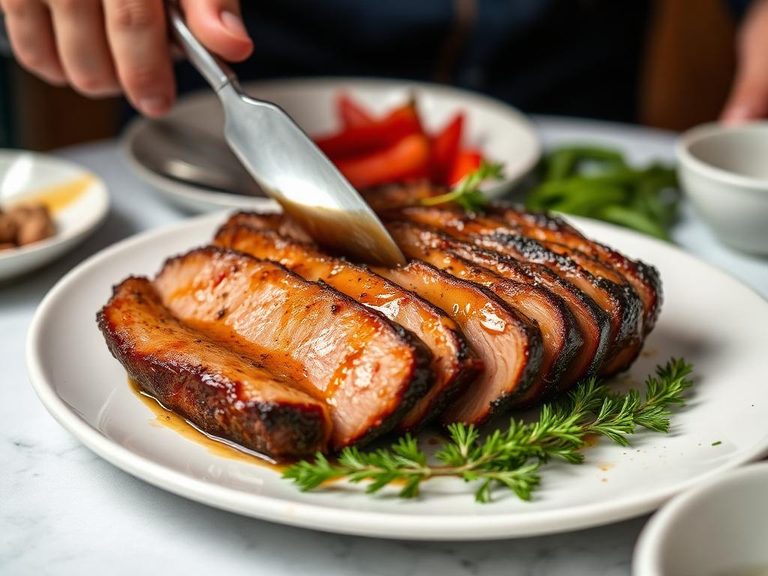
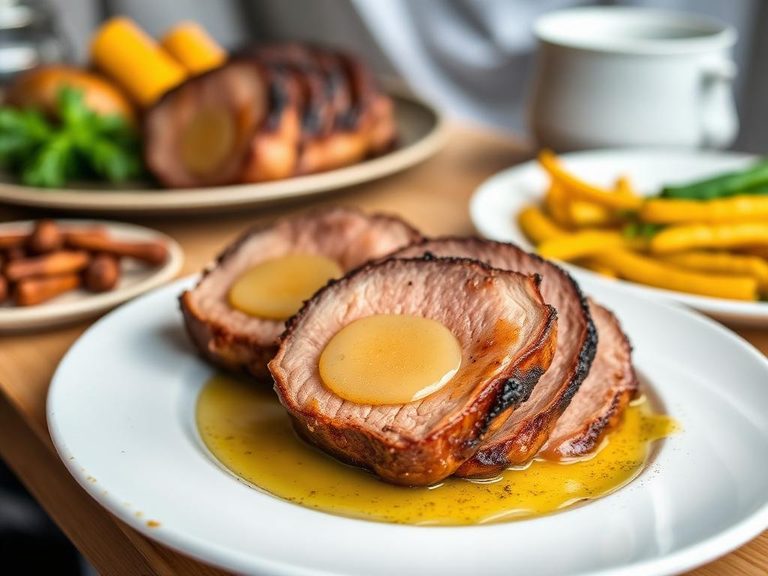
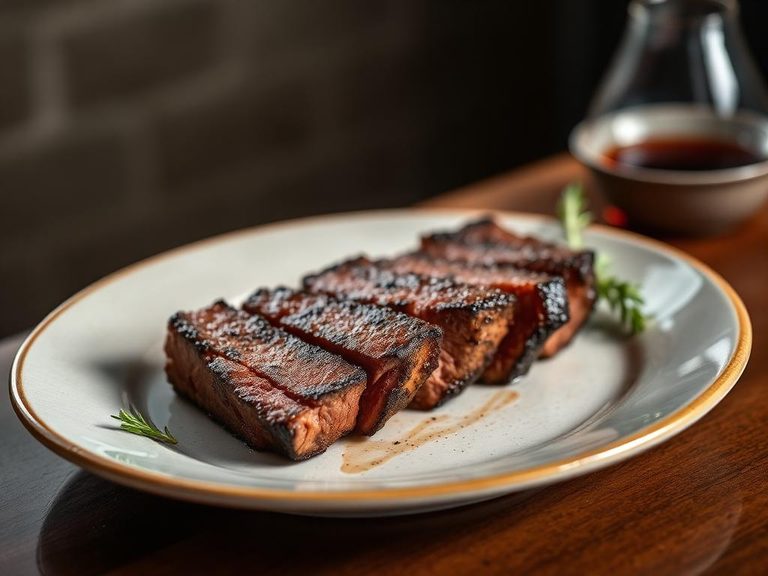
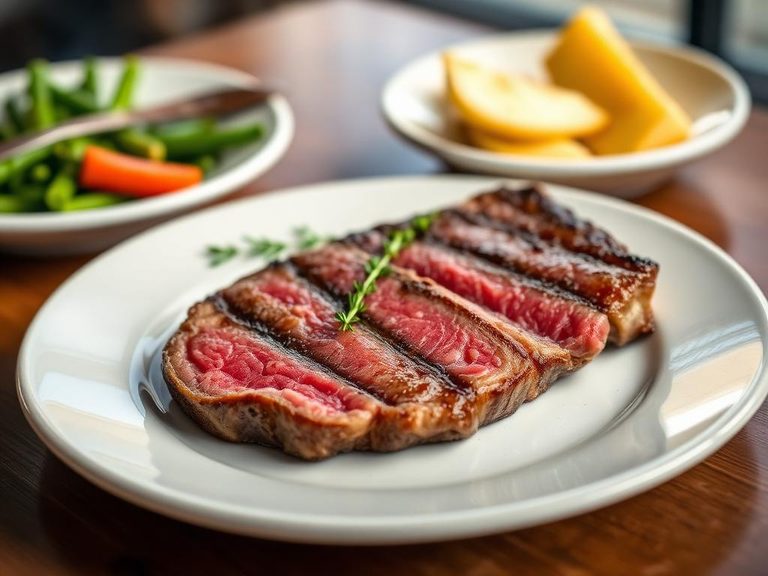
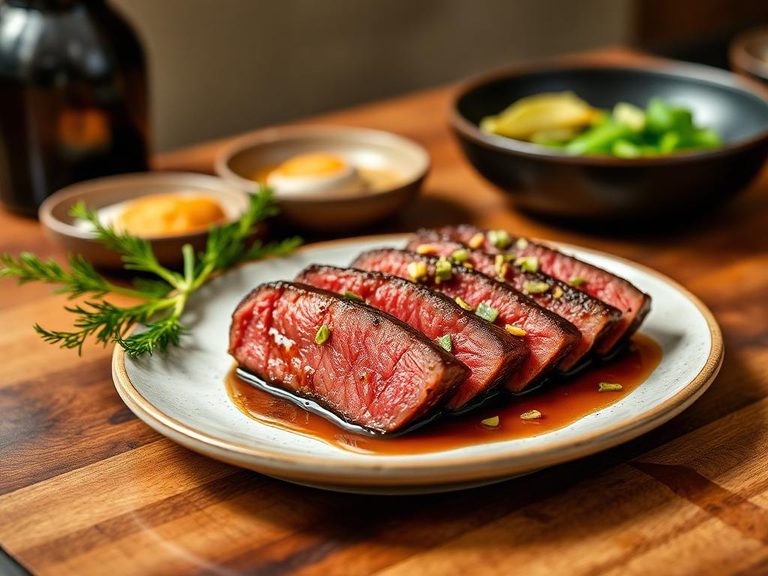
Wagyu steak basting is a premium Japanese cooking technique where high-quality, heavily marbled Wagyu beef is pan-seared and continuously spooned with a mixture of melted butter, aromatics like garlic and thyme, and often soy sauce or mirin. This method infuses the steak with rich flavor while creating a glossy, caramelized crust. It's a signature preparation in high-end Japanese teppanyaki and Western steakhouse cuisine.
🍽️ Nutrition at a glance
This dish is extremely high in protein and fat, particularly saturated fat from the beef's intramuscular marbling and the butter used for basting. A typical serving provides a significant amount of iron, zinc, and B vitamins, with a calorie count that can easily range from 700 to over 1,000 kcal depending on the cut and portion size.
Nutrition breakdown
| Calories | 900 kcal |
| Protein | 52 g |
| Carbs | 2 g |
| Fat | 74 g |
| Fiber | 0 g |
| Sugar | 0 g |
| Sodium | 480 mg |
| Iron | 5.2 mg |
| Zinc | 12.1 mg |
| Vitamin B12 | 5.8 mcg |
| Niacin (B3) | 18.4 mg |
| Phosphorus | 420 mg |
| Selenium | 62 mcg |
| Potassium | 680 mg |
| Vitamin B6 | 0.9 mg |
Per 1 serving (200 g, cooked, about 7 oz) · estimated, varies by recipe
💡 What's interesting
The cultural uniqueness lies in the Wagyu itself, prized for its intense 'shimofuri' (marbling) that melts at low temperatures, creating an exceptionally tender and buttery texture. Nutritionally, while high in total fat, Wagyu contains a higher proportion of monounsaturated fats (like oleic acid, also found in olive oil) compared to other beef.