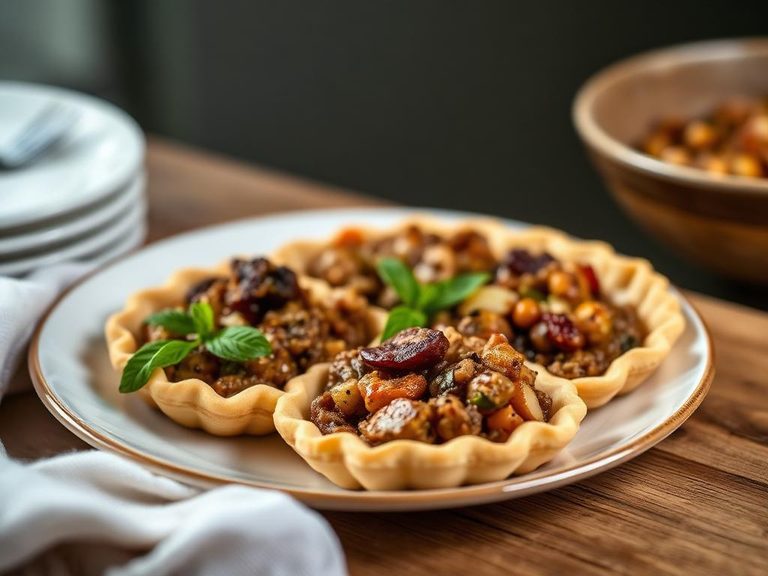
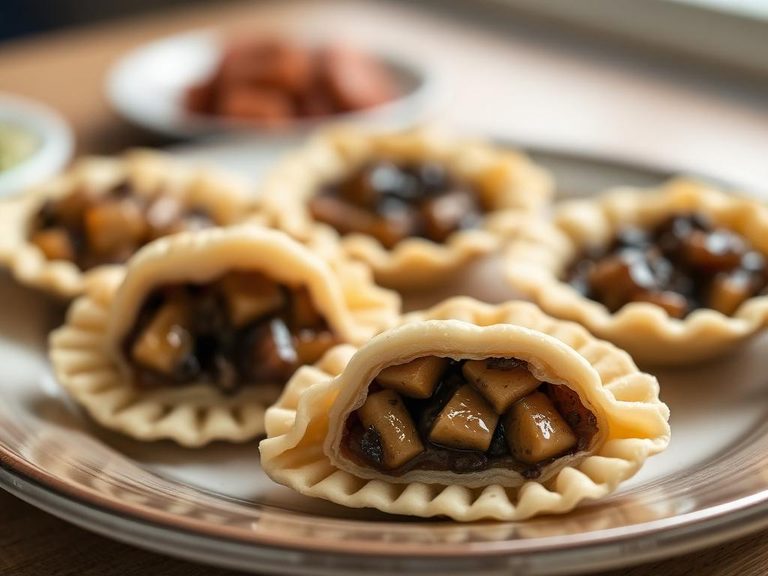
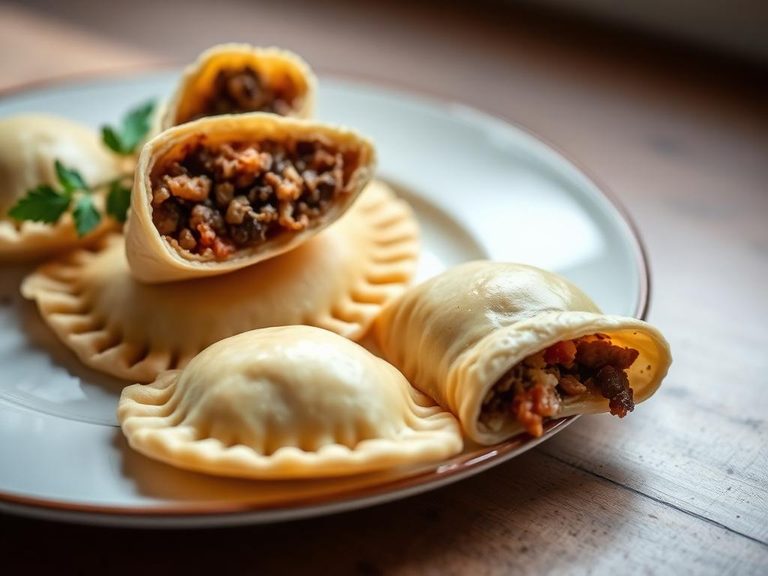
Used as a filling for savory pies or tarts
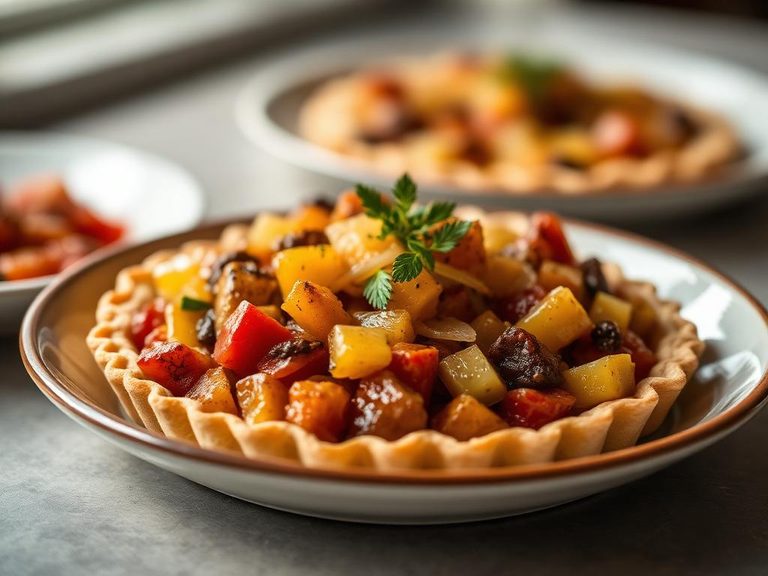
This refers to a savory pie or tart filling, most commonly a seasoned meat mixture like ground beef, pork, or lamb, often combined with onions, herbs, and sometimes vegetables. It is a foundational component in dishes from British and European cuisines, such as the filling for a classic pork pie, steak and kidney pie, or a French pâté en croûte. The filling is typically cooked before being encased in pastry and baked.
🍽️ Nutrition at a glance
As a meat-based filling, it is high in protein and fat, with minimal carbohydrates unless extended with ingredients like breadcrumbs or lentils. It is a good source of iron, zinc, and B vitamins, particularly B12. A typical serving from a finished pie can range from 300 to 500 calories, depending on the meat-to-pastry ratio and added fats.
Nutrition breakdown
| Calories | 320 kcal |
| Protein | 18 g |
| Carbs | 5 g |
| Fat | 25 g |
| Fiber | 1 g |
| Sugar | 2 g |
| Sodium | 480 mg |
| Iron | 2.5 mg |
| Zinc | 4.2 mg |
| Vitamin B12 | 1.8 mcg |
| Niacin (B3) | 5.0 mg |
| Selenium | 18 mcg |
| Phosphorus | 180 mg |
| Potassium | 280 mg |
| Vitamin B6 | 0.3 mg |
Per 1 serving of meat pie filling (approx. 150 g) · estimated, varies by recipe
💡 What's interesting
The use of a cooked meat filling sealed in pastry was historically a method of preservation, with the pastry crust acting as a protective barrier. Nutritionally, the combination of red meat with a fat-rich pastry provides a very dense, energy-dense meal, which was historically valuable for laborers and during cold climates.