Turkey Legs
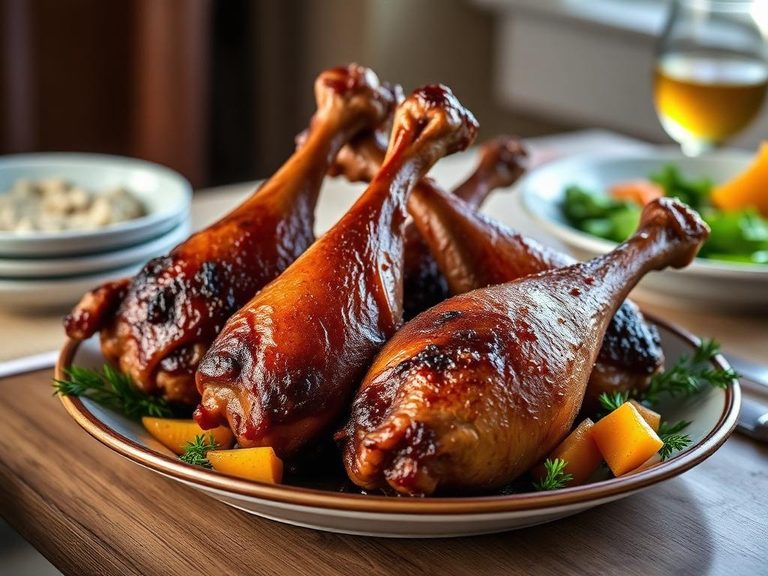
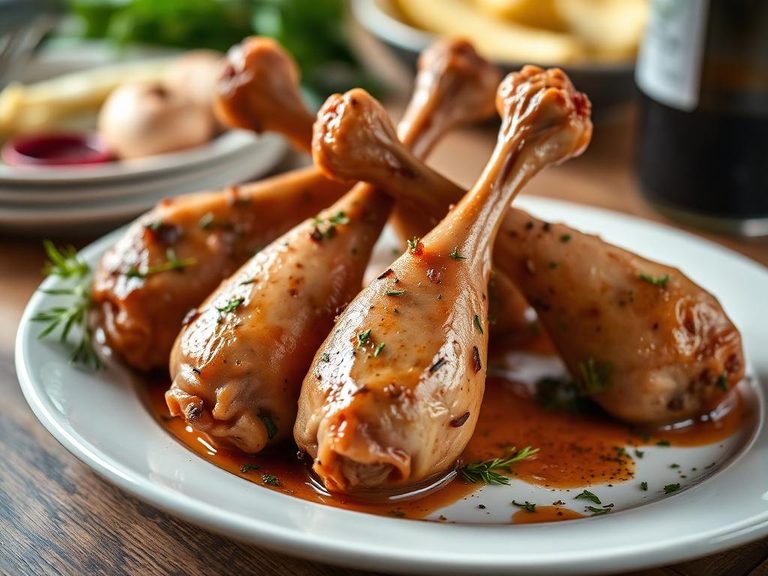
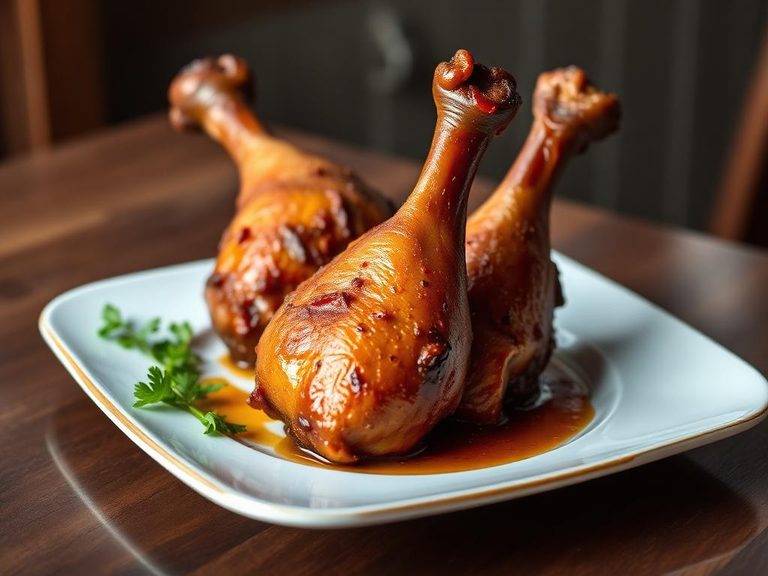
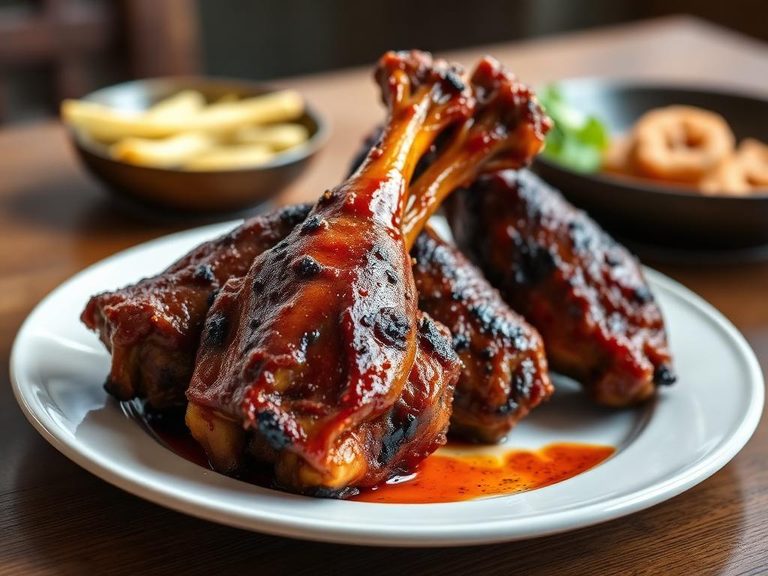
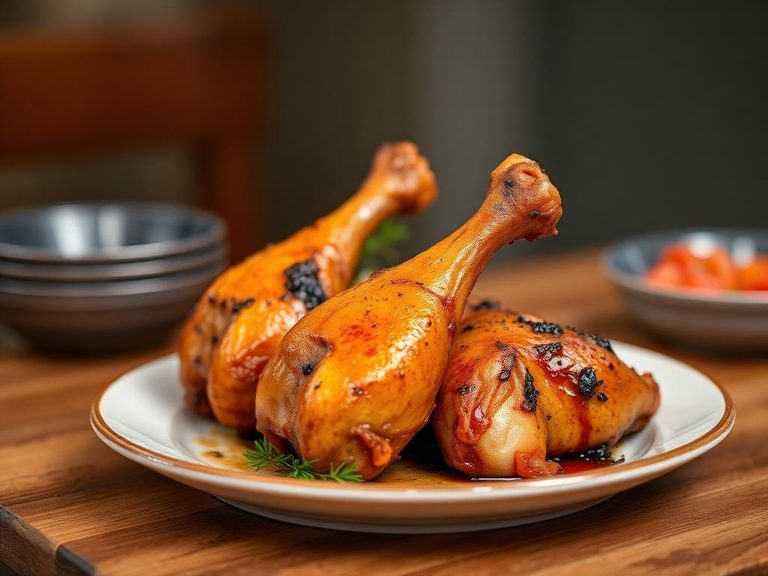
Turkey legs are large, meaty portions of the bird, typically smoked low-and-slow or roasted until the skin is crisp and the interior is tender. They are seasoned with a blend of spices like paprika, garlic, and black pepper, and are a staple at Renaissance fairs, barbecues, and holiday feasts across the United States.
🍽️ Nutrition at a glance
This dish is a powerhouse of high-quality protein and is very low in carbohydrates. It provides essential nutrients like B vitamins (especially niacin and B6) and minerals like selenium and phosphorus, with a single roasted leg containing roughly 400-500 calories.
Nutrition breakdown
| Calories | 480 kcal |
| Protein | 65 g |
| Carbs | 0 g |
| Fat | 24 g |
| Fiber | 0 g |
| Sugar | 0 g |
| Sodium | 220 mg |
| Niacin (B3) | 15 mg |
| Vitamin B6 | 1.2 mg |
| Phosphorus | 550 mg |
| Selenium | 80 mcg |
| Zinc | 8 mg |
| Potassium | 700 mg |
| Iron | 4 mg |
| Choline | 180 mg |
Per 1 turkey leg, roasted, meat and skin (approx. 350 g) · estimated, varies by recipe
💡 What's interesting
Culturally, the giant smoked turkey leg has become an iconic symbol of American Renaissance fairs and theme parks, often eaten as a hearty, handheld meal. Nutritionally, it's a leaner red meat alternative, offering a rich source of complete protein with less saturated fat than many cuts of beef or pork.