

Toast and bread
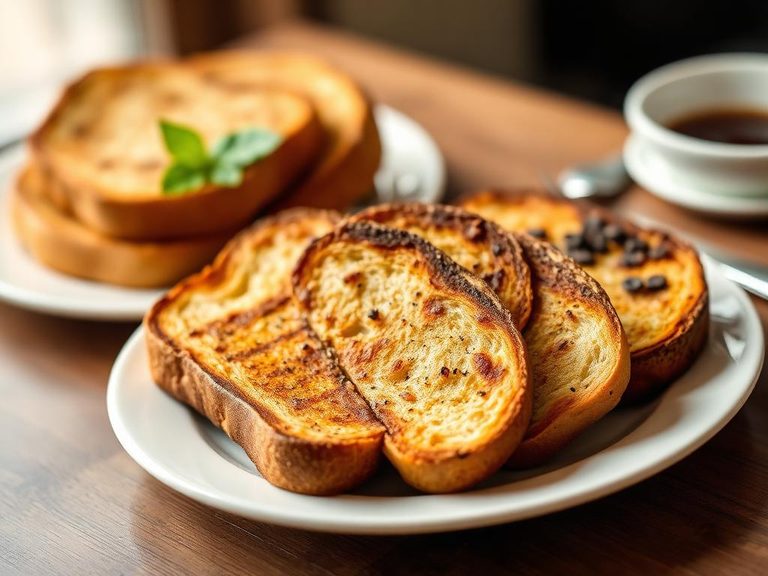
Toast and bread is a simple, foundational dish made from sliced bread that is typically toasted until golden and crisp. It is a staple food in many cultures worldwide, often served plain or with toppings like butter, jam, or avocado. Its origins are tied to the widespread cultivation of grain and the development of baking techniques across Europe and beyond.
🍽️ Nutrition at a glance
This dish is primarily a source of carbohydrates, providing quick energy, with a modest amount of protein and minimal fat. A single serving offers key nutrients like B vitamins (especially thiamin and niacin) and minerals such as iron and magnesium, with a calorie range typically between 70-100 kcal for a plain slice.
Nutrition breakdown
| Calories | 80 kcal |
| Protein | 3 g |
| Carbs | 14 g |
| Fat | 1 g |
| Fiber | 1.5 g |
| Sugar | 1.5 g |
| Sodium | 150 mg |
| Thiamin (B1) | 0.1 mg |
| Niacin (B3) | 1.5 mg |
| Iron | 1 mg |
| Magnesium | 10 mg |
| Selenium | 6 mcg |
| Folate | 20 mcg |
| Phosphorus | 30 mg |
| Manganese | 0.2 mg |
Per 1 slice (30 g) · estimated, varies by recipe
💡 What's interesting
Culturally, toast and bread symbolize comfort and simplicity, often being the first solid food for infants and a go-to for quick meals. Nutritionally, whole-grain versions can be a good source of dietary fiber, supporting digestive health and providing sustained energy release.
🍽️ Related dishes





AI estimate may be inaccurate · Terms