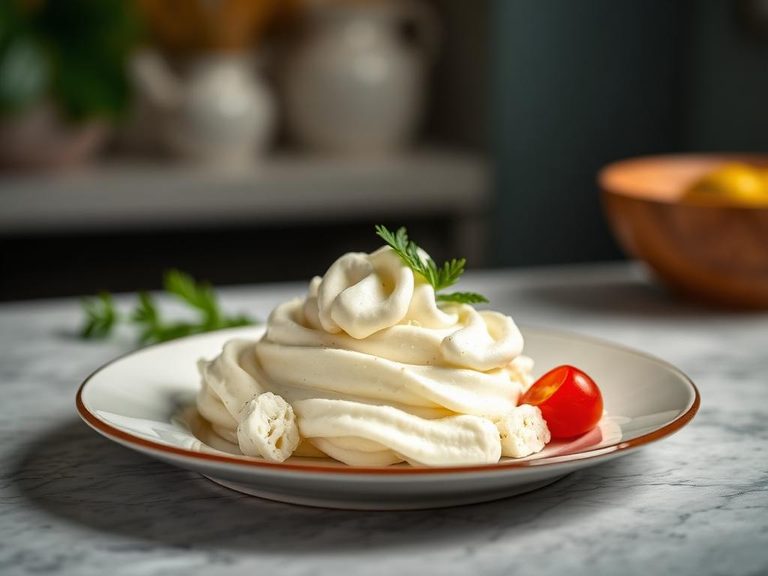
Swirled into soup for creaminess
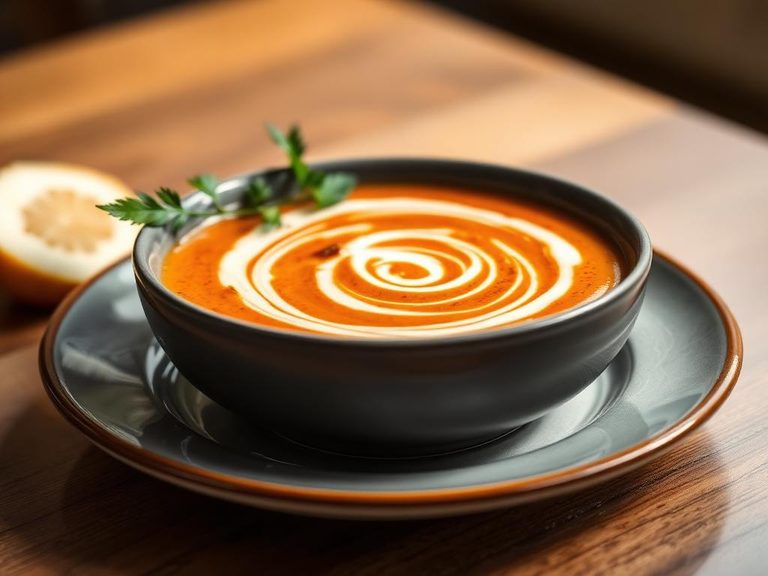
This is not a standalone dish but a culinary technique where a creamy ingredient—like coconut milk, heavy cream, yogurt, or a starch slurry—is swirled into a soup base to add richness, body, and a smooth texture. The method is used globally, from French bisques to Indian curries and Thai coconut soups, transforming a thin broth into a velvety, satisfying meal.
🍽️ Nutrition at a glance
The nutritional profile varies drastically by the creamy element used; coconut milk adds high saturated fat, while yogurt adds protein and probiotics. A typical serving of a cream-enriched soup generally provides a moderate amount of calories, with the key nutrients being the fats or proteins from the additive and the vitamins from the soup's vegetable or meat base.
Nutrition breakdown
| Calories | 180 kcal |
| Protein | 4 g |
| Carbs | 15 g |
| Fat | 12 g |
| Fiber | 2 g |
| Sugar | 4 g |
| Sodium | 450 mg |
| Vitamin A | 300 mcg RAE |
| Vitamin C | 10 mg |
| Calcium | 60 mg |
| Iron | 1.5 mg |
| Potassium | 350 mg |
| Vitamin K | 15 mcg |
| Magnesium | 25 mg |
| Phosphorus | 70 mg |
Per 1 cup (240 g) · estimated, varies by recipe
💡 What's interesting
Culturally, this technique is a universal shortcut to luxury, turning simple ingredients into something perceived as rich and indulgent. Nutritionally, swirling in a fat source can help the body absorb fat-soluble vitamins (like A, D, E, and K) from other ingredients in the soup, such as carrots or spinach.