Sulguni with Tongue
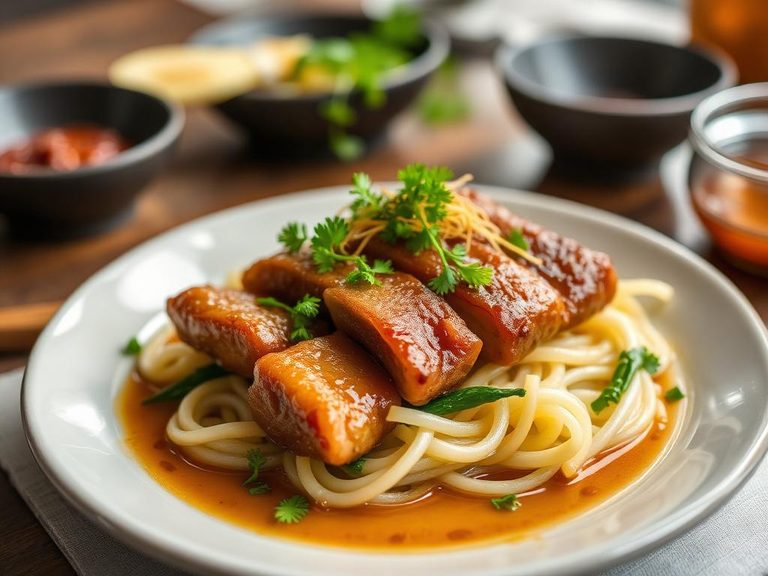
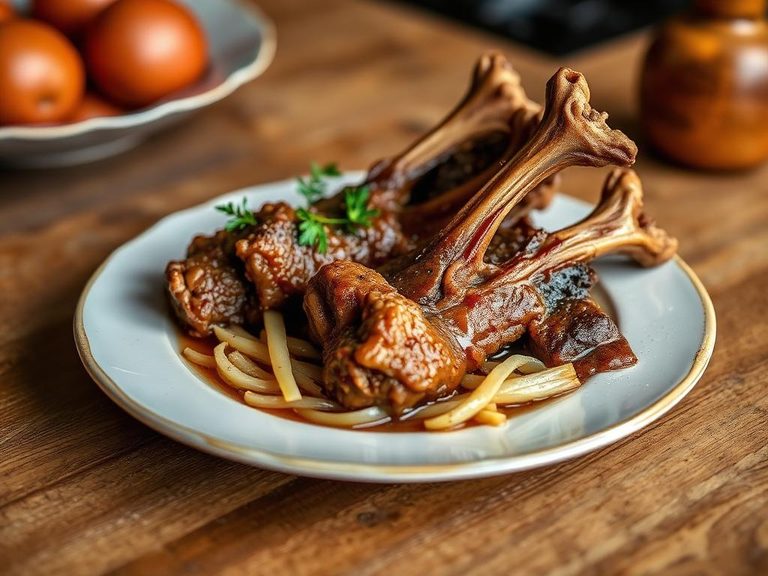
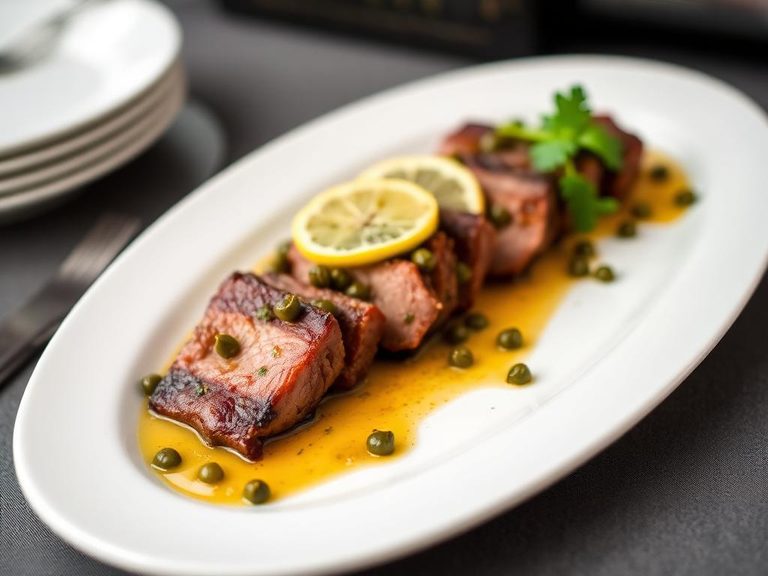
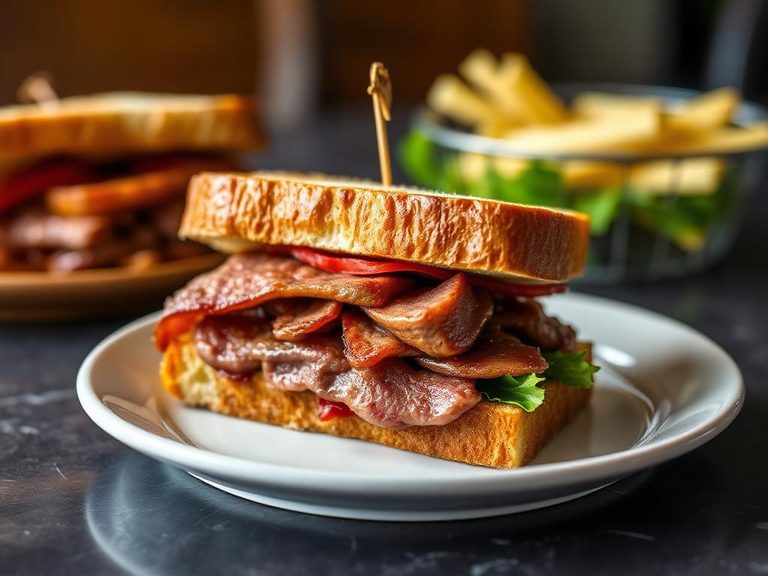
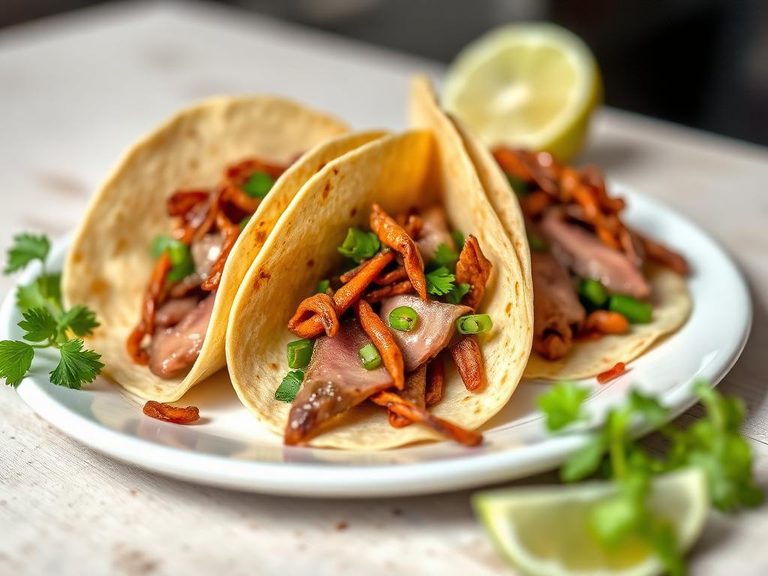
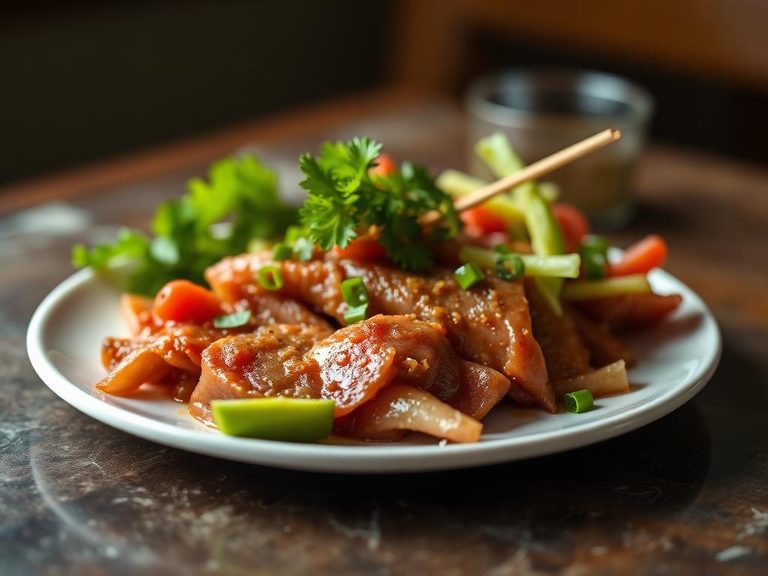
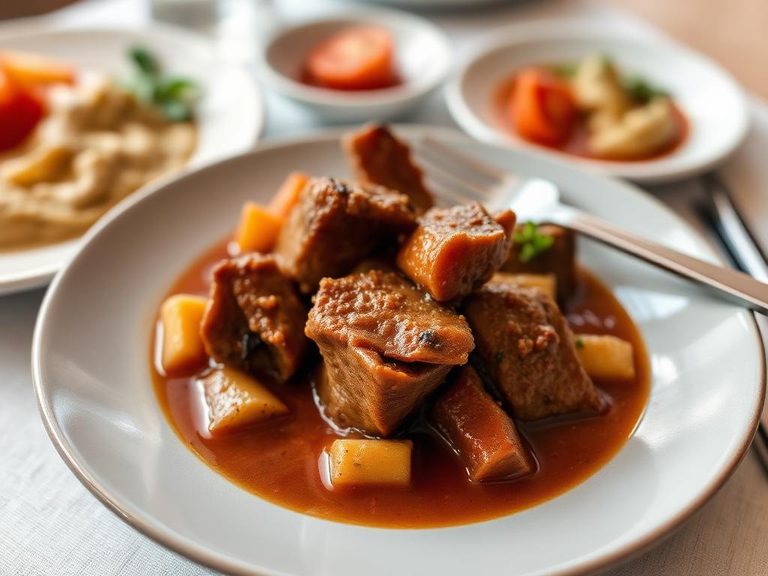
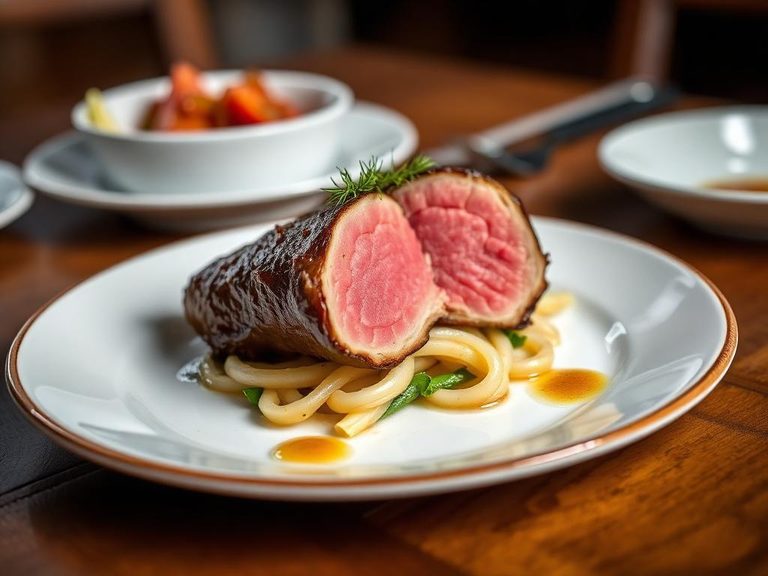
Sulguni with Tongue is a hearty Georgian dish featuring tender, slow-cooked beef or veal tongue served with or atop slices of sulguni, a briny, elastic Georgian cheese. The tongue is typically boiled with aromatics like bay leaf, onion, and peppercorns until tender, then sliced and presented alongside the cheese, which may be grilled or fried until golden. It's a savory, protein-rich combination often found in Georgian cuisine, particularly in the Svaneti region.
🍽️ Nutrition at a glance
This dish is very high in protein and fat, with minimal carbohydrates, making it a substantial, energy-dense meal. It provides excellent sources of B vitamins (especially B12), iron, and zinc from the tongue, along with calcium and sodium from the sulguni cheese. A typical serving likely contains between 500-700 calories.
Nutrition breakdown
| Calories | 620 kcal |
| Protein | 42 g |
| Carbs | 2 g |
| Fat | 49 g |
| Fiber | 0 g |
| Sugar | 1 g |
| Sodium | 1250 mg |
| Vitamin B12 | 12.0 mcg |
| Zinc | 8.5 mg |
| Iron | 4.2 mg |
| Selenium | 35 mcg |
| Phosphorus | 380 mg |
| Calcium | 300 mg |
| Niacin (B3) | 8.0 mg |
| Potassium | 410 mg |
Per 1 plate (300 g) · estimated, varies by recipe
💡 What's interesting
Culturally, this dish highlights the Georgian tradition of using offal (like tongue) in hearty, flavorful preparations and pairs it with the country's iconic cheese. Nutritionally, it's a powerhouse of bioavailable heme iron and complete protein, though the high sodium content from the brined cheese is notable.