

Smoked scoter strips

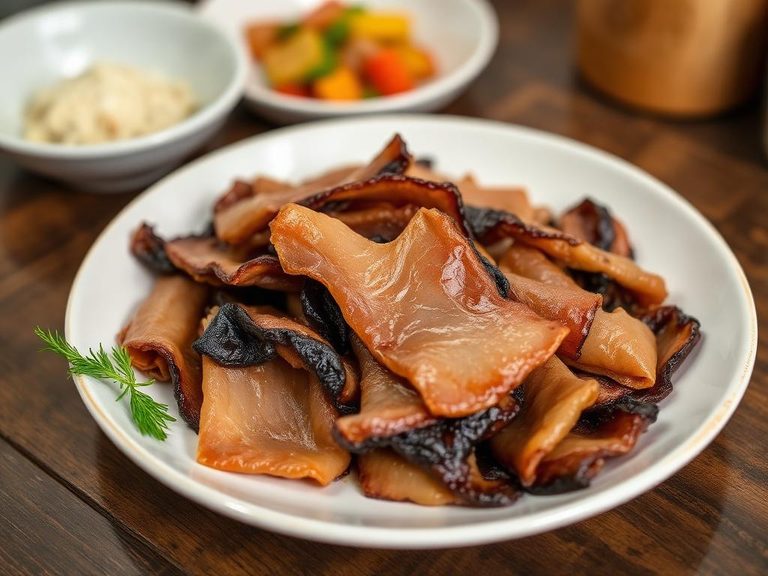
Smoked scoter strips are a traditional preserved delicacy made from the meat of the scoter, a large sea duck. The dish involves smoking and drying the duck meat, often seasoned with salt and spices, resulting in a chewy, intensely flavored product. It originates from coastal regions of Northern Europe, particularly Scandinavia and the Baltic, where it was historically a vital source of nutrition for fishermen and coastal communities.
🍽️ Nutrition at a glance
This dish is very high in protein and fat, with virtually no carbohydrates, making it a dense energy source. It provides significant amounts of iron, zinc, and B vitamins, particularly niacin (B3) and B12, with a rough calorie count of 250-300 kcal per 100g serving.
Nutrition breakdown
| Calories | 280 kcal |
| Protein | 25 g |
| Carbs | 0 g |
| Fat | 20 g |
| Fiber | 0 g |
| Sugar | 0 g |
| Sodium | 800 mg |
| Niacin (B3) | 6.5 mg |
| Vitamin B12 | 2.5 µg |
| Iron | 3.2 mg |
| Zinc | 2.8 mg |
| Phosphorus | 220 mg |
| Selenium | 18 µg |
| Potassium | 280 mg |
| Vitamin D | 1.2 µg |
Per 100 g · estimated, varies by recipe
💡 What's interesting
Culturally, smoked scoter strips are a prime example of traditional food preservation techniques born from necessity in harsh coastal climates. Nutritionally, the smoking process not only imparts flavor but also acts as a natural preservative, and the high fat content from the sea duck provides essential fatty acids.
🍽️ Related dishes







AI estimate may be inaccurate · Terms