

Savarin
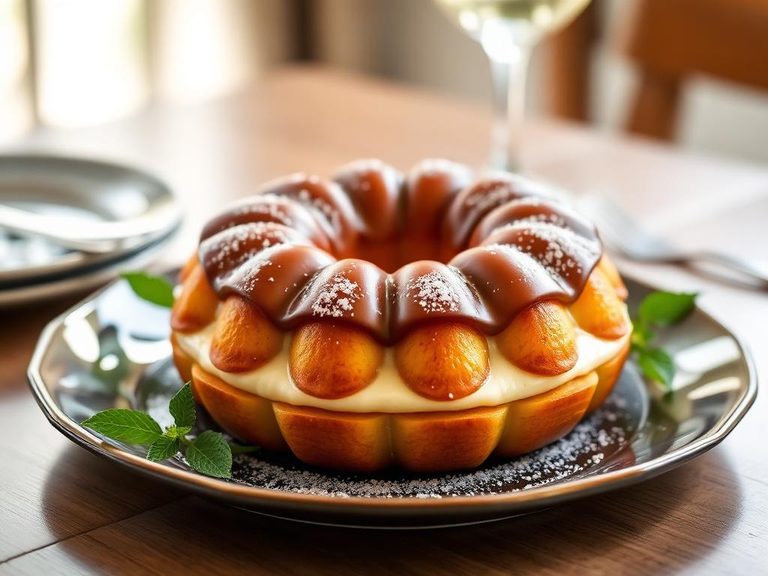
Savarin is a classic French yeast cake, similar to a brioche, that is baked in a distinctive ring-shaped mold. After baking, the warm cake is soaked in a flavored syrup, often infused with rum or other liqueurs, and is typically filled with pastry cream and fresh fruits. It originated in 19th-century Paris and is named after the famous French gastronome Jean Anthelme Brillat-Savarin.
🍽️ Nutrition at a glance
As a rich dessert, Savarin is high in carbohydrates from the sugar and flour, and contains significant fat from the butter and eggs used in the dough. A single serving provides a substantial amount of energy, typically ranging from 400 to 600 calories, along with some protein from the eggs and dairy.
Nutrition breakdown
| Calories | 350 kcal |
| Protein | 6.5 g |
| Carbs | 45 g |
| Fat | 16 g |
| Fiber | 1 g |
| Sugar | 22 g |
| Sodium | 220 mg |
| Iron | 2.5 mg |
| Calcium | 60 mg |
| Potassium | 120 mg |
| Vitamin A | 150 IU |
| Vitamin B1 (Thiamine) | 0.2 mg |
| Vitamin B2 (Riboflavin) | 0.15 mg |
| Vitamin B3 (Niacin) | 1.8 mg |
| Phosphorus | 70 mg |
Per 1 piece (100 g) · estimated, varies by recipe
💡 What's interesting
Culturally, Savarin is a celebratory centerpiece in French pâtisserie, often served at special occasions. Its unique preparation involves baking a plain cake and then transforming it by soaking it in syrup, which ensures a moist texture and allows for versatile flavor infusions.
AI estimate may be inaccurate · Terms