

Salad Garnish
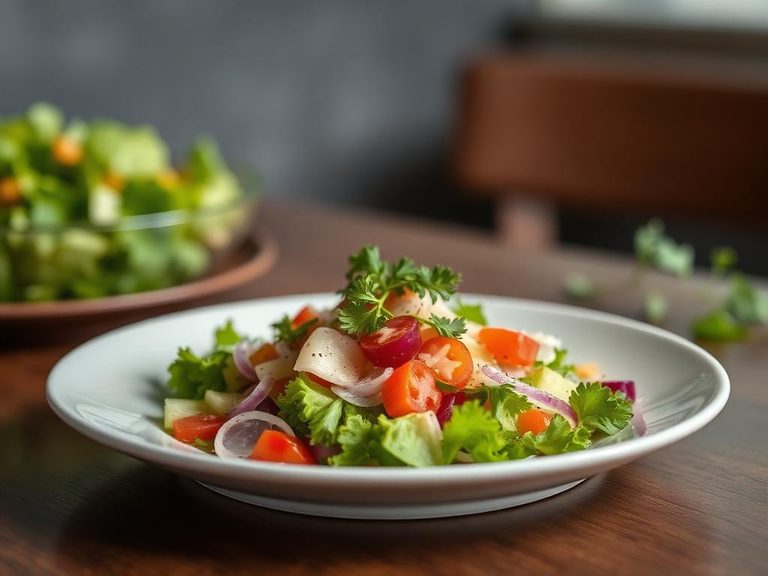
Salad garnish refers to the decorative and flavorful elements added to a salad to enhance its visual appeal and taste. These typically include items like croutons, cheese, nuts, seeds, or fresh herbs, and are common in Western cuisine, particularly in American and European culinary traditions. They are not a standalone dish but a complementary component to salads.
🍳 View the full Salad Garnish recipe →
🍽️ Nutrition at a glance
Salad garnish is generally low in calories, with a typical serving contributing around 20-50 calories. It often provides healthy fats (from nuts or cheese), some protein (from cheese or seeds), and minimal carbohydrates, while also adding micronutrients like vitamins and minerals depending on the specific garnish used.
Nutrition breakdown
| Calories | 10 kcal |
| Protein | 0.7 g |
| Carbs | 2 g |
| Fat | 0.1 g |
| Fiber | 1 g |
| Sugar | 0.8 g |
| Sodium | 15 mg |
| Vitamin A | 300 µg |
| Vitamin K | 45 µg |
| Vitamin C | 5 mg |
| Potassium | 150 mg |
| Folate | 30 µg |
| Manganese | 0.2 mg |
| Iron | 0.5 mg |
| Calcium | 20 mg |
Per 1 cup (50 g) · estimated, varies by recipe
💡 What's interesting
Culturally, salad garnishes reflect a trend towards personalization and texture contrast in modern dining, allowing diners to customize their salads. Nutritionally, they can transform a simple salad into a more balanced meal by adding essential nutrients and enhancing satiety without excessive calories.
🍽️ Related dishes





AI estimate may be inaccurate · Terms