

Sønderjysk Sylte
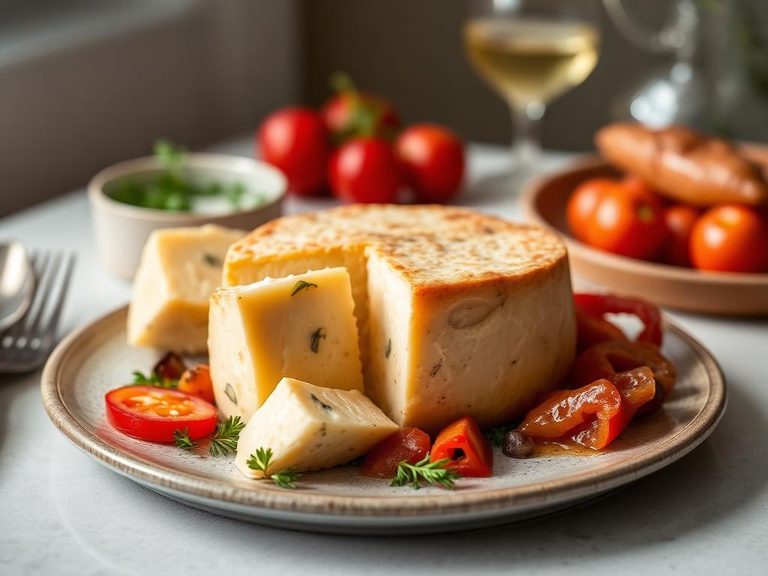
Sønderjysk Sylte is a traditional Danish head cheese from the South Jutland region, made by slow-cooking a mix of pork cuts—often including the head, feet, and tongue—until the meat is tender and the natural collagen forms a rich, savory jelly. It is typically seasoned with salt, pepper, and sometimes allspice or bay leaves, then pressed into a terrine and served cold in thick slices.
🍽️ Nutrition at a glance
This dish is high in protein and fat, with virtually no carbohydrates, providing a good source of collagen, gelatin, and minerals like iron and zinc. A typical 100-gram serving contains roughly 200–250 calories, depending on the specific cuts and fat content used.
Nutrition breakdown
| Calories | 130 kcal |
| Protein | 9 g |
| Carbs | 1 g |
| Fat | 10 g |
| Fiber | 0 g |
| Sugar | 0 g |
| Sodium | 480 mg |
| Sodium | 480 mg |
| Cholesterol | 40 mg |
| Iron | 0.8 mg |
| Zinc | 1.5 mg |
| Phosphorus | 85 mg |
| Potassium | 120 mg |
| Vitamin B1 (Thiamin) | 0.1 mg |
| Vitamin B12 | 0.5 µg |
Per 1 slice (56 g) · estimated, varies by recipe
💡 What's interesting
Culturally, Sønderjysk Sylte is a cherished part of Danish holiday traditions, especially at Christmas, where it’s often enjoyed on rye bread with pickled beetroot and mustard. Nutritionally, its high collagen content from slow-cooked connective tissues is unique, offering benefits for joint and gut health that are less common in modern processed meats.
AI estimate may be inaccurate · Terms