

Roasted Leg of Mutton
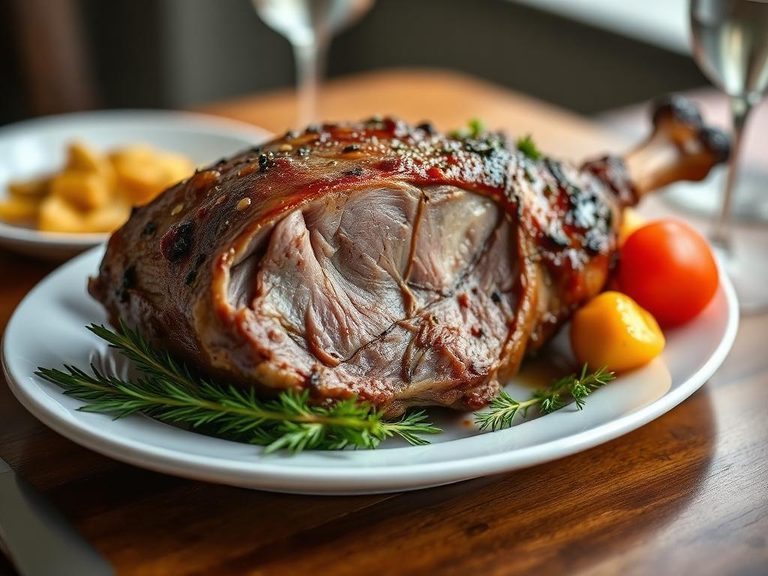
Roasted Leg of Mutton is a classic, hearty dish featuring a whole leg of mature sheep, typically seasoned with herbs like rosemary, garlic, and black pepper, then slow-roasted until tender. It is a celebratory centerpiece in many cuisines, particularly in British, Mediterranean, and Middle Eastern culinary traditions, often served for Sunday roasts or festive gatherings.
🍽️ Nutrition at a glance
This dish is an excellent source of high-quality protein and healthy fats, with minimal carbohydrates. A typical serving provides significant amounts of iron, zinc, and B vitamins, particularly B12, with a calorie range of approximately 350-450 kcal per 100g of cooked meat.
Nutrition breakdown
| Calories | 294 kcal |
| Protein | 25 g |
| Carbs | 0 g |
| Fat | 21 g |
| Fiber | 0 g |
| Sugar | 0 g |
| Sodium | 75 mg |
| Iron | 2.0 mg |
| Zinc | 4.5 mg |
| Vitamin B12 | 2.5 µg |
| Niacin (B3) | 6.0 mg |
| Phosphorus | 180 mg |
| Selenium | 30 µg |
| Potassium | 300 mg |
| Vitamin B6 | 0.3 mg |
Per 3 oz (85 g) cooked, lean and fat eaten · estimated, varies by recipe
💡 What's interesting
Culturally, a whole roasted leg of mutton is often a symbol of hospitality and celebration, featured in holiday feasts and special occasions. Nutritionally, mutton from mature sheep has a richer, more complex flavor and a higher fat content than lamb, which contributes to its succulence when slow-roasted.
🍽️ Related dishes

AI estimate may be inaccurate · Terms