Rehydrated in fish head soup
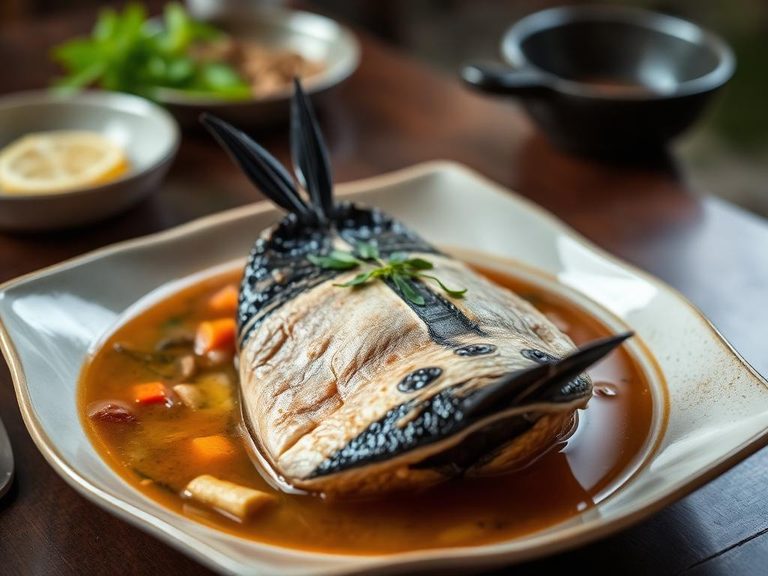
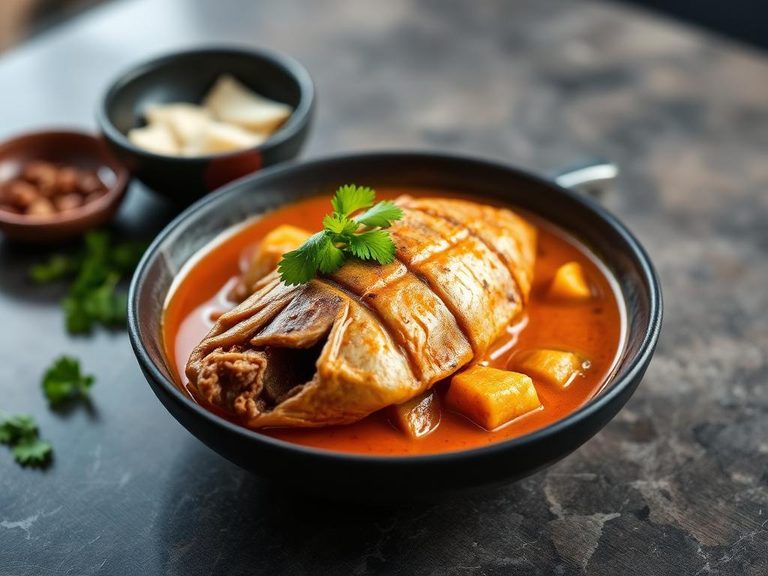
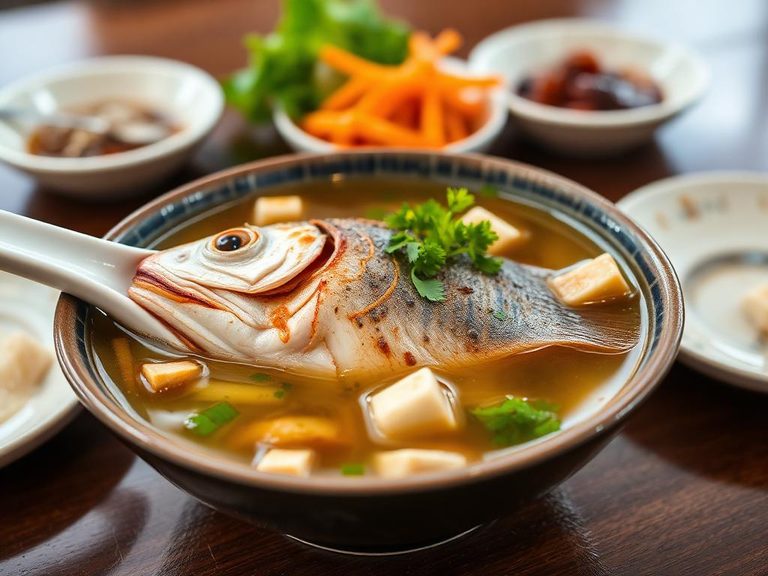
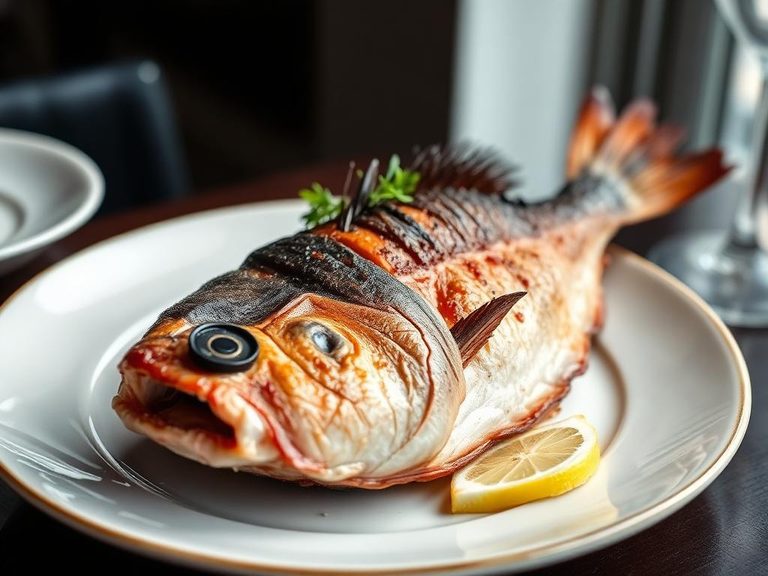
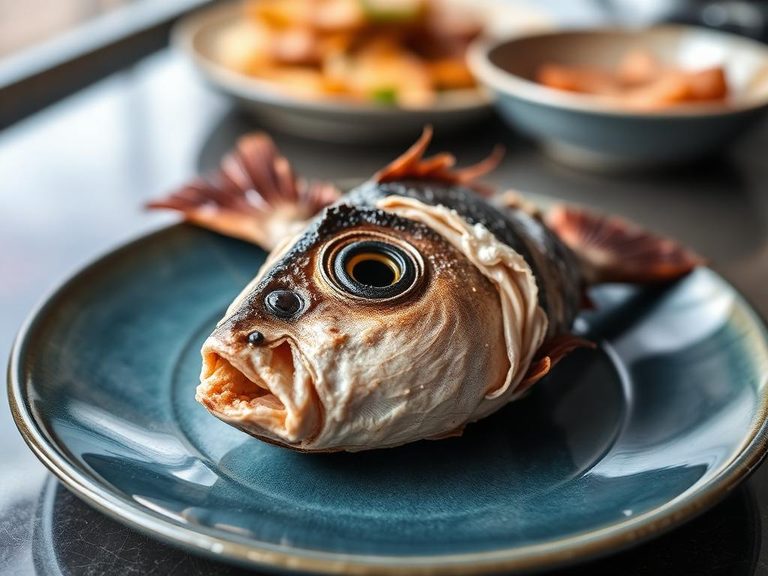
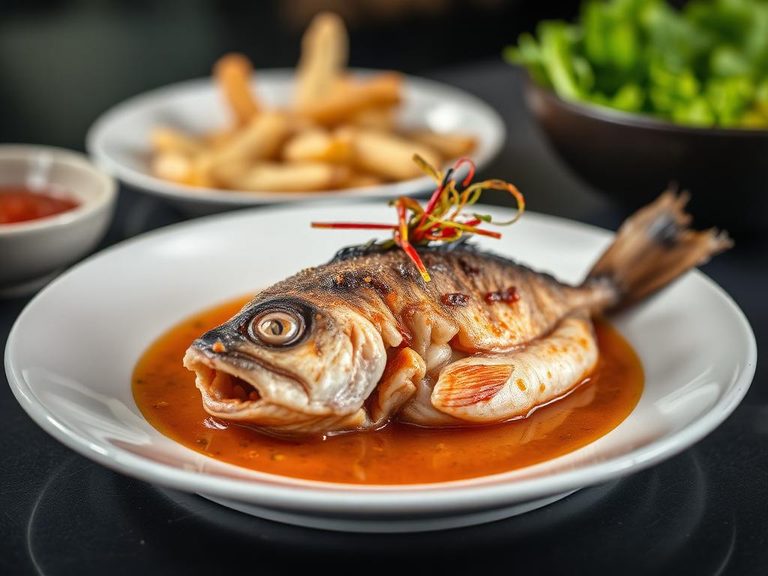
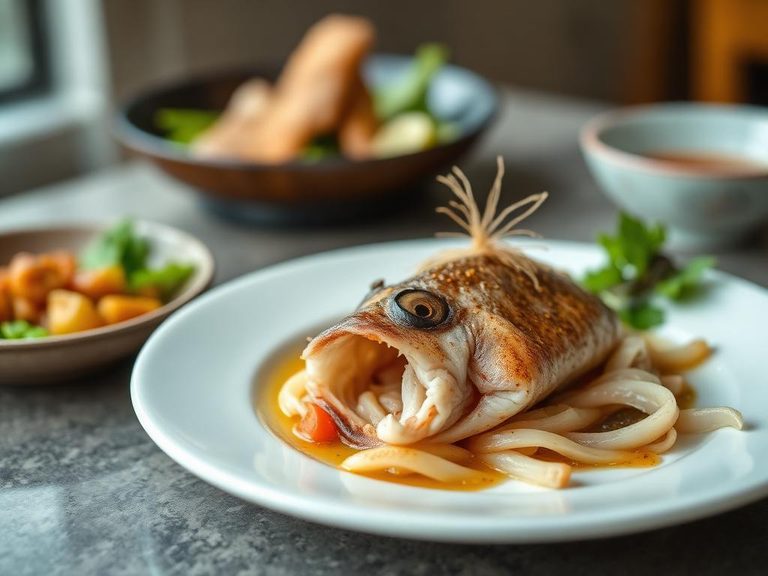
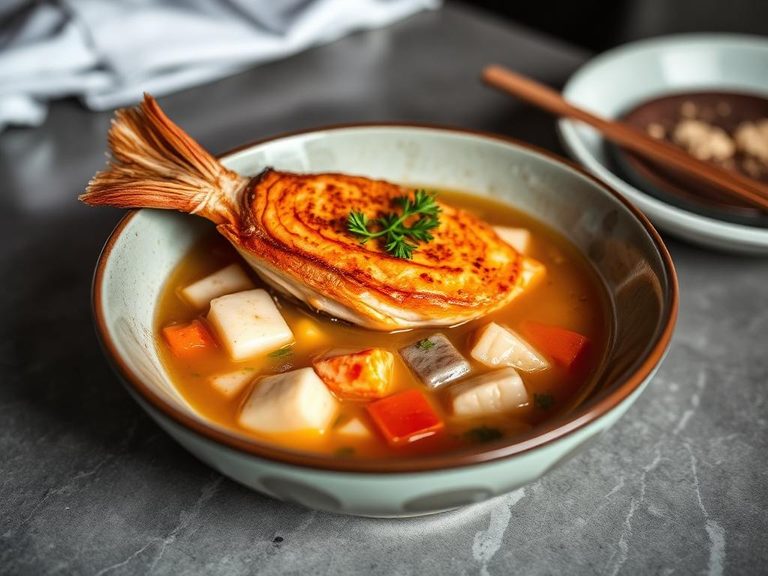
Rehydrated in fish head soup is a traditional Chinese dish where dried ingredients, most commonly dried tofu skin (yuba) or dried daylily buds, are rehydrated and cooked in a rich, milky broth made from fish heads. The fish head, often from grass carp or bighead carp, is simmered for hours to extract collagen and flavor, creating a nourishing and savory soup.
🍽️ Nutrition at a glance
This dish is high in protein and healthy fats from the fish, with minimal carbohydrates unless starchy ingredients are added. It is an excellent source of collagen, omega-3 fatty acids, and minerals like calcium and phosphorus, with a typical serving containing roughly 200-300 calories.
Nutrition breakdown
| Calories | 250 kcal |
| Protein | 22 g |
| Carbs | 5 g |
| Fat | 16 g |
| Fiber | 1 g |
| Sugar | 1 g |
| Sodium | 480 mg |
| Calcium | 120 mg |
| Phosphorus | 280 mg |
| Omega-3 (EPA+DHA) | 500 mg |
| Collagen | High |
| Vitamin D | 2 µg |
| Selenium | 18 µg |
| Niacin (B3) | 4 mg |
| Potassium | 320 mg |
Per 1 bowl (300 g) · estimated, varies by recipe
💡 What's interesting
Culturally, this soup is prized in Chinese cuisine as a restorative food, believed to nourish the brain and skin due to its high collagen content. The process of creating the signature milky-white broth through prolonged boiling is a classic technique in Chinese soup-making.